
Si has investigado sobre la elaboración de la kombucha, probablemente te habrás dado cuenta de que el término “filtración” puede referirse a cosas muy diferentes. Algunos productores se limitan a retirar los trozos de SCOBY antes del embotellado, mientras que otros utilizan la filtración por membrana, la pasteurización o incluso la filtración estéril para producir una bebida cristalina y de larga conservación.
Esto suele dar lugar a una pregunta práctica:
¿En qué momento se debe filtrar realmente la kombucha?
A diferencia de la cerveza o el vino, no existe una norma de producción universal para la kombucha. El momento ideal para la filtración depende de si se pretende que el producto final se mantenga sin procesar y probiótico, que tenga una vida útil más larga o que cumpla con las expectativas visuales de los consumidores minoristas.
Para los productores comerciales, la filtración no debe considerarse como una única máquina situada al final de la línea de producción. Por el contrario, debe entenderse como un proceso integrado que funciona en conjunto con la fermentación, la refrigeración, la carbonatación y el embotellado.
Un proceso típico de producción industrial de kombucha
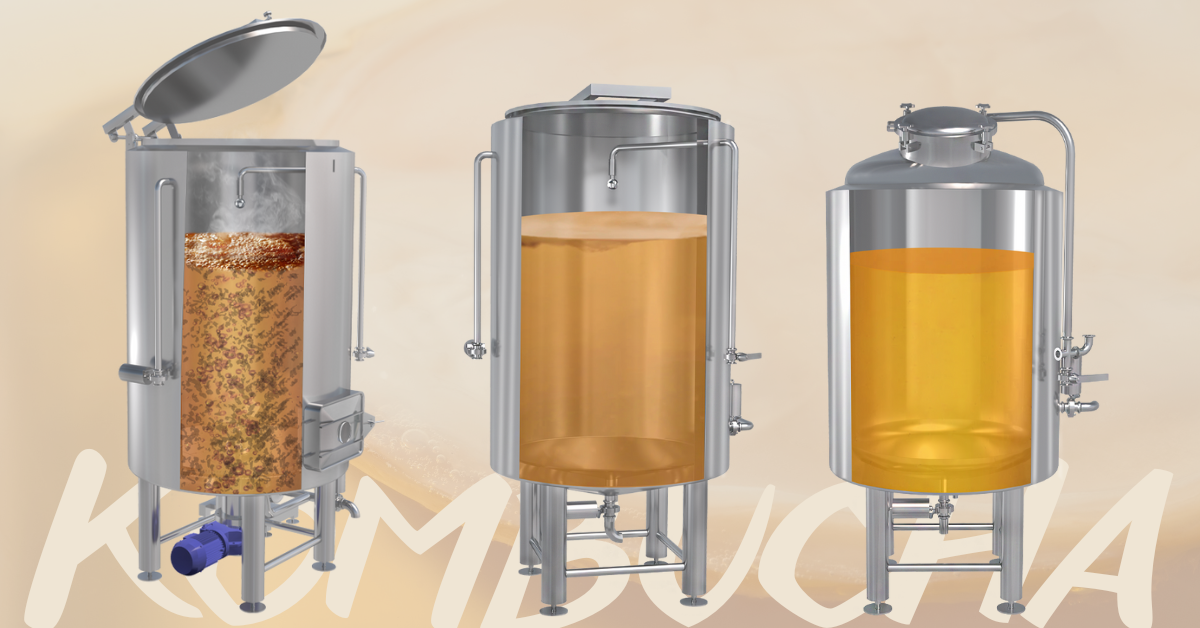
Aunque las recetas varían según el fabricante, la mayor parte de la producción comercial de kombucha sigue una secuencia similar:
Preparación del té
↓
Disolución del azúcar
↓
Fermentación primaria
↓
Zumo de fruta o adición de sabor (opcional)
↓
Fermentación secundaria (opcional)
↓
Filtración
↓
Pasteurización (opcional)
↓
Carbonatación (opcional)
↓
Llenado y envasado
Obsérvese que la filtración se produce relativamente tarde en el proceso. Esto es intencionado. Durante la fermentación, la levadura y las bacterias deben permanecer activas para producir ácidos orgánicos, compuestos aromáticos y precursores de la carbonatación. Filtrar demasiado pronto elimina microorganismos que aún contribuyen a la fermentación, lo que podría afectar tanto a la calidad como a la consistencia del producto.
En cambio, la filtración se utiliza generalmente como operación de acabado una vez que se han alcanzado los objetivos de la fermentación.
¿La filtración se realiza antes o después de la aromatización?
Una de las primeras decisiones relativas al proceso consiste en determinar si la filtración debe realizarse antes o después de añadir el zumo de fruta, los ingredientes botánicos o los aromas naturales.
Opción 1: Filtrar antes de añadir el saborizante
Algunos fabricantes clarifican primero la kombucha base y, a continuación, añaden los aromatizantes en un depósito de mezcla independiente.
Este enfoque ofrece varias ventajas:
- Un producto base más limpio antes de mezclarlo.
- Mayor control sobre la uniformidad del sabor.
- Menor riesgo de introducir sedimentos adicionales procedentes de la fase de fermentación.
No obstante, si los ingredientes añadidos contienen pulpa, especias o partículas vegetales, es posible que siga siendo necesario realizar otro proceso de filtración de pulido antes del envasado.
Opción 2: Filtrar tras añadir el saborizante
Muchos productores comerciales de kombucha prefieren realizar la filtración una vez que se han mezclado todos los ingredientes.
Esto elimina:
- Pulpa de fruta
- Partículas de especias
- Sedimento del té
- Fragmentos restantes de SCOBY
- Exceso de flóculos de levadura
El resultado es un aspecto más homogéneo y un mejor rendimiento de llenado, especialmente en el caso de líneas de embotellado de alta velocidad.
La contrapartida es que los medios filtrantes pueden requerir una limpieza o sustitución más frecuentes debido a la mayor carga de sólidos.
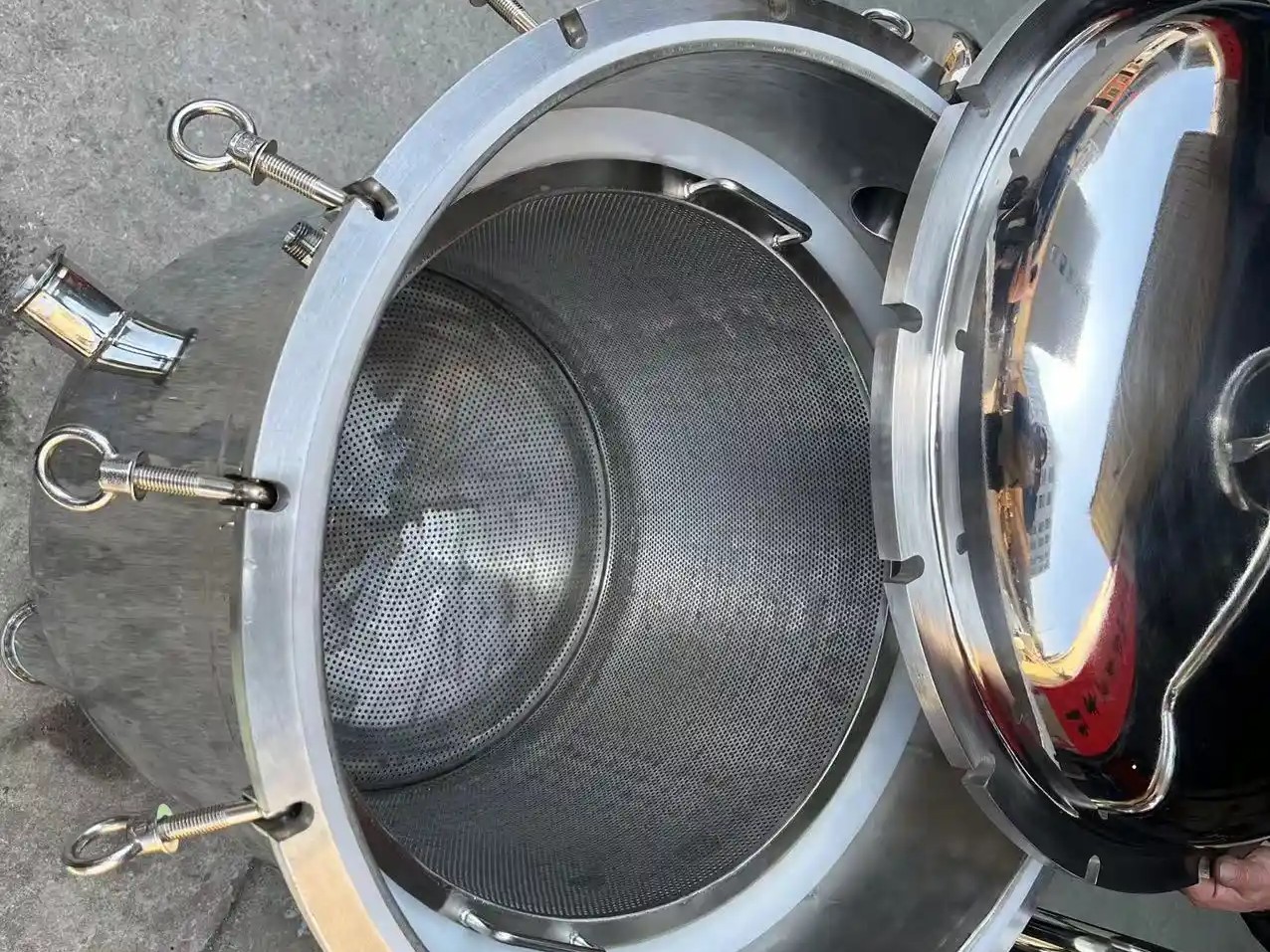
La filtración está estrechamente relacionada con la estrategia de envasado
Una idea errónea muy extendida es que las decisiones sobre la filtración se basan únicamente en el aspecto.
En realidad, el envase suele determinar la estrategia de filtración.
Kombucha cruda y refrigerada
Si el producto va a permanecer refrigerado durante todo el proceso de distribución y se comercializa indicando que contiene cultivos vivos, la filtración suele ser relativamente suave.
El objetivo suele ser eliminar los fragmentos visibles de SCOBY y el exceso de levadura, conservando al mismo tiempo la mayor actividad microbiana posible.
Productos de consumo a largo plazo para la venta al por menor
Los productos destinados al almacenamiento a temperatura ambiente suelen requerir un nivel mucho mayor de control microbiano.
En función de la normativa regional y del posicionamiento de la marca, los fabricantes pueden combinar la filtración fina con la pasteurización u otras tecnologías de estabilización para reducir el riesgo de que la fermentación continúe durante el almacenamiento.
Kombucha madurada en botella
Algunos productores artesanales recurren deliberadamente a la levadura residual para generar carbonatación natural dentro de la botella.
En este caso, una filtración agresiva eliminaría precisamente los microorganismos responsables del acondicionamiento en botella.
En el caso de estos productos, por lo general se prefiere un proceso de filtración mínima.
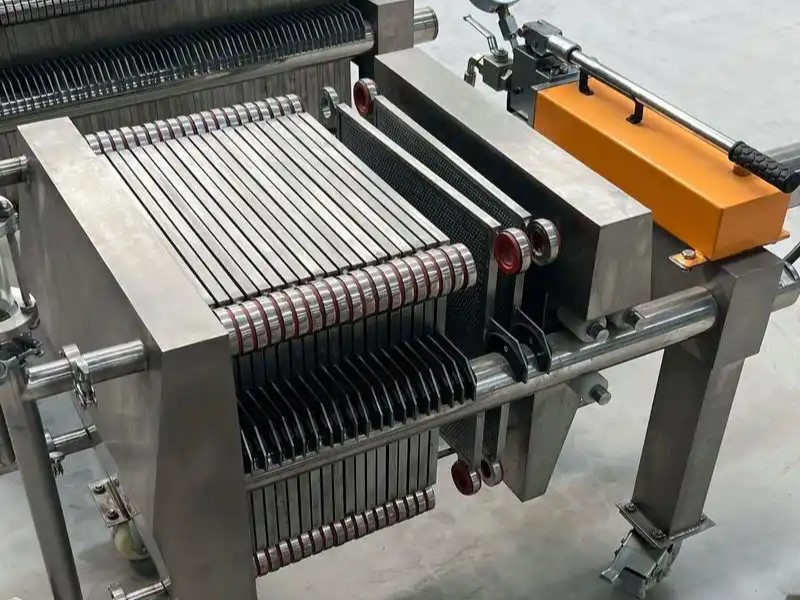
La filtración debe planificarse junto con la selección de los equipos
Uno de los errores más habituales en el diseño de una fábrica de cerveza o de una planta de kombucha es considerar la filtración como un equipo que simplemente se puede añadir más adelante.
En realidad, la filtración afecta a múltiples partes de la línea de producción, entre ellas:
- Depósitos luminosos
- Sistemas de refrigeración
- Bombas de transferencia de productos
- Tuberías sanitarias
- Diseño CIP
- Equipos de carbonatación
- Tecnología de llenado
Por ejemplo, la implantación de la estabilización en frío requiere una capacidad de refrigeración suficiente y depósitos de proceso aislados. La actualización a filtración por membrana puede requerir presiones de transferencia, conexiones sanitarias y procedimientos de limpieza diferentes a los de un simple filtro de granulado.
Planificar estos sistemas de forma conjunta desde el principio facilita considerablemente su futura ampliación.
Diseño de la estrategia de filtración adecuada
No existe un único lugar “ideal” para filtrar la kombucha, ya que no hay un único tipo de kombucha.
Un producto artesanal sin procesar, una bebida refrigerada de alta gama y una bebida de consumo al por menor de larga duración requieren, cada uno de ellos, prioridades de producción diferentes.
Por este motivo, la filtración debe tenerse en cuenta durante el diseño general del proceso, y no solo a la hora de seleccionar un filtro.
En Tiantai, colaboramos con los fabricantes de bebidas para integrar recipientes de fermentación, sistemas de refrigeración, tuberías sanitarias, equipos de filtración, sistemas CIP, carbonatación y líneas de llenado, para ofrecer soluciones de producción completas «llave en mano». Tanto si su objetivo es preservar los cultivos vivos, mejorar la claridad del producto o preparar kombucha para su distribución comercial a gran escala, diseñar el proceso de filtración como parte de toda la línea de producción ofrece una mayor flexibilidad, una mejor higiene y una calidad del producto más constante a largo plazo.