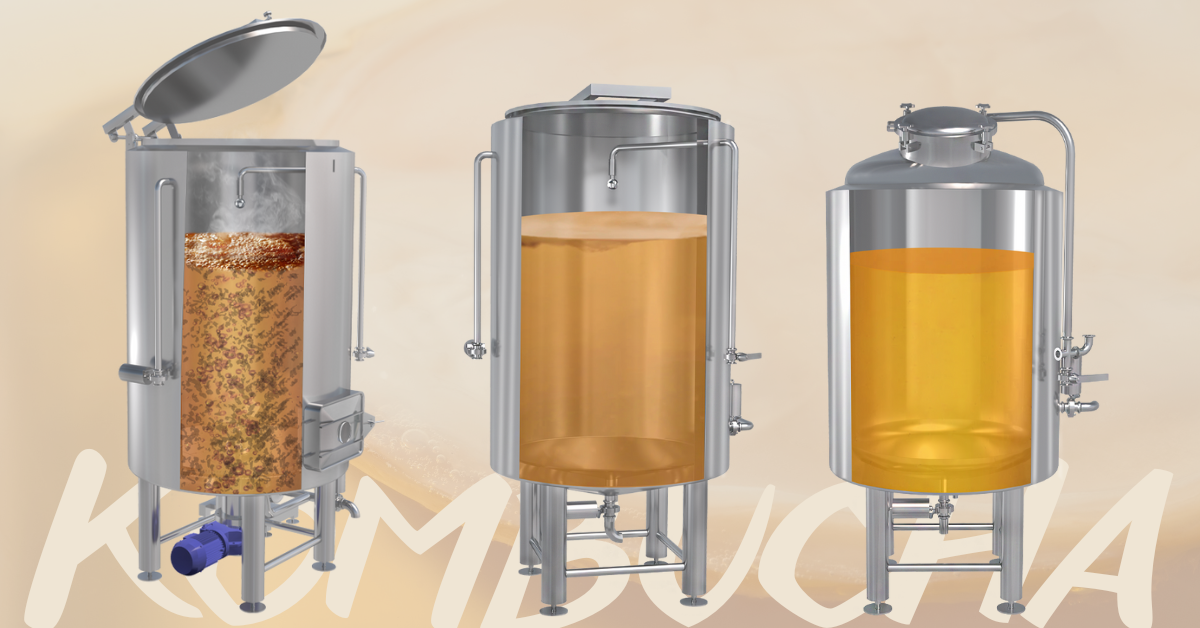
Where does filtration fit into the kombucha production process?

If you’ve researched kombucha production, you’ve probably noticed that “filtration” can mean very different things. Some producers simply remove pieces of SCOBY before bottling, while others use membrane filtration, pasteurization, or even sterile filtration to produce a crystal-clear, shelf-stable beverage.

This often leads to a practical question:

At what stage should kombucha actually be filtered?

Unlike beer or wine, there is no universal production standard for kombucha. The ideal filtration point depends on whether the final product is intended to remain raw and probiotic, achieve a longer shelf life, or meet the visual expectations of retail consumers.

For commercial producers, filtration should not be viewed as a single machine at the end of the production line. Instead, it should be considered an integrated process that works together with fermentation, cooling, carbonation, and filling.


A Typical Industrial Kombucha Production Process


天台コンブチャ装置

Although recipes vary between manufacturers, most commercial kombucha production follows a similar sequence:

Tea Brewing

Sugar Dissolution

一次発酵

Fruit Juice or Flavor Addition (Optional)

Secondary Fermentation (Optional)

ろ過

Pasteurization (Optional)

Carbonation (Optional)

Filling & Packaging

Notice that filtration appears relatively late in the process. This is intentional. During fermentation, yeast and bacteria need to remain active to produce organic acids, flavor compounds, and carbonation precursors. Filtering too early removes microorganisms that are still contributing to fermentation, potentially affecting both product quality and consistency.

Instead, filtration is generally used as a finishing operation after fermentation objectives have been achieved.


Filtration Before or After Flavoring?

One of the first process decisions involves determining whether filtration should occur before or after adding fruit juice, botanicals, or natural flavors.

Option 1: Filter Before Flavor Addition

Some manufacturers clarify the base kombucha first and then introduce flavorings in a separate blending tank.

This approach offers several advantages:

  • A cleaner base product before blending.
  • Better control over flavor consistency.
  • Less risk of introducing additional sediment from the fermentation stage.

However, if the added ingredients contain pulp, spices, or botanical particles, another polishing filtration may still be required before filling.

Option 2: Filter After Flavor Addition

Many commercial kombucha producers prefer to perform filtration after all ingredients have been blended.

This removes:

  • Fruit pulp
  • Spice particles
  • Tea sediment
  • Remaining SCOBY fragments
  • Excess yeast flocs

The result is a more consistent appearance and improved filling performance, especially for high-speed bottling lines.

The trade-off is that filtration media may require more frequent cleaning or replacement because of the higher solids load.

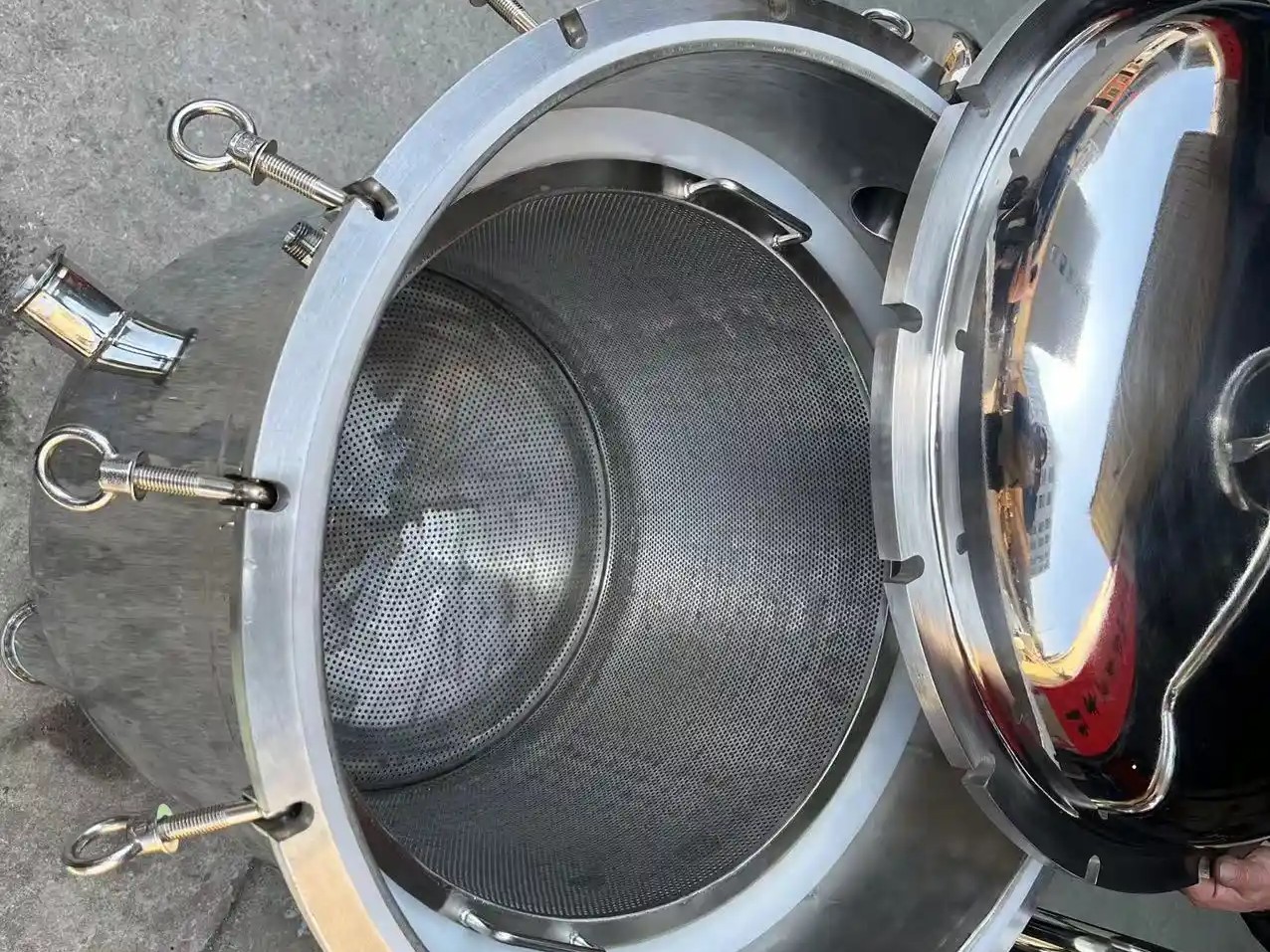
safety filter

Filtration Is Closely Connected to Packaging Strategy

A common misconception is that filtration decisions are based solely on appearance.

In reality, packaging often determines the filtration strategy.

Raw Refrigerated Kombucha

If the product will remain refrigerated throughout distribution and is marketed as containing live cultures, filtration is typically kept relatively gentle.

The objective is usually to remove visible SCOBY fragments and excessive yeast while preserving as much microbial activity as possible.

Shelf-Stable Retail Products

Products intended for ambient storage usually require a much higher degree of microbial control.

Depending on regional regulations and brand positioning, manufacturers may combine fine filtration with pasteurization or other stabilization technologies to reduce the risk of continued fermentation during storage.

Bottle-Conditioned Kombucha

Some craft producers intentionally rely on residual yeast to generate natural carbonation inside the bottle.

In this case, aggressive filtration would remove the very microorganisms responsible for bottle conditioning.

For these products, minimal filtration is generally the preferred approach.

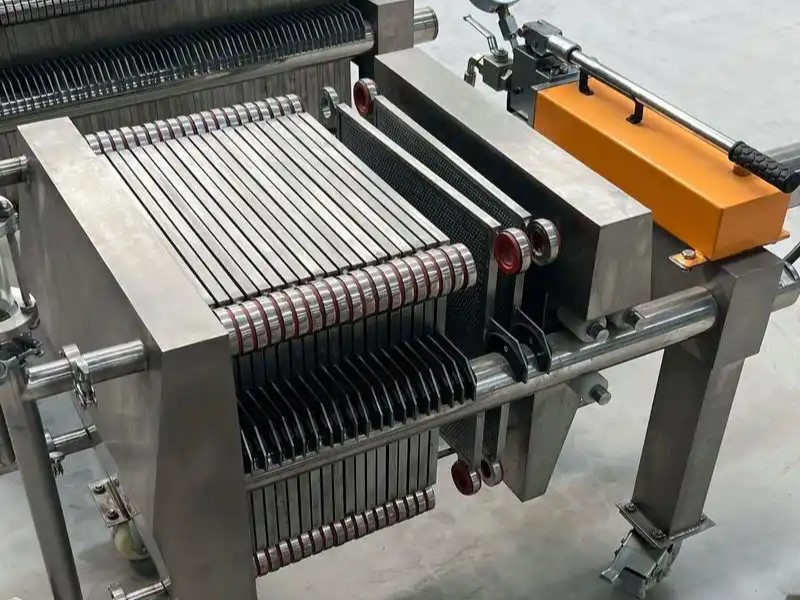
frame filter

Filtration Should Be Planned Together with Equipment Selection

One of the most common mistakes during brewery or kombucha plant design is treating filtration as equipment that can simply be added later.

In reality, filtration affects multiple parts of the production line, including:

For example, introducing cold stabilization requires sufficient cooling capacity and insulated process tanks. Upgrading to membrane filtration may require different transfer pressures, sanitary connections, and cleaning procedures than a simple coarse filter.

Planning these systems together from the beginning makes future expansion significantly easier.


Engineering the Right Filtration Strategy

There is no single “best” place to filter kombucha because there is no single type of kombucha.

A raw craft product, a premium refrigerated beverage, and a shelf-stable retail drink each require different production priorities.

For this reason, filtration should be considered during the overall process design—not only when selecting a filter.

At Tiantai, we work with beverage manufacturers to integrate 発酵容器, cooling systems, sanitary piping, filtration equipment, CIP systems, carbonation, and filling lines into complete turnkey production solutions. Whether your goal is to preserve live cultures, improve product clarity, or prepare kombucha for large-scale commercial distribution, designing the filtration process as part of the entire production line provides greater flexibility, better hygiene, and more consistent product quality over the long term.

ぜひご連絡ください。

お客様のコンブチャプロジェクトについてお聞かせください。

お問い合わせフォームデモ

連絡先

次のプロジェクトをサポートするパートナーをお探しですか?Tiantaiは、革新的なプロセス設計、エンジニアリング、建設、および機器の選択サービスを提供することを熱望しています。お客様のプロジェクトについてお聞かせください。

当社の専門家チームがいつでもお客様をサポートいたします。Tiantaiは、優れた顧客サービスを提供し、当社の製品とサービスにご満足いただくことに専念しています。

上部へスクロール