Should kombucha be chill filtered?

When discussing filtration in beverage production, many people immediately think about beer or whisky. Chill filtration has been widely used in these industries for decades to improve clarity and prevent unwanted haze after storage at low temperatures.

But what about kombucha?

As commercial kombucha production continues to grow, more producers are looking for ways to improve product consistency while keeping the characteristics that make kombucha unique. This raises an important question:

Should kombucha be chill-filtered?

The answer is not as straightforward as it may seem.

Unlike whisky, where chill filtration mainly targets compounds that create cold haze, kombucha is a living fermented beverage with a completely different composition. The main challenge for kombucha producers is not simply removing haze-forming compounds, but finding the right balance between appearance, stability, and the preservation of the natural character of fermentation.

For a craft producer selling refrigerated raw kombucha, sediment and natural variation may represent authenticity. For a commercial brand distributing thousands of bottles internationally, excessive sediment and inconsistent appearance can create completely different challenges.

Therefore, the role of chill filtration in kombucha production needs to be considered from a processing and product-positioning perspective.


What Is Chill Filtration?

Chill filtration is a process where a beverage is cooled before filtration to encourage certain suspended materials to separate from the liquid.

The general principle is simple:

  1. The beverage is cooled under controlled conditions.
  2. Some particles or compounds with reduced solubility become less stable and begin to aggregate.
  3. These particles are removed through filtration.
  4. The clarified beverage continues to the next production stage.

In whisky production, chill filtration is mainly used because some naturally occurring compounds can create a cloudy appearance when the spirit is chilled or diluted. Removing these compounds helps maintain a clear appearance in the bottle.

Beer producers may also use cold treatment to improve physical stability and reduce haze formation.

However, kombucha is different.

The substances responsible for cloudiness in kombucha are closely related to its fermentation process and raw materials.

Understanding these differences is essential before deciding whether chill filtration is suitable for a kombucha production line.

kombucha content

What Creates Cloudiness in Kombucha?

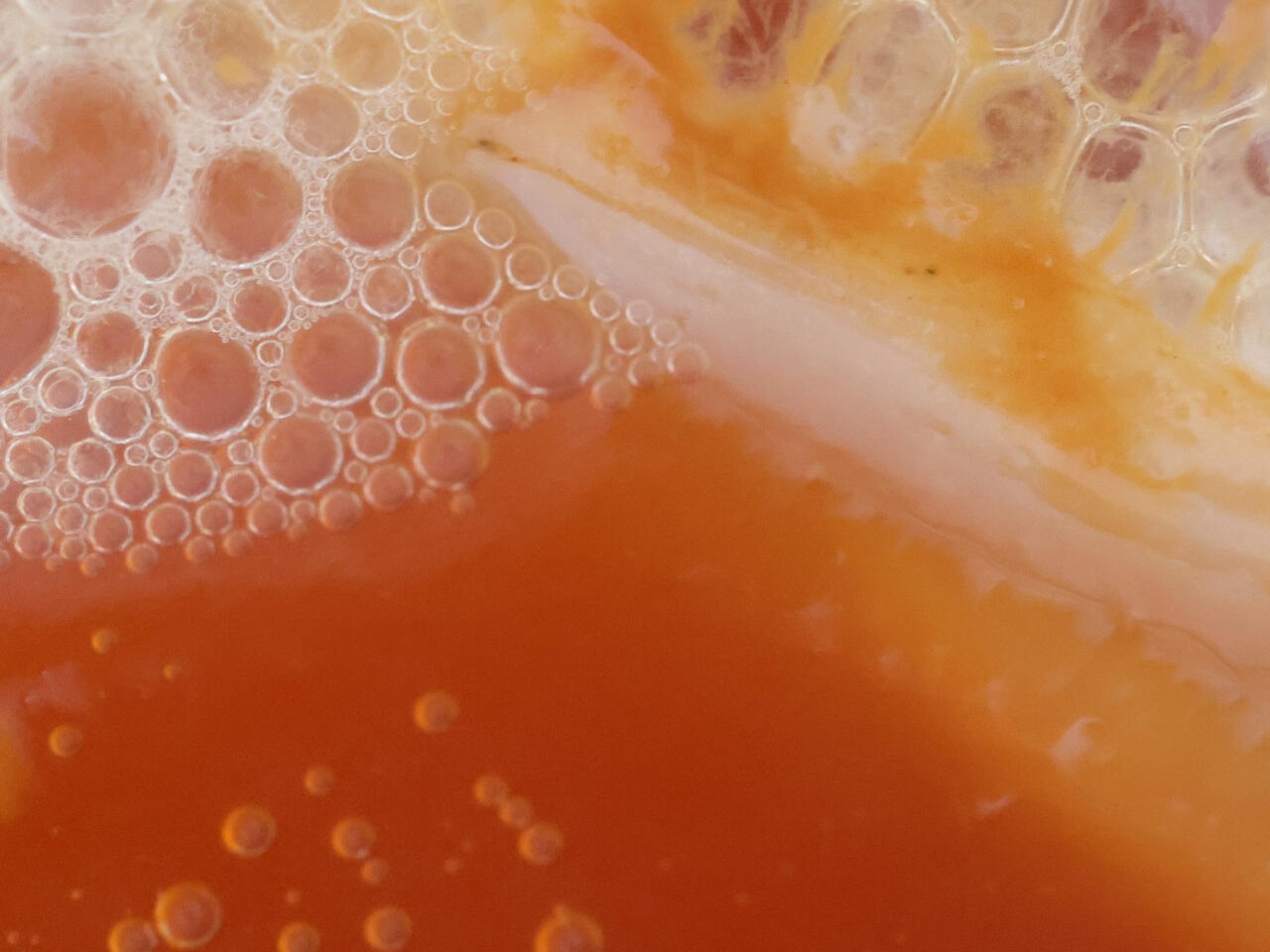
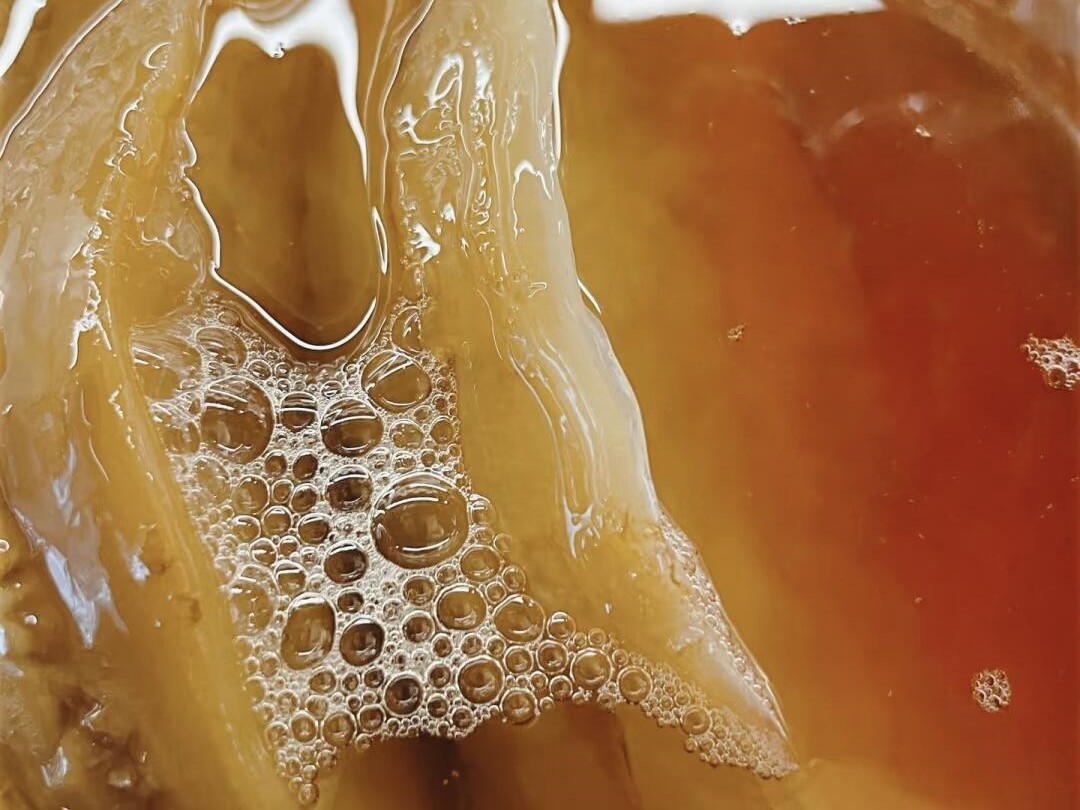
Kombucha is produced by fermenting sweetened tea with a SCOBY (Symbiotic Culture of Bacteria and Yeast). During fermentation, microorganisms transform sugar into organic acids, carbon dioxide, small amounts of alcohol, and a wide range of flavor compounds.

At the end of fermentation, the finished kombucha naturally contains several components that influence its appearance.

Yeast Cells

Yeast is one of the most important components in kombucha fermentation.

During fermentation, yeast produces alcohol and carbon dioxide while contributing to the development of flavor. However, after fermentation is complete, some yeast cells remain suspended in the liquid.

These suspended yeast cells can create:

  • Natural cloudiness
  • Sediment at the bottom of the bottle
  • Variation between batches

From a traditional kombucha perspective, this is not necessarily a problem. Many consumers associate visible sediment with a less processed, living fermented product.

However, from a commercial production perspective, uncontrolled sediment can affect:

  • Visual consistency
  • Consumer expectations
  • Filling performance

This is one reason why larger kombucha manufacturers evaluate different filtration options.

Bacteria and SCOBY-Derived Materials

Kombucha contains a complex community of microorganisms, mainly yeast and acetic acid bacteria.

During fermentation, the SCOBY also produces cellulose structures. Small fragments of this material may remain suspended in the beverage after fermentation.

These natural particles contribute to kombucha’s characteristic appearance but can also create challenges when producers aim for a cleaner and more uniform product.

Tea Compounds and Colloidal Particles

Because kombucha is based on tea, it also contains naturally occurring plant compounds such as polyphenols and proteins.

These compounds can interact with each other and form very small colloidal particles. Depending on the formulation, fermentation conditions, and storage temperature, they may contribute to changes in clarity over time.

This is where cooling can become useful.

Cold treatment may encourage some suspended particles to settle before filtration, making the filtration process more efficient.

However, this mechanism is different from the traditional chill filtration used for whisky.

건강 가리비

Is Chill Filtration Suitable for Kombucha?

Technically, yes.

But the purpose is different.

For kombucha, the process is usually better understood as cold stabilization combined with filtration, rather than a direct equivalent of whisky chill filtration.

The goal is not to remove whisky-style haze-forming compounds. Instead, producers may use controlled cooling to help manage:

  • Yeast sediment
  • Suspended fermentation particles
  • Tea-derived colloids
  • Batch-to-batch appearance variation

A typical approach may involve cooling fermented kombucha in a temperature-controlled tank, allowing unstable particles to settle, and then passing the product through a suitable filtration system.

The effectiveness of this approach depends on many factors, including:

  • Fermentation conditions
  • Tea type
  • Sugar concentration
  • Final pH
  • Desired level of live culture retention
  • Target shelf life

For this reason, there is no universal filtration setting that works for every kombucha brand.


Other Filtration Options Used in Kombucha Production

Although chill filtration can be useful, it is only one possible approach.

Different kombucha producers select different filtration strategies depending on their product positioning.

Coarse Filtration

Used mainly to remove:

  • SCOBY fragments
  • Large particles
  • Excess sediment

장점:

  • Simple operation
  • Low cost
  • Preserves most live cultures

Commonly used for craft and raw kombucha.

Plate or Depth Filtration

Provides finer clarification by removing smaller suspended particles.

장점:

  • Better appearance
  • Improved consistency
  • Suitable for larger production volumes

Membrane Filtration

Microfiltration can remove much smaller particles, including yeast and some microorganisms depending on pore size.

장점:

  • High clarity
  • Longer product stability

단점:

  • May reduce live culture content
  • Higher equipment investment

Pasteurization

Some commercial kombucha products use pasteurization instead of relying on living cultures.

장점:

  • Extended shelf life
  • Strong microbial stability

단점:

  • Eliminates active microorganisms
  • Change the positioning of the product

Filtration should not be considered an isolated step. It needs to work together with fermentation, cooling, carbonation, storage, and filling processes.

A well-designed kombucha production line allows producers to adjust processing intensity according to their brand strategy.

At Tiantai, we help beverage manufacturers develop complete kombucha production solutions, including fermentation tanks, cooling systems, filtration integration, CIP systems, and filling preparation.

Whether the goal is preserving a raw, living kombucha character or creating a clearer and more stable commercial product, the production system should be designed around the final product vision.

The best filtration solution is not always the most aggressive one. It is the solution that creates the right balance between product quality, consumer expectations, and long-term production efficiency.

여러분의 의견을 듣고 싶습니다.

콤부차 프로젝트에 대해 알려주시면 더 빠르게 도움을 드릴 수 있습니다.

문의 양식 데모

연락하기

다음 프로젝트를 지원할 파트너를 찾고 계신가요? Tiantai는 혁신적인 프로세스 설계, 엔지니어링, 시공 및 장비 선택 서비스를 제공하고자 합니다. 예정된 프로젝트에 대해 자세히 알려주시면 도움을 드릴 수 있습니다.

전문가 팀이 언제나 여러분을 도와드립니다. 티안타이는 우수한 고객 서비스를 제공하고 제품 및 서비스에 대한 만족을 보장하기 위해 최선을 다하고 있습니다.

위로 스크롤