
Was ist trinkfertiger Tee (RTD)?
Angesichts des wachsenden Gesundheitsbewusstseins und eines zunehmend schnelllebigen Lebensstils hat sich trinkfertiger Tee (Ready-to-Drink, RTD) weltweit zu einer der am schnellsten wachsenden Getränkekategorien entwickelt. Im Vergleich zu traditionellem losem Tee oder Teebeuteln ist RTD-Tee vollständig aufgebrüht, verpackt und sofort trinkfertig. Er bietet Verbrauchern ein praktisches, sicheres und gleichbleibendes Getränk, wobei der natürliche Geschmack und die wohltuenden Inhaltsstoffe des Tees erhalten bleiben.
Heute umfassen RTD-Tee-Produkte Grüntee, Schwarztee, Oolong-Tee, Weißtee, Kräutertee, Früchtetee und funktionelle Teegetränke. Je nach Marktnachfrage können Hersteller Produkte mit Fruchtsaft, Honig, Pflanzenextrakten, Vitaminen und anderen funktionellen Inhaltsstoffen formulieren, um zuckerarme, zuckerfreie, ballaststoffreiche oder gesundheitsorientierte Getränke zu entwickeln.
Angesichts der steigenden Nachfrage nach natürlichen Inhaltsstoffen und Produkten mit „Clean-Label“-Kennzeichnung setzen immer mehr Getränkehersteller künstliche Aromazusammensetzungen durch Technologien zur direkten Extraktion aus Teeblättern ab. Dieser Ansatz trägt dazu bei, das natürliche Aroma, die Farbe und die bioaktiven Verbindungen des Tees zu bewahren und gleichzeitig die Produktqualität sowie die Wettbewerbsfähigkeit auf dem Markt zu steigern.

Herstellungsprozess von RTD-Tee
Das vorrangige Ziel der RTD-Teeherstellung besteht darin, den natürlichen Geschmack, die Farbe und die Nährstoffe des Tees so weit wie möglich zu erhalten und gleichzeitig Lebensmittelsicherheit, gleichbleibende Produktqualität, hervorragenden Geschmack und eine längere Haltbarkeit zu gewährleisten.
Eine komplette RTD-Tee-Produktionslinie umfasst in der Regel die folgenden Verarbeitungsschritte:
Rohstoffaufbereitung → Tee-Extraktion → Grobfiltration → Abkühlung → Zentrifugalklärung → Mischung → Homogenisierung (optional) → Vakuumentgasung → UHT-Sterilisation → Heißabfüllung → Abkühlung → Verpackung
Der gesamte Produktionsprozess wird automatisch gesteuert, um Temperatur, Verarbeitungszeit, Durchflussrate und die Dosierung der Zutaten präzise zu regeln und so eine gleichbleibende Produktqualität von Charge zu Charge zu gewährleisten.
1. Aufbereitung des Rohmaterials
Hochwertige Rohstoffe bilden die Grundlage für die Herstellung von Premium-Fertigtee.
Als Hauptzutaten werden natürliche Teeblätter wie grüner Tee, schwarzer Tee, Oolong-Tee, weißer Tee und Kräutertee ausgewählt. Während des gesamten Produktionsprozesses wird gereinigtes Wasser verwendet, das den Standards für die Lebensmittelverarbeitung entspricht. Je nach Produktzusammensetzung können Zutaten wie Zucker, Zitronensäure, Vitamine und natürliche Aromen hinzugefügt werden, um den gewünschten Geschmack und das gewünschte Nährwertprofil zu erzielen.
Das Prozesswasser durchläuft in der Regel eine Quarzsandfilterung, eine Aktivkohlefilterung, eine Wasserenthärtung und eine Umkehrosmose (RO)-Behandlung, um eine stabile Wasserqualität und eine zuverlässige Produktkonsistenz zu gewährleisten.
2. Teeaufguss
Die Teeextraktion ist der entscheidende Schritt für den Geschmack und die Qualität von RTD-Tee.
Abgemessene Mengen an Teeblättern werden in eine automatisierte Anlage befördert Tee-Extraktionsbehälter, wobei die Extraktionstemperatur und die Ziehzeit sorgfältig geregelt werden, um die Freisetzung von Tee-Polyphenolen, Aminosäuren, Koffein und Aromastoffen zu maximieren und gleichzeitig übermäßige Bitterkeit zu minimieren.
Zu den typischen Extraktionstemperaturen gehören:
Grüner Tee: 75–85 °C
Oolong-Tee: 80–90 °C
Schwarztee: 90–95 °C
Kräutertee: Auf die Eigenschaften der einzelnen pflanzlichen Zutaten abgestimmt
Automatisierte Zirkulations-Extraktionssysteme verbessern die Extraktionseffizienz und gewährleisten einen gleichbleibenden Teegeschmack über alle Produktionschargen hinweg.
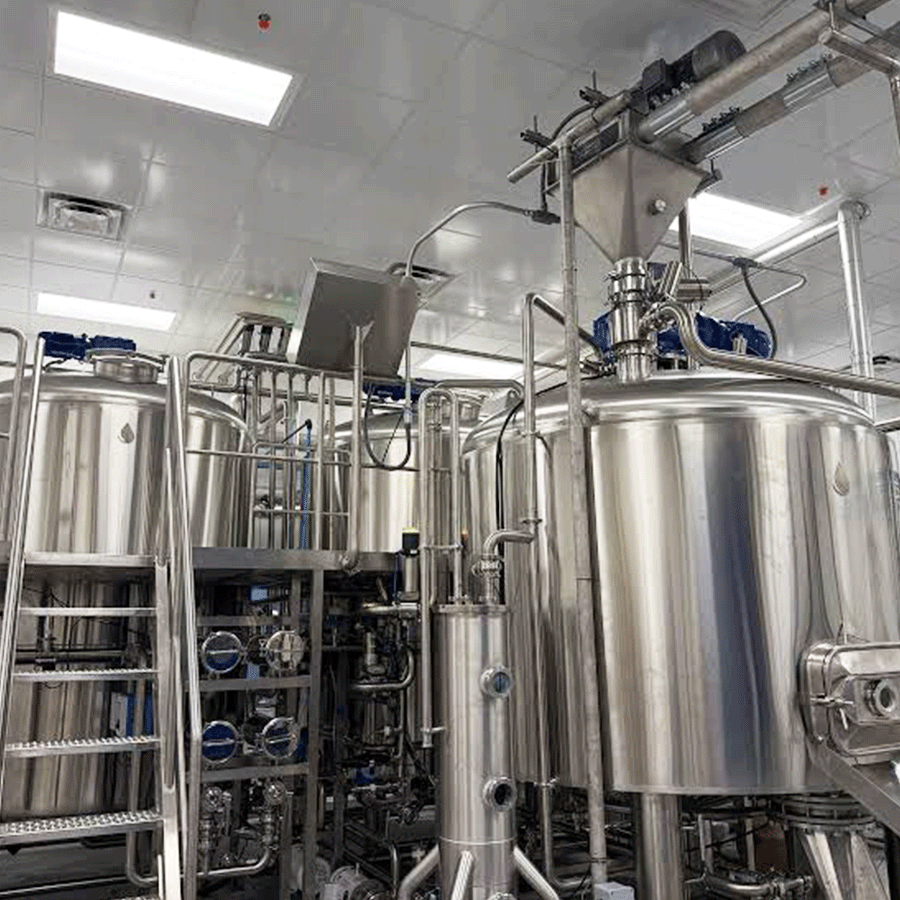
3. Filtration und Klärung von Tee
Nach der Extraktion enthält der Teeaufguss Teepartikel, Fasern und Schwebstoffe, die entfernt werden müssen.
Der Tee läuft zunächst durch ein grobes Sieb Filtration Zunächst werden große Partikel entfernt, anschließend erfolgt eine Zentrifugalklärung, um feine Schwebstoffe zu beseitigen und einen klaren Teeaufguss zu erzielen. Dieser Prozess verbessert das Erscheinungsbild des Produkts, verringert die Sedimentbildung während der Lagerung und erhöht die allgemeine Produktstabilität.
4. Abkühlen des Tees
Der geklärte Tee wird mithilfe eines Plattenwärmetauschers rasch auf etwa 45–60 °C abgekühlt, bevor er in die Mischphase gelangt.
Durch die schnelle Abkühlung wird die Oxidation der Tee-Polyphenole minimiert und der Verlust flüchtiger Aromastoffe verringert, wodurch die natürliche Farbe und der frische Geschmack des Tees erhalten bleiben.
5. Vermischen der Zutaten
Der abgekühlte Tee wird in einen Mischbehälter geleitet, wo gereinigtes Wasser und weitere Zutaten – darunter Zuckersirup, Fruchtsaft, natürliche Aromen, Säureregulatoren und Pflanzenextrakte – automatisch dosiert und gemäß der Produktrezeptur gründlich vermischt werden.
Der Mischvorgang findet in einem geschlossenen Mischsystem statt. Einige Produktionslinien setzen zudem Stickstoff oder Kohlendioxid als Schutzgas ein, um den Kontakt mit Sauerstoff auf ein Minimum zu beschränken und so die natürliche Farbe und das Aroma des Tees zu bewahren.
6. Homogenisierung (optional)
Für RTD-Tee-Rezepturen, die Fruchtsaft, Milchbestandteile, pflanzliche Proteine oder andere funktionelle Bestandteile enthalten, wird eine Hochdruckhomogenisierung empfohlen.
Durch die Homogenisierung wird die Partikelgröße verringert, die Produktstabilität verbessert, eine Phasentrennung oder Sedimentation verhindert und ein geschmeidigeres Mundgefühl erzielt. Reine Teegetränke erfordern in der Regel keine Homogenisierung und können diesen Schritt je nach Produktzusammensetzung überspringen.
7. Vakuumentgasung
Gelöster Sauerstoff beschleunigt die Oxidation der Teepolyphenole, was zu Farbveränderungen, einem Qualitätsverlust des Geschmacks und einer verkürzten Haltbarkeit führt.
Durch die Vakuumentgasung wird vor der Sterilisation gelöster Sauerstoff entfernt, wodurch das natürliche Aroma des Tees erhalten bleibt, die Produktstabilität verbessert und die Haltbarkeit verlängert wird.
8. UHT-Sterilisation
Da die meisten RTD-Tegetränke als säurearme Produkte eingestuft werden (in der Regel mit einem pH-Wert über 4,6), wird die Ultrahochtemperatursterilisation (UHT) weit verbreitet eingesetzt.
Das Teegetränk wird für einige Sekunden rasch auf etwa 127–135 °C erhitzt, wodurch Bakterien, Hefen und Schimmelpilze wirksam abgetötet werden, während der Verlust an natürlichem Geschmack und Nährstoffen auf ein Minimum reduziert wird.
In Kombination mit der Heißabfülltechnologie sorgt die UHT-Sterilisation für kommerzielle Sterilität ohne den Einsatz künstlicher Konservierungsstoffe und ermöglicht so eine langfristige Lagerung bei Raumtemperatur.
9. Heißabfüllung und Verpackung
Nach der Sterilisation wird das Teegetränk bei einer Temperatur von etwa 84–88 °C in PET-Flaschen abgefüllt und sofort mit sterilisierten Verschlüssen verschlossen.
Die Restwärme im Inneren der Flasche sterilisiert den Flaschenhals und den Verschluss zusätzlich, bevor die Flaschen in einen Kühltunnel gelangen, wo sie allmählich abgekühlt werden, um eine Verformung der PET-Flaschen zu verhindern und gleichzeitig die Produktqualität zu gewährleisten.
Nach dem Abkühlen durchlaufen die Flaschen automatische Trocknungs-, Etikettier-, Datumscodier-, Kartonverpackungs- und Palettieranlagen, bevor sie in das Lager und den Vertrieb gelangen. Die fertigen Produkte werden anschließend an Supermärkte, Convenience-Stores, E-Commerce-Plattformen, Restaurants und andere Einzelhandelskanäle geliefert.
Da die Nachfrage der Verbraucher nach natürlichen, zuckerarmen und funktionellen Teegetränken weiter zunimmt, entwickelt sich die Herstellung von trinkfertigen Teegetränken in Richtung höherer Automatisierung, intelligenterer Prozesse und besserer Produktqualität.
Tiantai bietet komplette, schlüsselfertige Lösungen für RTD-Tee-Produktionslinien, die auf die Produkttypen, Produktionskapazitäten, Verpackungsformate und Automatisierungsanforderungen der Kunden zugeschnitten sind. Unsere Dienstleistungen umfassen die Prozessplanung, die Herstellung der Anlagen, die Installation, die Inbetriebnahme sowie technische Schulungen.
Ob für die Entwicklung im Labormaßstab, die Pilotproduktion oder die industrielle Großproduktion – unsere maßgeschneiderten Lösungen unterstützen unsere Kunden beim Aufbau effizienter, zuverlässiger und intelligenter Produktionsanlagen für RTD-Tee.