
The tea‑beverage market keeps expanding, with growing diversity in product categories such as sugar‑free pure tea, fruit‑flavoured compound tea, milk tea, and sugar‑free sparkling tea. Accordingly, process complexity of production lines varies significantly. Many newly‑built tea‑beverage plants and beverage OEM manufacturers tend to encounter pitfalls during production‑line procurement. In most cases, poor outcomes stem not from inferior equipment, but from a failure to distinguish process logics corresponding to different product positioning. The first step to selecting a tea‑beverage production line is to clarify process and equipment differences among pure tea beverages, compound tea beverages and concentrated tea juice.
Production Process of Pure Tea Beverages
Raw Material Preprocessing
Tea leaves undergo preliminary treatment to remove dust, fine debris, sand and metallic impurities. Green tea is generally screened without crushing, while black tea is moderately crushed to boost extraction efficiency.
Extraction
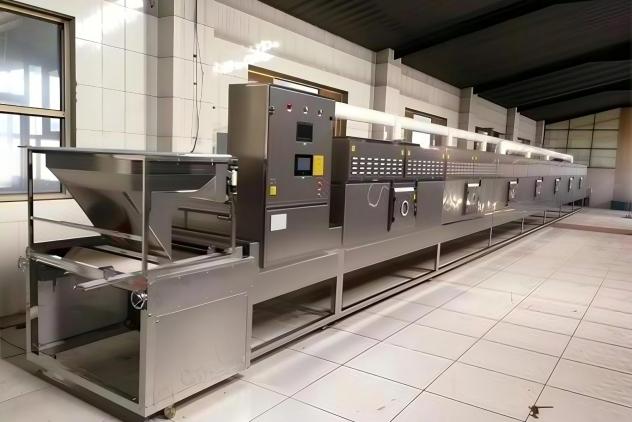
A 3-stage continuous countercurrent extraction tower has become standard equipment for pure tea production lines. Tea residues are screw-pressed to recover residual tea liquor, significantly improving raw material utilization. Crude filtrate from extraction proceeds to multi-stage clarification treatment.
Clarification & Filtration
Basic simple filtration cannot resolve the tea cream haze (cold turbidity) issue inherent to pure tea. Multi-stage filtration is mandatory for pure tea production:
Primary bag coarse filter: intercept large tea leaf particles
Secondary disc high-speed centrifuge: remove suspended particles and tea colloids, reducing the turbidity of tea liquor to ≤5 NTU
Special hollow fiber cross-flow ultrafiltration unit for tea drinks: operates at ambient temperature via cross-flow filtration, precisely intercepting pectin, macromolecular proteins and polyphenol aggregates (the primary cause of cold turbidity). It fully retains tea polyphenols, theanine and caffeine. After filtration, tea liquor turbidity drops below 0.5 NTU, with no natural precipitation during 3 months of ambient storage, eliminating the need for extra stabilizers.
Blending, Sterilization & Filling
Pure tea requires minimal blending, only tiny additions of granulated sugar and VC antioxidant. After blending, the liquor flows into the sterilization system before final filling.
Blended Tea Beverages Are Not Equivalent to Pure Tea Beverages
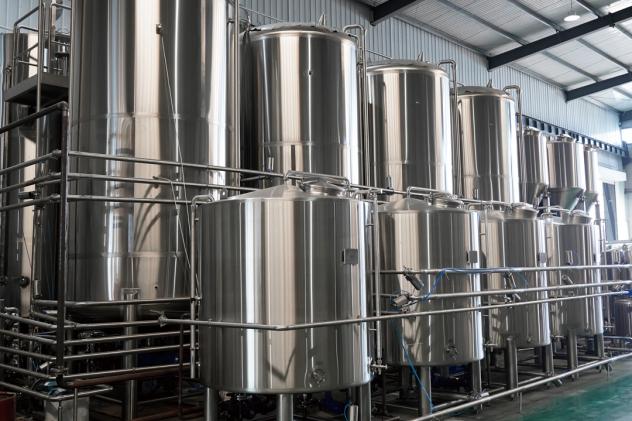
Many buyers confuse the two types of products when sourcing production lines. They either apply pure tea lines to produce blended tea, or use low-spec blended tea equipment to manufacture sugar-free pure tea, which eventually leads to unqualified product quality and incomplete line functions. The two categories have essential differences in product definition and production logic:
- Pure tea beverage: The base liquid is only tea extract from tea leaves with minimal auxiliary materials; production focuses on tea liquor clarification and sediment prevention.
- Blended tea beverage: Taking tea liquor as the base, it is compounded with water, fruit juice concentrate, sugar syrup, acidulants, flavors, stabilizers and other auxiliary materials to form flavored drinks. Its production priority lies in uniform mixing of multi-component materials and consistent flavor performance. High-standard clarification equipment such as ultrafiltration units is not compulsory, while a complete auxiliary material processing unit is necessary.
To put it simply: the production flow of blended tea beverages adds a full set of auxiliary material processing, homogenization and degassing procedures on the basis of the complete tea liquor preparation process for pure tea, instead of two completely independent and irrelevant production lines.
Production Line for Blended Tea Beverages
The pre-processing, extraction and basic filtration procedures for tea leaves in blended tea production are fully compatible with those for pure tea. After clarified tea liquor is obtained, a complete blending process is added as follows:
Precise multi-component blending: sequentially complete water dilution, sugar syrup preparation, pH adjustment with acidulants, flavor blending with fruit juice/flavors, and stabilizer mixing;
Homogenization: prevent beverage stratification;
Vacuum degassing: remove dissolved oxygen in tea liquor to avoid oxidation discoloration and flavor loss of tea polyphenols;
Secondary fine filtration: filter tiny impurities brought by auxiliary materials;
UHT ultra-high temperature instantaneous sterilization, suitable for heat-sensitive raw materials like fruit juice;
Optional hot filling or aseptic cold filling.
Compared with pure tea production lines, blended tea lines are equipped with extra sugar dissolving tanks, blending tanks, homogenizers and vacuum degassers. If manufacturers need to produce both pure tea and blended tea beverages, Tiantai provides customized integrated tea beverage production lines.
Selection of Sterilization and Filling Systems
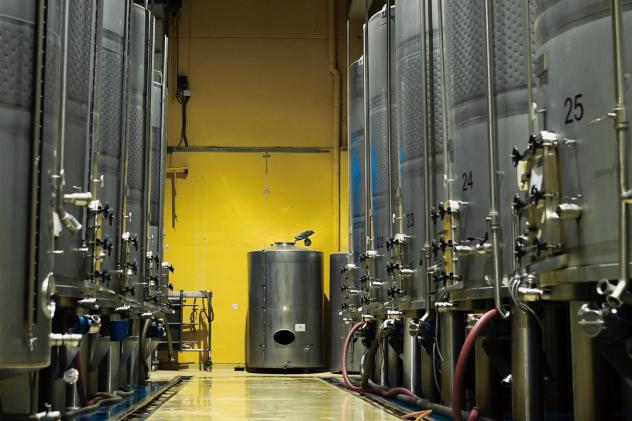
Whether for pure tea or blended tea beverages, sterilization and filling account for a large proportion of total investment.
| Filling Type | Working Principle | Advantages | Disadvantages |
| Hot Filling | After UHT sterilization, materials are filled at 85~95℃ | Mature equipment, relatively low cleanliness requirements for filling workshops, low investment | High temperature damages tea flavor; PET bottles must resist high temperature |
| Aseptic Cold Filling | Materials are cooled to ambient temperature after UHT sterilization, then filled in a Class 100 aseptic environment | Superior color and aroma retention, friendly to heat-sensitive substances; one core technical solution to relieve cold turbidity of pure tea | Higher equipment investment and operation & maintenance costs |
Selection Suggestions
For startups or clients with limited budgets: Choose hot filling lines with high cost performance and mature operation & maintenance.
For pure tea or high-end premium products: Adopt aseptic cold filling for better flavor restoration.
Conclusion
Selecting a tea beverage production line is not simply stacking individual machines, but engineering implementation based on product positioning. The core of pure tea production lies in clarification, while blended tea production centers on product stability. As a professional tea beverage equipment manufacturer, Tiantai delivers far more than single machines — we fully understand the process logic of every tea beverage production line, helping customers select suitable equipment, make cost-effective investments and achieve stable production.
If you are planning a new beverage factory, feel free to contact Tiantai to obtain customized tea beverage production solutions.