
Sugar is one of the most important raw materials in kombucha fermentation, but asking for a single “correct” sugar level can be misleading.
Kombucha microorganisms need fermentable carbohydrates to grow and carry out the reactions that produce the beverage’s characteristic acids, aroma compounds, and small amounts of alcohol and carbon dioxide. At the same time, the amount of sugar added at the beginning has a direct influence on fermentation speed, acidity, residual sweetness, and the composition of the finished beverage.
For commercial production, the goal is therefore not to add as much sugar as possible or simply copy a small-batch recipe. The starting sugar concentration needs to fit the culture, tea base, fermentation conditions, target fermentation time, and desired final product.
As a general reference, published kombucha studies commonly use sucrose concentrations in the range of approximately 5–10% w/v, equivalent to roughly 50–100 g/L. Other formulations fall outside this range depending on the fermentation strategy and product specification. Around 10% w/v has also been widely used in traditional and experimental kombucha production.
For a commercial kombucha brewery, however, this range should be treated as a starting point rather than a universal recipe.
Why does kombucha need sugar?
Sugar is the main fermentable carbon source in traditional kombucha.
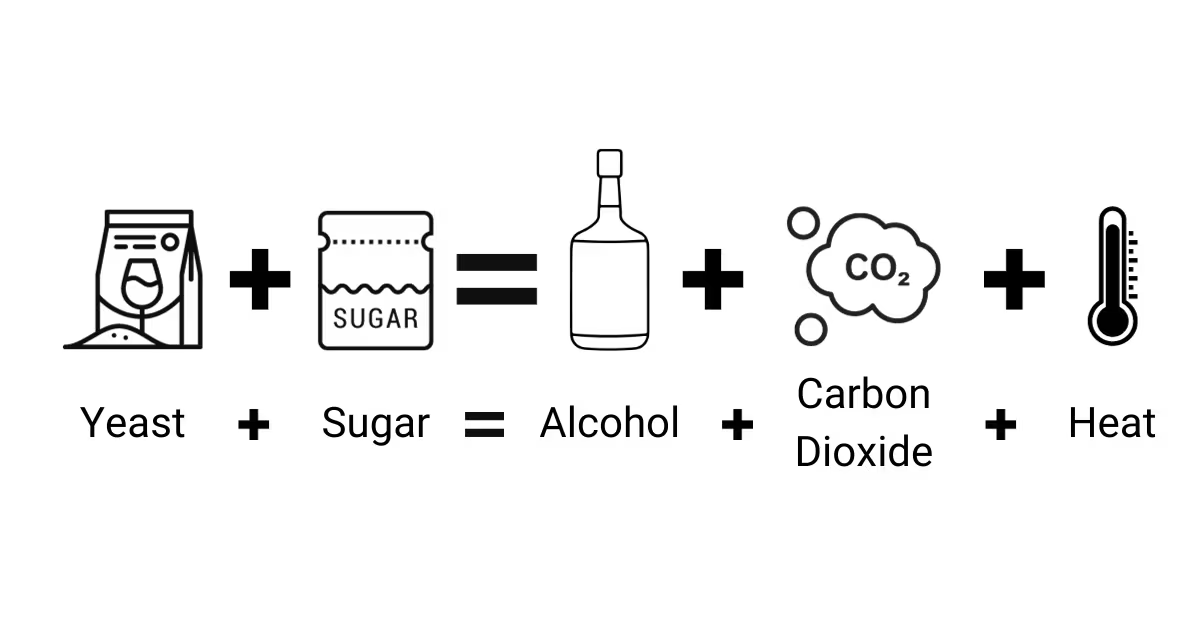
The fermentation culture contains yeasts and acetic acid bacteria that interact with the sugars in the sweetened tea. Sucrose is commonly hydrolyzed by yeast into glucose and fructose. The yeast can then metabolize these sugars and produce ethanol and carbon dioxide, while acetic acid bacteria use compounds generated during fermentation to produce organic acids such as acetic acid and gluconic acid.
This means that sugar is not simply added to make kombucha taste sweet.
Part of the original sugar becomes fermentation products.
As fermentation progresses, the beverage can become less sweet while developing more acidity, fermented aroma, and other characteristics associated with kombucha.
The starting sugar concentration therefore influences the raw material available to the microbial culture and, consequently, the direction and extent of fermentation.
How much sugar is commonly used?
A useful commercial starting range is approximately 50–100 g of sucrose per liter of sweetened tea, corresponding to 5–10% w/v.
Within that range, the exact formulation can vary considerably.
Some producers may formulate a relatively lower-sugar kombucha to limit residual sweetness or reduce the amount of fermentable substrate carried into later processing. Others may begin with a higher sugar concentration when a longer fermentation or different product profile is intended.
Research comparing different sucrose concentrations has shown that sugar concentration can affect fermentation rate and organic-acid development. At the same time, fermentation temperature can have an even larger effect on the sensory profile of the final beverage.
This is why a sugar target should never be considered independently from temperature, culture activity, and fermentation time.
50 g/L vs. 100 g/L: What Changes?
The difference between 50 g/L and 100 g/L is substantial from a fermentation perspective.
At approximately 50 g/L, the culture has a moderate supply of fermentable sugar. At approximately 100 g/L, the initial substrate load is roughly twice as high.
That does not mean the second batch will simply ferment “twice as much.”
Microbial metabolism does not increase linearly with sugar concentration. At higher concentrations, the osmotic environment can become less favorable for some microorganisms, and the actual rate of sugar consumption depends on the microbial community and fermentation conditions. High sugar concentrations have been reported to inhibit microbial growth under some kombucha fermentation conditions.
For this reason, increasing sugar is not a simple way to accelerate production.
The producer needs to evaluate what happens to the entire fermentation profile.
What happens if there is too little sugar?
Insufficient fermentable sugar can limit microbial activity.
When the culture lacks enough available substrate, fermentation may weaken or reach its endpoint earlier than intended. The beverage may retain a relatively light fermentation character and may not develop the desired balance between sweetness and acidity.
For products relying on natural carbonation, insufficient residual fermentable sugar can also reduce CO₂ production during secondary fermentation.
However, “more sugar” is not automatically the solution.
If the intended finished kombucha is designed to have relatively low residual sugar, adding excessive sugar during primary fermentation simply creates a larger substrate load that must later be controlled.
The right target is the amount of fermentable sugar required for the intended fermentation—not the maximum amount that the culture can consume.
What happens if there is too much sugar?
Excessive starting sugar creates a different set of problems.
First, a high substrate concentration can change the environment experienced by the microorganisms.
Second, if fermentation does not consume the additional sugar, the finished beverage may retain more sweetness than intended.
Third, more fermentable sugar provides greater potential for continued microbial activity after the main fermentation has finished.
This becomes particularly important for products that undergo secondary fermentation or are packaged while still biologically active.
Residual sugar can continue to serve as a substrate for yeast, which means that fermentation may continue during later stages. This can affect carbonation, acidity, and alcohol formation.
For commercial kombucha, sugar therefore needs to be considered together with the complete production timeline rather than only the primary fermentation tank.
Sugar does not simply “disappear” during fermentation
One of the most useful ways to understand kombucha fermentation is to think of sugar as being transformed rather than simply removed.
Sucrose can first be hydrolyzed into glucose and fructose. These sugars then enter different metabolic pathways within the mixed microbial culture.
Yeasts can produce ethanol and carbon dioxide from fermentable sugars. Acetic acid bacteria can subsequently oxidize ethanol and other substrates into organic acids. Glucose can also contribute to the formation of gluconic acid and cellulose-related products.
As a result, changes in sugar concentration are accompanied by changes in:
- ethanol;
- organic acids;
- pH;
- carbon dioxide;
- aroma compounds;
- residual sweetness.
This is why the starting sugar concentration can influence far more than sweetness alone.
Sugar, acidity, and fermentation time
Sugar concentration and fermentation time are closely connected.
If the initial sugar load is increased while all other conditions remain unchanged, more fermentable substrate is available to the culture. Depending on the microorganisms and operating conditions, this can change the rate at which acids and other fermentation products accumulate.
However, fermentation time cannot be predicted from sugar concentration alone.
Temperature, starter condition, tea composition, oxygen availability, and microbial community all affect fermentation kinetics.
Research monitoring different kombucha formulations has shown that changes in sucrose concentration can alter fermentation behavior, while temperature strongly influences acid production and sensory characteristics.
For commercial production, this means that a formulation should be validated under the actual fermentation conditions used in the plant.
Sugar and the final sweetness of kombucha
Starting sugar concentration and final sweetness are not the same thing.
A kombucha can start with a relatively high sugar concentration and finish with substantially less sucrose after fermentation. Conversely, a lower initial sugar concentration can still produce a beverage with noticeable residual sweetness if you stop fermentation earlier.
The finished product therefore depends on both:
- How much sugar is added
- How much sugar the fermentation is allowed to consume
This distinction matters most when you use the same kombucha base to make several flavors.
For example, fruit juice can contribute additional glucose, fructose, and other sugars after primary fermentation. A flavored product can therefore have a very different fermentable sugar profile from the original tea fermentation.
The flavoring stage should therefore be included in the overall sugar management strategy.
Why sucrose is commonly used
Sucrose remains the most common sugar source for conventional kombucha production.
One reason is that it is readily available and economical. Another is that the microbial culture can efficiently convert it into simpler sugars that enter the fermentation pathways.
Alternative carbohydrate sources are possible, including glucose and fructose, and research has examined a wide variety of substrates. But changing the carbohydrate source can change fermentation behavior and the resulting chemical and sensory profile.
For this reason, changing from sucrose to another sweetener should be treated as a formulation change rather than a simple one-to-one substitution.
A commercial producer should evaluate the new substrate through actual fermentation trials before applying it to production.
Should you measure sugar by weight or brix?
For commercial production, sugar should be formulated by weight whenever precise dosing is required.
A simple concentration such as 60 g/L is straightforward to reproduce because the amount of sugar is directly connected to the volume or mass of the production batch.
Brix measurements are also useful during production because they provide a convenient indication of dissolved soluble solids. However, a refractometer reading is not identical to a direct measurement of sucrose concentration once the beverage contains acids, ethanol, tea compounds, and other dissolved substances.
In other words, Brix is useful for monitoring trends, but it should be interpreted in the context of the complete kombucha matrix.
A commercial brewery may therefore use initial formulation records together with in-process measurements and laboratory analysis to understand how the sugar profile changes during fermentation.
How starter liquid changes the sugar calculation
Starter liquid is another reason why commercial sugar targets cannot be based solely on the fresh sweet tea recipe.
Starter liquid is itself a fermented beverage and may still contain residual sugars.
When it is added to a new batch, it contributes not only microorganisms and acidity but also whatever fermentable carbohydrates remain in the starter.
The same applies to fruit juice, concentrates, syrups, or other ingredients added later in the production process.
A production manager should therefore think about the total fermentable sugar entering the system, rather than only the sugar weighed into the tea preparation tank.
This is particularly important when comparing different production recipes.
A formulation using 10% sugar in the base tea is not necessarily equivalent to another formulation that uses less base sugar but adds a high-sugar fruit component before secondary fermentation.
Sugar and natural carbonation
Sugar becomes even more important when kombucha is naturally carbonated.
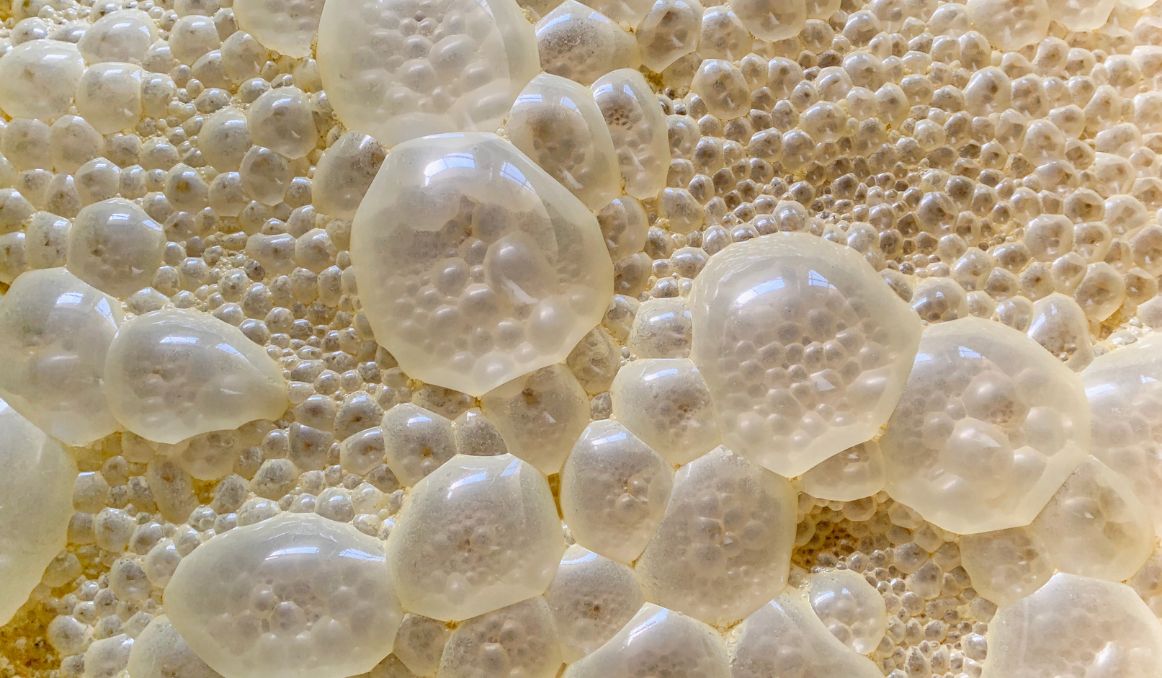
Natural carbonation depends on continued microbial activity in a relatively closed environment. Yeasts metabolize available fermentable sugars and produce CO₂, part of which remains dissolved in the beverage.
The amount of fermentable sugar remaining at this stage therefore influences the potential for additional carbonation.
But there is an important trade-off. More fermentable sugar can mean more CO₂ production, but it can also support further ethanol formation and continued changes in acidity and flavor.
This is one reason why natural carbonation requires tighter sugar control than simply adding “a little more sugar” for more bubbles.
Commercial producers need to consider residual sugar, yeast activity, temperature, pressure, and carbonation time together.
Sugar and alcohol formation
Sugar management is also closely connected to alcohol.
Yeast converts fermentable sugars into ethanol and carbon dioxide during alcoholic metabolism. Acetic acid bacteria can subsequently oxidize ethanol into organic acids under suitable conditions.
The actual alcohol development of kombucha therefore depends on more than starting sugar concentration.
It is influenced by:
- sugar concentration;
- yeast activity;
- fermentation temperature;
- oxygen availability;
- fermentation duration;
- microbial composition;
- secondary fermentation;
- post-packaging conditions.
For commercial producers, this means that reducing sugar in the recipe is only one possible way to influence alcohol formation. Process control is equally important.
A better way to determine the sugar level
Rather than asking for one universal sugar number, a commercial producer can work backward from the desired product.
Start with the target beverage profile.
- How much residual sweetness should remain?
- How acidic should the product become?
- How long should primary fermentation take?
- Will the product undergo secondary fermentation?
- Will fruit or juice be added later?
- Will the product be naturally or force carbonated?
- What alcohol specification must the final product meet?
Once these requirements are defined, the initial sugar concentration can be established through pilot fermentation and then validated at production scale.
This approach is more reliable than simply selecting a sugar percentage from a generic kombucha recipe.
Tiantai designs commercial kombucha systems around the relationship between raw-material preparation and fermentation rather than treating sugar addition as an isolated operation. Depending on production capacity and process requirements, the system can integrate tea preparation, sugar mixing, fermentation, temperature control, transfer, CIP, filtration, carbonation, and filling into a coordinated production line.
Conclusion
Kombucha needs sugar because the fermentation culture needs a fermentable carbon source. But commercial kombucha production is not a matter of finding the highest or lowest possible sugar concentration.
A starting level of approximately 50–100 g/L sucrose is commonly reported for kombucha fermentation, but the appropriate target depends on the culture, tea base, temperature, fermentation time, desired residual sweetness, carbonation method, and final product specification.
Too little sugar can limit fermentation. Too much can increase residual sweetness, alter fermentation behavior, and create additional challenges during secondary fermentation and packaging.
For a commercial producer, the more useful question is therefore not simply:
“How much sugar does kombucha need?”
It is:
“What starting sugar concentration gives our culture the right amount of substrate to reach the desired final product under our actual production conditions?”
Once that target is established, the formulation, fermentation tanks, mixing system, temperature control, monitoring, and downstream processing can all be designed around the same production objective.