
Water is one of the first process inputs in kombucha production, yet chlorine is often overlooked because chlorinated tap water is perfectly acceptable for drinking.
The situation is different when that same water becomes part of a controlled fermentation process.
Municipal water is commonly disinfected with free chlorine or chloramine to control microorganisms in the distribution system. These disinfectants are useful for producing safe drinking water, but kombucha relies on living yeasts and bacteria to carry out fermentation. Residual disinfectant entering the brewing process can therefore work against the biological culture that the producer is trying to maintain. Research specifically examining water chemistry in kombucha has identified chlorine as a potential negative factor for the fermentation culture, while also noting that water chemistry can affect the finished beverage’s sensory and chemical properties.
This does not mean that every batch made with municipal water will fail. The important point is that water suitable for drinking is not automatically optimized for fermentation.
For commercial kombucha production, chlorine should be treated as a process variable that needs to be measured and controlled.
Why is chlorine added to drinking water?
Chlorine is widely used as a drinking-water disinfectant because it inactivates microorganisms and provides a residual disinfecting effect as water moves through distribution systems.
Some water utilities instead use chloramine, usually monochloramine, because it remains more stable in distribution systems and provides longer-lasting disinfection. Both approaches are standard methods of maintaining drinking-water quality.
From a beverage-production perspective, however, the same residual disinfecting activity can become undesirable.
Kombucha fermentation depends primarily on a mixed microbial community of yeasts and acetic acid bacteria. Yeasts metabolize sugars and produce ethanol and carbon dioxide, while acetic acid bacteria participate in the oxidation of fermentation products and the formation of organic acids.
The brewing water therefore needs to provide a suitable environment for these microorganisms rather than continue to exert a disinfecting effect.
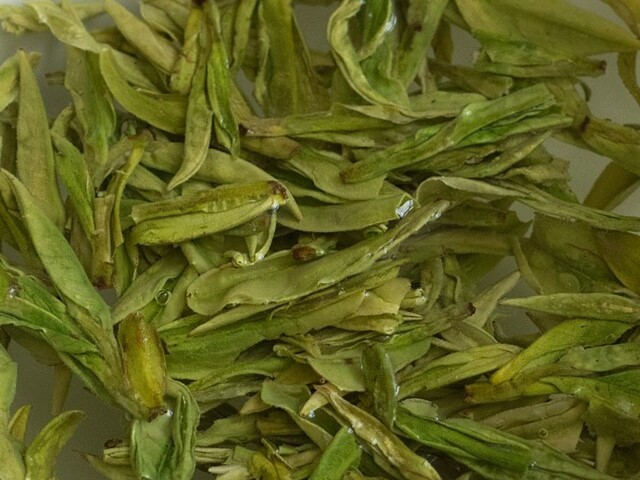
What does chlorine do during kombucha production?
The most direct concern is its interaction with microorganisms.
Free chlorine is a reactive disinfectant that can damage or inactivate microbial cells. This is precisely why it is useful in drinking-water treatment. Studies of waterborne microorganisms have demonstrated that free chlorine can reduce viable bacterial and fungal populations under appropriate exposure conditions.
Kombucha is obviously not the same microbial system as a drinking-water community, and there is limited research establishing a universal chlorine concentration at which kombucha cultures stop functioning.
Nevertheless, the underlying process principle is straightforward:
If a beverage depends on living microorganisms, residual disinfectant is not a desirable variable to carry into the fermentation stage.
A small amount of residual chlorine may not produce an obvious fermentation failure. Its effect can instead appear as reduced culture activity, slower acidification, altered fermentation behavior, or greater batch-to-batch variation.
This is particularly relevant when commercial production relies on a repeatedly propagated kombucha culture. The same process conditions are expected to be reproduced across many fermentation cycles, so even relatively small changes in the upstream water can become operationally significant.
Chlorine can affect the tea before fermentation starts
There is another reason to control chlorine: kombucha does not begin with the microorganisms.
It begins with tea extraction.
The brewing water contacts tea leaves before the starter culture is introduced. Water chemistry affects the extraction of tea compounds, and chlorine can also participate in reactions with organic compounds present in tea.
Research on tea brewed with chlorinated water has demonstrated that residual chlorine can react with tea constituents and contribute to the formation of chlorinated disinfection by-products. The study also identified evidence that chlorine can react with polyphenolic compounds from tea leaves.
For kombucha production, this matters because the tea infusion becomes the substrate for fermentation.
If the water has already altered the tea composition before inoculation, the producer is not starting the fermentation with exactly the same medium.
This creates a useful way of thinking about brewing water:
Water quality → Tea extraction → Fermentation environment → Finished kombucha
Chlorine can potentially influence the process at more than one point in that chain.
Can chlorine change kombucha flavor?
Yes, although the effect should not be reduced to the simple statement that “chlorinated water always makes kombucha taste bad.”
Residual chlorine itself can produce noticeable taste and odor characteristics in water, and chlorination can create additional compounds through reactions with organic matter. Water-quality research has long established that chlorine-related compounds can influence taste and odor, with some chlorinated phenolic compounds having particularly low sensory thresholds.
In tea, the issue becomes more complicated because the water interacts with polyphenols and other compounds extracted from the leaves. Research has demonstrated that brewing-water conditions affect the sensory and physicochemical properties of tea infusions.
The result is that water with residual chlorine can introduce another source of variation before fermentation even begins.
For a commercial kombucha producer, this can be more important than detecting a strong chlorine taste in the finished drink. The concern is process consistency.
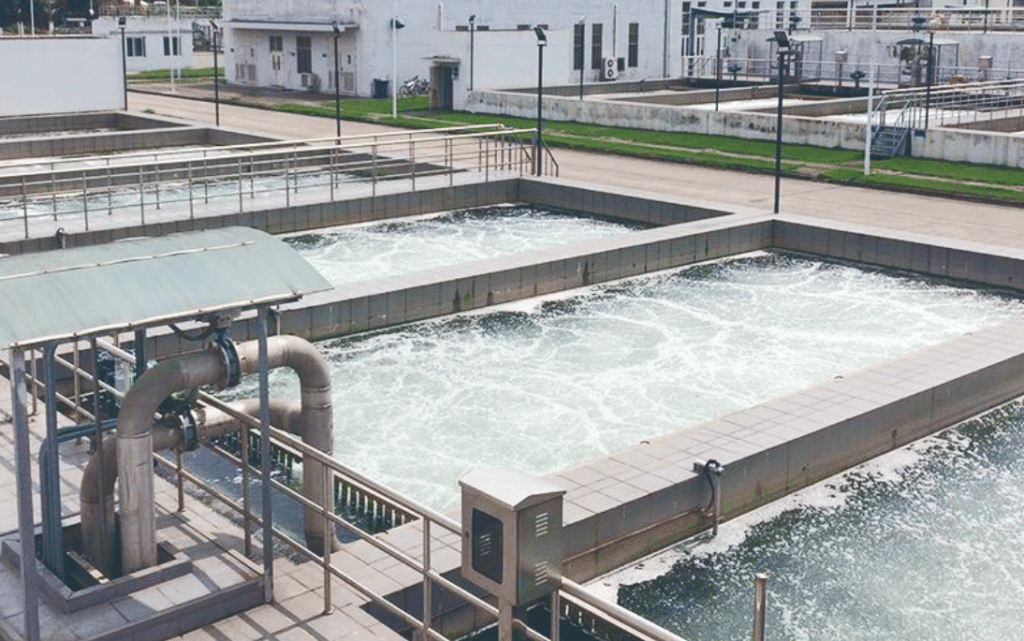
Chlorine vs. Chloramine: They are not the same
Commercial water treatment discussions often use the terms chlorine and chloramine as though they were interchangeable.
They are not.
Free Chlorine
Free chlorine refers to active chlorine species such as hypochlorous acid and hypochlorite. It is relatively reactive and is widely used for primary disinfection.
Because of this reactivity, free chlorine can usually be reduced relatively readily through appropriate treatment such as activated-carbon filtration. Activated carbon is widely used for dechlorination because it reacts with and removes free chlorine from water.
Chloramine
Chloramine, particularly monochloramine, is chemically more stable.
This stability is useful for drinking-water distribution because it allows a longer-lasting disinfectant residual. It also means that treatment methods designed only for free chlorine may not remove chloramine effectively.
Simply assuming that “a carbon filter removes all chlorine” can therefore lead to disappointing results when the municipal supply actually uses chloramine.
The treatment method needs to be selected according to the disinfectant present in the incoming water.
Does boiling remove chlorine?
Boiling is sometimes used by small-scale brewers to prepare water.
Heating can help reduce free chlorine, particularly because some chlorine species are volatile. However, relying on boiling as the universal solution is not appropriate for every water source, particularly where chloramine is used.
Official drinking-water guidance notes that boiling does not effectively remove monochloramine.
There is also a practical limitation at commercial scale.
Heating several thousand liters of brewing water simply to address residual disinfectant can add unnecessary energy consumption and complicate the production process. A dedicated water-treatment system is generally more practical when a commercial brewery needs consistent water quality.
How can chlorine be removed from kombucha brewing water?
The appropriate treatment depends on what is actually present in the source water.
Activated Carbon Filtration
Activated carbon is one of the most common approaches for reducing free chlorine.
It can be installed upstream of tea preparation so that the brewing water reaches the tea tank with a much lower disinfectant residual. Activated carbon also has the advantage of retaining many of the minerals present in the original water rather than stripping the water to an extremely low mineral level.
However, carbon performance depends on the water chemistry, contact conditions, carbon type, and filter condition. A carbon filter should therefore not be considered effective indefinitely simply because it was effective when first installed.
Catalytic Activated Carbon
Where chloramine is present, catalytic activated carbon is often considered because chloramine is more difficult to remove than free chlorine.
Treatment performance depends on the specific water source and system design, so the municipal disinfectant should be identified before the treatment equipment is selected. Research on chloramine removal has demonstrated that activated-carbon-based treatment can be effective, but the operating conditions and carbon characteristics matter.
Reverse Osmosis
Reverse osmosis can provide a much broader reduction in dissolved substances and is therefore useful when the brewery also needs control over hardness, TDS, or other dissolved constituents.
However, RO is not automatically the best solution simply because it produces highly purified water.
Tea and kombucha production can also be influenced by mineral composition. Recent research on kombucha water chemistry has shown that different ionic profiles can change fermentation-related properties and sensory characteristics.
For this reason, an RO-based beverage water system may require controlled remineralization rather than sending completely demineralized water directly into the tea-brewing process.
Should all brewing water be completely dechlorinated?
For commercial kombucha production, the target should generally be controlled brewing water, not simply “the purest possible water.”
Removing chlorine addresses the disinfectant issue, but other water parameters still matter.
These can include:
- hardness;
- alkalinity;
- calcium;
- magnesium;
- TDS;
- pH;
- iron and manganese;
- source-water variability.
Water chemistry can influence tea extraction as well as fermentation behavior. A recent study specifically investigating kombucha found that changes in ionic composition affected parameters including pH, titratable acidity, ethanol production, and other chemical characteristics.
Therefore, a sensible treatment strategy usually starts with an analysis of the incoming water.
The plant should know what is actually present before deciding what needs to be removed.
What happens if chlorine is not controlled?
The effect may not always appear as an obvious failure.
More commonly, a producer may notice that fermentation behaves differently from one production run to another.
Possible observations include:
Slower fermentation
The active culture may not perform as expected, particularly when residual disinfectant conditions are higher than usual.
Delayed acidification
If microbial activity is affected, the expected pH trajectory can change.
Different tea flavor
Changes in the interaction between brewing water and tea compounds can alter the sensory profile of the base tea.
Batch variation
Changes in municipal water chemistry or disinfectant residual can become another variable affecting production consistency.
Difficulty maintaining a stable culture
For operations that repeatedly propagate the same culture, uncontrolled water chemistry introduces an additional source of stress and variation.
None of these effects should automatically be attributed to chlorine alone. Fermentation temperature, starter condition, sugar concentration, tea composition, oxygen availability, and sanitation all affect kombucha fermentation. But water should be ruled in or out through measurement rather than assumption.
How to tell whether your brewing water contains chlorine or chloramine
The first step is to obtain the latest water-quality information available from the local water supplier.
This can reveal whether the source uses free chlorine, chloramine, or a combination of treatment methods.
For commercial production, however, supplier information may not be sufficient because the disinfectant residual can vary by location and over time.
Routine water testing can therefore be useful.
A brewery may monitor:
Free chlorine
Useful for identifying residual free disinfectant.
Total chlorine
Can help account for both free and combined chlorine depending on the analytical method.
Chloramine
Particularly important when the municipal system relies on chloramination.
pH and TDS
Useful for understanding broader changes in the brewing-water profile.
The objective is not to create a laboratory program for its own sake.
The objective is to know whether the water entering every brewing batch is within the range established for the production process.
Water treatment should come before tea preparation
The timing of dechlorination also matters.
If water treatment is installed after the tea has already been brewed, it is too late to prevent the interaction between residual chlorine and tea compounds during extraction.
For kombucha production, the preferred process sequence is generally:
Source Water → Water Treatment → Treated Brewing Water → Tea Extraction → Sugar Mixing → Cooling → Fermentation
This means water-treatment equipment should be considered part of the upstream production system.
It is not simply a utility installed somewhere in the factory.
How commercial kombucha producers can build a stable water strategy
A practical commercial water program can be built around four steps.
1. Analyze the Source Water
Determine the disinfectant system and evaluate the main mineral and chemical parameters.
2. Define the Brewing-Water Target
Instead of specifying only “filtered water,” establish the actual operating range required for the tea and fermentation process.
3. Select Treatment Based on the Problem
Free chlorine may require a different treatment approach from chloramine. High hardness or high TDS may require additional treatment beyond dechlorination.
4. Verify the Treated Water
A treatment system should be monitored to confirm that it continues to perform as intended.
This final step is particularly important with activated-carbon systems. Carbon media do not have infinite capacity, so a filter that worked effectively after installation may eventually allow disinfectant breakthrough if it is not properly maintained or replaced.
Tiantai water treatment for kombucha production
Water treatment is most effective when it is designed together with the rest of the beverage process.
At Tiantai, commercial kombucha projects can integrate water preparation with tea extraction, sugar mixing, fermentation, temperature control, downstream processing, CIP, carbonation, and filling.
For a brewery supplied by municipal water containing free chlorine, activated-carbon pretreatment may be sufficient for the disinfectant-control requirement while retaining a useful mineral profile.
Where chloramine, high hardness, elevated TDS, or other source-water issues are present, the treatment train can be expanded accordingly. Depending on the analysis, this may include carbon filtration, softening, RO, remineralization, and other treatment stages.
The purpose is not to remove everything from the water.
It is to produce a stable and repeatable brewing-water profile that gives the tea and fermentation culture consistent conditions from batch to batch.
Chlorine control is part of fermentation control
Kombucha fermentation is driven by living microorganisms, so the water entering the process cannot be treated as a neutral background ingredient.
Residual chlorine can matter because it interacts with the same biological system that the producer is trying to maintain. It can also influence the tea before fermentation begins.
At the same time, chlorine is only one component of brewing-water quality.
A well-controlled commercial kombucha process considers water chemistry as a whole:
Disinfectant Residual → Tea Extraction → Starter Culture → Fermentation → Acidity → Flavor → Final Product
Removing chlorine or chloramine is therefore not an isolated water-treatment objective. It is one part of creating a repeatable fermentation environment.
For a commercial kombucha producer, the practical lesson is straightforward:
Do not ask only whether your source water is safe to drink. Ask whether its disinfectant and mineral profile is suitable for the fermentation process you are trying to reproduce.
That distinction becomes increasingly important as production grows and every fermentation tank needs to start from the same controlled brewing conditions.