
The rapid growth of kombucha across the global market is an undeniable fact — this ancient fermented beverage is evolving from a niche trendy drink into a regular shelf staple. Nevertheless, there exists a distinct and challenging technical gap between small-batch producibility and stable, large-scale commercial manufacturing.
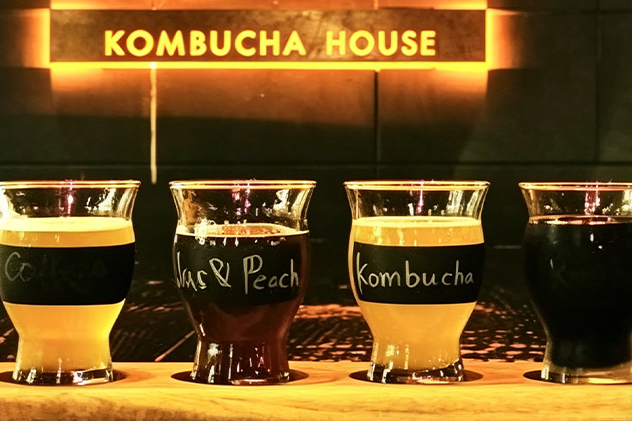
Market Window of Opportunity
While kombucha has become a common shelf product in many regions, the industry maintains a prudent and sober outlook on its large-scale production. To achieve true standardization and high-quality kombucha manufacturing, further clarification of microbial interactions and other process parameters is still required.
For equipment manufacturers, this statement precisely indicates that controllability of process parameters constitutes the core value of production equipment. This judgement is grounded in solid market evidence: the global kombucha market continues to expand, driven by rising demand for healthy beverages and consumer preference for functional fermented drinks.
Kombucha Production Process
Large-scale kombucha manufacturing is essentially an engineering discipline that converts uncontrollable fermentation into a controllable process. It needs to preserve the vibrant flavour profile generated by SCOBY fermentation while ensuring batch-to-batch consistency, homogeneity and product safety. A mature large-scale production workflow generally covers raw material & pre-treatment → sweet tea preparation → fermentation → post-processing → aseptic filling and other unit operations.
Studies indicate that the primary bottlenecks for kombucha scale-up are not merely feasibility of production, but alcohol content control and standardization of the microbial ecosystem. Deviations in fermentation duration, temperature, sugar dosage, aeration and other parameters can trigger alcohol over-limit or flavour drift. The core value of process equipment lies in locking down these variables.
1. Preparatory Work & Raw Material Screening
Prior to factory brewing, raw material inspection, equipment cleaning and environmental conditioning shall be completed to underpin continuous and stable operation of the whole production line.
Raw material screening and crushing: Upon tea incoming, a screener removes twigs, gravel and other contaminants. A crusher (mill) reduces tea leaves into particles optimized for extraction, improving extraction efficiency and better releasing flavour and nutritional compounds. Fully automated material conveying eliminates manual handling, guaranteeing tea purity and preventing foreign contaminants from entering the downstream fermentation system and compromising finished beverage sensory properties.
Raw material sanitation & process water: Kombucha production water must meet brewing water specifications. Water purification shall be implemented according to source water quality. In addition, full CIP cleaning and sterilization shall be performed on all product-wetted parts including equipment, pipelines and valves to establish a hygienic brewing workshop environment.
2. Sweet Tea Base Preparation
Dosing & Extraction: Brewing water is fed into a tea boiling tank. Sugar and tea are dosed into hot water following predefined formulation ratios and fully mixed to achieve complete dissolution. Tea selection is critical. Factories may adopt black tea, green tea, white tea or oolong tea based on product positioning. Note that tea bags feature large specific surface area with fast infusion and rapid caffeine release; whole-leaf tea releases tannins, antioxidants and other active ingredients at a milder rate, delivering a smoother, more rounded flavour.
Infusion & Filtration: Infusion duration is adjusted per process requirements. Periodic agitation during infusion promotes full release of active constituents. After infusion, primary filtration is conducted via sieve plates (this step can be omitted for tea bag processes) to obtain concentrated sweet tea stock.
Dilution: The freshly extracted concentrated sweet tea carries high temperature and high solids content and therefore requires dilution. Concentrated tea is transferred into a dilution tank, with brewing water slowly added at preset ratios. Dilution serves three purposes: rapid cooling in preparation for subsequent fermentation, reduction of tannin concentration to avoid astringency in final products, and improvement of tea yield to balance production efficiency and operational cost. Brix measurement is performed post dilution to verify compliance with fermentation specifications.
3. Primary Aerobic Fermentation
From the perspective of microbial composition, SCOBY consists of acetic acid bacteria, lactic acid bacteria and yeasts, dominated by genera Acetobacter, Gluconacetobacter and Komagataeibacter. In this stage, microbial communities perform synergistic metabolism: yeasts convert sucrose into glucose and fructose, further producing ethanol; acetic acid bacteria oxidize ethanol into acetic acid; lactic acid bacteria contribute to flavour and aroma formation.
This phase operates under predominantly aerobic conditions. Acetic acid bacteria are obligate aerobes requiring oxygen for metabolism and cellulose pellicle synthesis. Therefore primary fermenters must maintain sufficient oxygen supply. Open-top atmospheric fermenters are commonly adopted (this is the engineering selection scheme from Tiantai; tank configurations can be customized according to process requirements). Such dedicated fermenters shall meet the following specifications:
- Food-grade stainless steel with mirror-polished internal surface: 304 / 316L stainless steel, enabling dead-spot-free sterilization, resistance to kombucha acidic media, and long service life with proper maintenance.
- Balanced oxygen supply & contamination prevention: production controllability achieved by regulating oxygen transfer rate and specific surface area.
- Reliable temperature control: tanks equipped with automatic temperature control systems for continuous monitoring and stable regulation of fermentation temperature.
- Hygienic sampling valves & automated monitoring: real-time display of all process parameters to facilitate in-process monitoring and fermentation endpoint determination.
4. Filtration / Centrifugation
Different from home-brew gauze filtration and manual pellicle skimming, after primary fermentation in large-scale kombucha plants, filter units or centrifuges remove biomass, SCOBY flocs and residues to yield clarified base tea liquor, greatly boosting brewing efficiency and hygiene standard.
5. Secondary Closed Fermentation & Flavour Blending (Optional)
Secondary fermentation takes place in closed (microaerophilic/anaerobic) conditions. It aims to enrich flavour complexity, enhance mouthfeel, generate a small volume of carbon dioxide and lay the foundation for carbonation. Primary fermented liquor (with excess surface pellicle removed) is transferred via sanitary pipelines into closed pressure vessels, whose appearance is similar to beer fermenters.
To diversify flavour profiles, fruit juice (apple juice, lemon juice, blueberry juice etc.) or fruit puree is normally dosed during secondary fermentation to satisfy diversified market demands.
6. Post-processing: Filtration, Cooling & Carbonation
Filtration: After secondary fermentation, filtration equipment removes residual pellicle fragments, fruit puree particles and other particulates to guarantee smooth mouthfeel, clear appearance while retaining flavour compounds. Clarity inspection is performed afterwards for standby.
Cooling: Filtered kombucha is cooled down to filling / refrigeration temperature to suppress microbial activity, halt fermentation and prevent flavour degradation.
Carbonation: Selectable based on product design. Natural carbonation generates a low level of carbon dioxide via residual microbial metabolism in secondary fermentation, delivering softer fizz. Artificial carbonation uses CO₂ supply systems to inject food-grade CO₂ into tanks, ensuring stable carbonation and consistent sensory performance across batches. Some production lines are equipped with bright beer tanks for flavour blending, secondary fermentation and carbonation before bottling. Temperature and carbonation level are tested after processing to meet specification requirements.
7. Aseptic Filling & Packaging
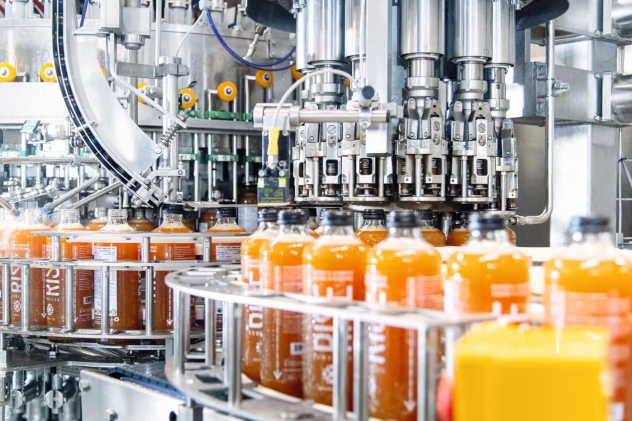
Filling is the final unit operation of brewing, with priorities on locking fermented flavour and ensuring food safety. Filling speed and pressure are precisely controlled to maintain consistent fill volume and carbonation level for every bottle/can, preventing batch quality defects caused by parameter drift and container rupture induced by over-carbonation.
Finished products are sampled for testing after sealing to confirm compliance with food safety regulations and brewing process standards. Qualified products go through labelling, case packing and then transfer to dedicated warehousing.
8. Sanitation & CIP Cleaning System: Foundation for Scale-up
Quality control runs through the entire production chain and is a prerequisite for compliant, safe finished goods. Home brewing relies on frequent container heat disinfection, while large-scale commercial production must depend on CIP (Clean-in-Place) cleaning and sterilization systems to secure batch consistency and food safety.
Beyond the above workflow, the production line can reserve optional process nodes — such as probiotic strain addition, erythritol, flavourants, organic acids and so on, allowing flexible switching between different product lines. Behind every process variable, Tiantai provides matched equipment selection design and process management solutions.
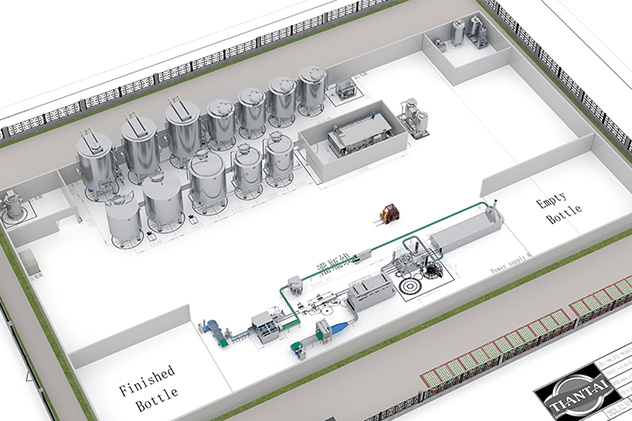
As an equipment manufacturer, we deliver not only standalone units, but also turnkey project services including factory layout consulting, workshop planning, equipment selection, formulation support, installation & commissioning, and technical training. If you are planning a kombucha production line, please share your capacity target and product roadmap. We will develop a professional technical proposal for you.