
When planning a commercial kombucha brewery, choosing the right fermentation tank involves more than deciding on its capacity and stainless steel grade. The tank’s wall construction also affects how well it maintains fermentation temperature, how much energy the production facility uses, and how consistently each batch develops.
One common question during equipment selection is whether to choose a single-wall or double-wall kombucha fermenter.
The answer depends on the production scale, local climate, fermentation process, and available temperature-control equipment. A single-wall tank may be sufficient for a small operation in a stable environment, while a jacketed and insulated fermenter offers more control for producers running larger batches throughout the year.
Before comparing the two options, it is important to understand what these tank structures actually mean.
What Is a Single-Wall Kombucha Fermenter?
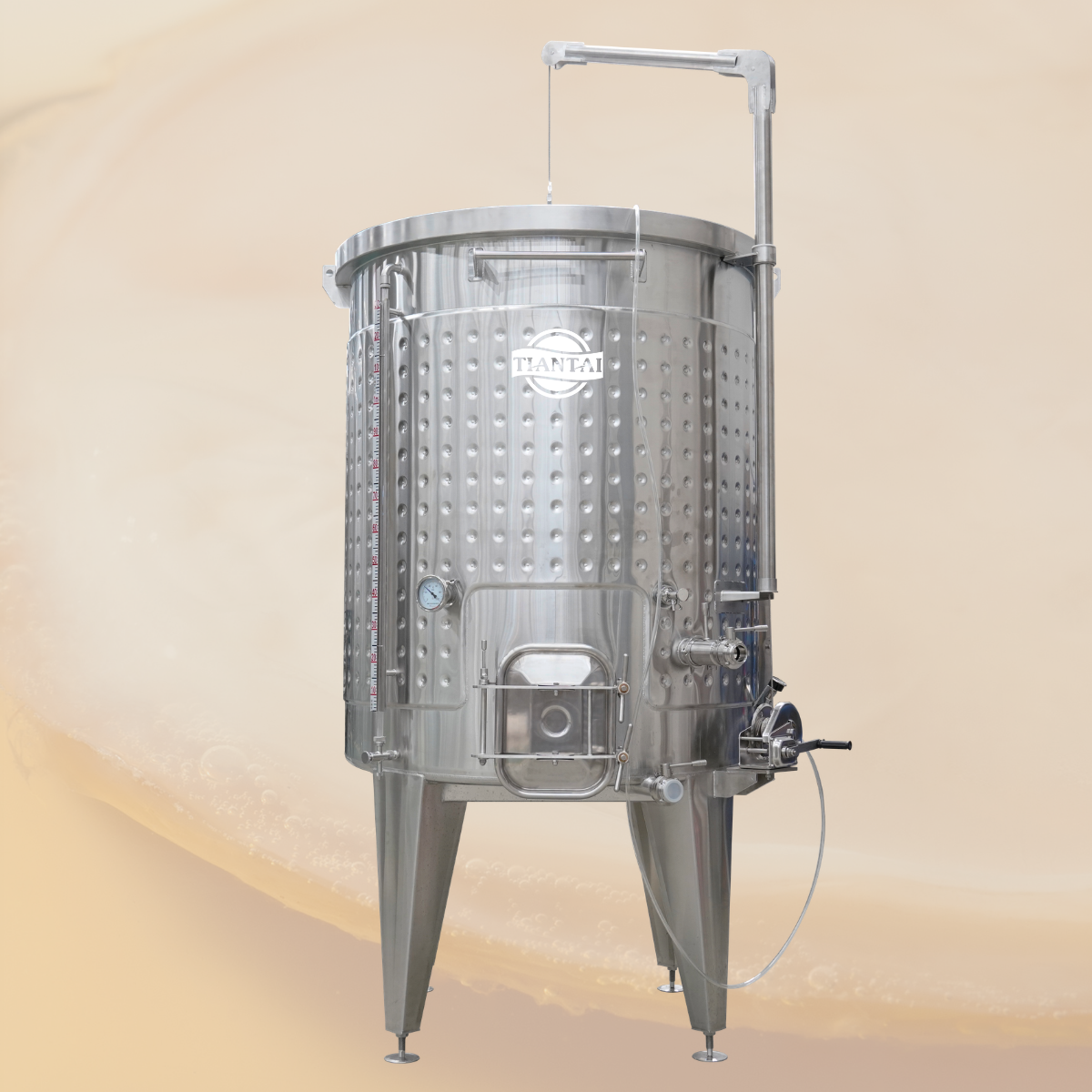
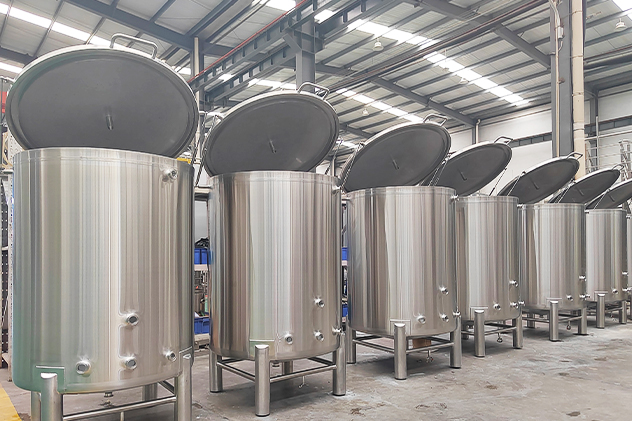
A single-wall fermenter has one stainless steel vessel wall in direct contact with the product. It does not have an integrated heating or cooling jacket, and it usually has no built-in insulation layer.
Because no heat-transfer medium circulates around the vessel, the surrounding environment mainly influences kombucha temperature. Producers may rely on room temperature control, air conditioning, or a separate external temperature-control arrangement.
Advantages of a single-wall fermenter
- Lower initial investment: The simpler construction generally requires less material and fewer components.
- Straightforward maintenance: With no integrated jacket or additional circulation connections, the tank has fewer external components to inspect.
- Suitable for stable environments: When the fermentation room can consistently maintain the required temperature, a separate tank jacket may not be necessary.
- Practical for pilot production: Small-scale producers testing recipes or developing their fermentation process may not need individual temperature control for every tank.
However, a single-wall tank also has limitations. It cannot directly heat or cool the kombucha through its vessel wall. When the room temperature changes with the seasons, maintaining the same fermentation conditions may become difficult.
For a brewery operating several tanks, controlling the temperature of the entire room can also become less practical than controlling the temperature of each vessel individually.
A single-wall fermenter is therefore most suitable when production volumes are relatively modest, the surrounding temperature is stable, and the fermentation process does not require frequent temperature adjustment.
What Is a Double-Wall or Jacketed Kombucha Fermenter?
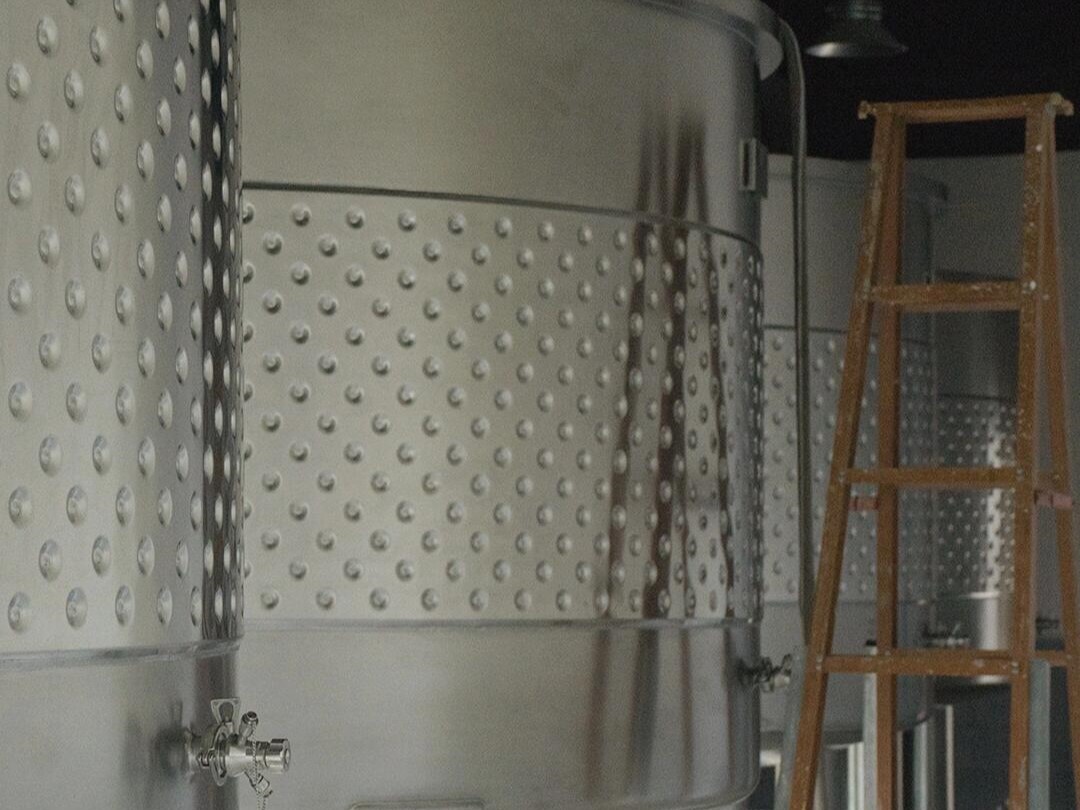
The term double-wall fermenter is commonly used to describe a tank with an inner product-contact shell and an additional outer jacket. The space between these walls allows a heating or cooling medium to circulate.
Depending on the tank design, the medium may be chilled water, glycol, or warm water. This allows heat to be removed from or transferred into the kombucha without direct contact between the liquid product and the heating or cooling medium.
For commercial kombucha production, this structure provides a more direct way to manage fermentation temperature.
A jacket can be designed in different forms, including dimple jackets, half-pipe jackets, and chamber jackets. Dimple jackets are commonly used in beverage tanks because they provide a practical balance between heat transfer performance, structural design, and manufacturing cost.
Advantages of a jacketed fermenter
- More direct temperature control: Heating or cooling takes place through the tank wall rather than relying entirely on room temperature.
- Better response to seasonal changes: The system can help maintain the target temperature when the surrounding environment becomes too warm or too cold.
- More consistent production conditions: Individual tanks can be monitored and controlled according to the fermentation requirements.
- Greater production flexibility: The same jacket may be used with warm water for heating or an appropriate cooling medium for temperature reduction, depending on the system design.
A jacketed tank does not automatically guarantee precise temperature control. Its performance also depends on the jacket coverage, heat-transfer area, circulation rate, temperature sensor, control system, and the capacity of the heating or cooling equipment.
These components should be designed as one integrated system rather than selected independently.
Double-Wall vs. Insulated: An Important Difference
There is sometimes confusion between a jacketed tank and an insulated tank. Although both may have more than one physical layer, they perform different functions.
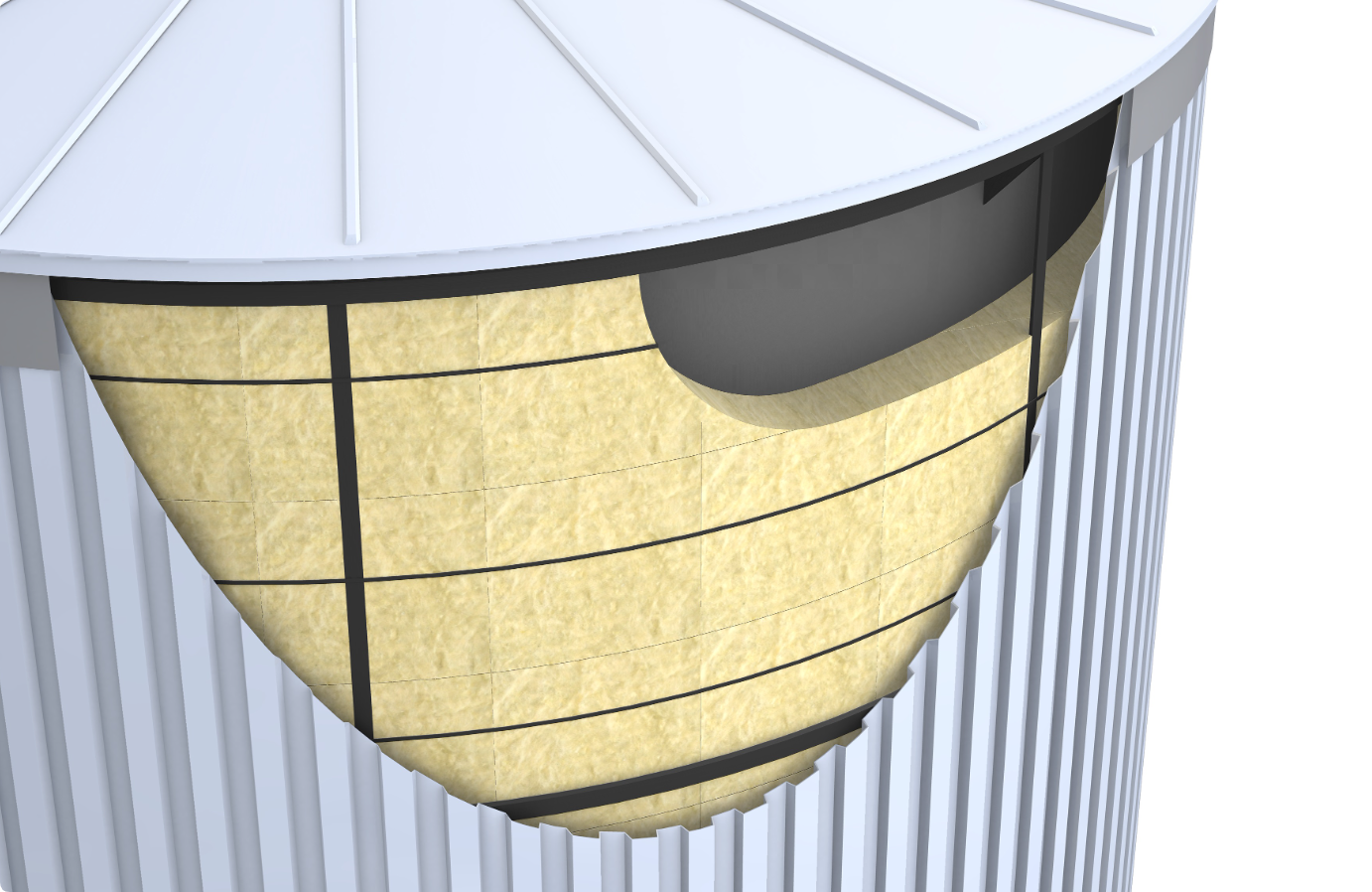
A heating or cooling jacket actively transfers heat. A separate insulation layer reduces heat exchange between the tank and the surrounding environment.
In practical terms:
- Single-wall tank: One product-contact shell, without an integrated jacket or insulation.
- Jacketed tank: An additional heat-transfer jacket through which hot water, chilled water, or glycol can circulate.
- Jacketed and insulated tank: A heat-transfer jacket combined with thermal insulation and an outer protective cladding.
Some manufacturers use the term double-wall for an insulated tank, while others use it for a jacketed vessel. Some describe a jacketed and insulated construction as a triple-wall tank.
For this reason, buyers should not rely on the product name alone. When requesting a quotation, specify whether the tank needs a heating/cooling jacket, an insulation layer, or both.
Why does insulation matter?
Even when a cooling jacket is installed, the outer surface of the tank can exchange heat with the surrounding air. In a hot production environment, this may increase the cooling load. In colder conditions, heat can escape more quickly from a warm-water system.
Insulation helps reduce these heat gains or losses. It can also help prevent condensation on the outside of cold tanks, which is useful in production areas where moisture management matters.
However, insulation does not actively cool or heat the product. A tank that only has an insulation layer cannot replace a proper temperature-control system.
Why Does Temperature Control Matter in Kombucha Fermentation?
Kombucha fermentation depends on the interaction between yeasts and acetic acid bacteria. Temperature influences microbial activity and the rate at which the beverage develops acidity, aroma, and its final flavor profile.
A fermentation temperature that is too high or too low for a particular culture and recipe may change the fermentation rate and the balance of the finished beverage.
This is particularly important for commercial producers. When multiple batches are fermented at different times of the year, changes in the surrounding temperature can lead to variations in fermentation duration, acidity, and taste.
A controlled tank environment helps producers work toward more repeatable conditions.
Nevertheless, there is no single fermentation temperature that applies to every kombucha recipe. The appropriate target should be established through trials using the actual tea base, sugar concentration, starter culture, and desired flavor profile. Temperature monitoring should be combined with measurements such as pH, acidity, and soluble solids.
Another important consideration is oxygen.
During primary kombucha fermentation, acetic acid bacteria use oxygen in their metabolic activity. Research on oxygen management in kombucha production has shown that the liquid surface is an important source of oxygen during the open-vessel fermentation stage.
This means that adding a temperature-control jacket should not change the basic requirements of the fermentation process. A primary fermenter can have a jacketed and insulated tank body while retaining an open or semi-open top design that supports the required gas exchange.
The tank structure, opening design, working volume, and temperature-control system must be considered together.
Which Kombucha Fermenter Should You Choose?
The following comparison can help narrow down the selection.
| Selection Factor | Single-Wall Fermenter | Jacketed Fermenter | Jacketed and Insulated Fermenter |
|---|---|---|---|
| Initial investment | Generally lower | Higher | Usually highest |
| Built-in heating/cooling | No | Yes | Yes |
| Temperature stability | Depends mainly on the surrounding environment | Better with a properly designed control system | Better protection against external temperature changes |
| Energy considerations | May require room-wide temperature control | Direct vessel temperature control | Reduced heat exchange can lower heating or cooling demand |
| Maintenance | Simpler tank construction | Requires jacket and circulation-system checks | Requires jacket, insulation, and exterior checks |
| Typical application | Pilot production and stable environments | Commercial fermentation requiring temperature adjustment | Larger production systems or facilities with significant ambient temperature changes |
When Should You Choose a Single-Wall Tank?
A single-wall fermenter may be a reasonable choice when:
- You are producing small batches or testing new kombucha recipes.
- The fermentation room maintains a relatively stable temperature throughout the year.
- You already have an effective room-level temperature-control system.
- Your production process does not require frequent heating or cooling adjustments.
The main consideration is whether the surrounding environment can maintain suitable conditions without making room-wide heating or cooling inefficient.
When Is a Jacketed Fermenter the Better Option?
A jacketed fermenter is worth considering when:
- You are operating a commercial kombucha production line.
- Your production schedule requires several batches to ferment simultaneously.
- Seasonal temperature changes affect the fermentation environment.
- You need to adjust temperature directly at individual tanks.
- Consistency between production batches is an important quality requirement.
For producers moving from pilot production to larger commercial batches, individual tank temperature control can provide greater flexibility in managing the fermentation process.
When Should You Add an Insulation Layer?
Insulation becomes particularly useful when the brewery operates in a hot or cold climate, when tanks are installed in areas without full environmental control, or when the temperature difference between the tank and surrounding air is considerable.
For larger production facilities, combining a jacket with insulation can help reduce unnecessary heat exchange and support more efficient operation of the heating and cooling system.
The final specification should be based on the tank size, operating temperature, local climate, and available utilities.
Other Factors to Consider Before Purchasing a Kombucha Fermenter
Wall construction is only one part of the equipment selection process. Several other details should be reviewed before placing an order.
Tank capacity and geometry
The working volume, headspace, tank diameter, and liquid depth affect how the tank fits into the fermentation process. Primary fermentation also requires an appropriate liquid surface area and oxygen access.
Heating and cooling capacity
The jacket should be designed according to the required temperature range and the amount of product being processed. The glycol chiller, hot-water supply, circulation pump, and control system must provide enough capacity for the expected operating conditions.
Temperature monitoring
A suitable temperature sensor and control arrangement help operators monitor each tank rather than relying only on the temperature of the fermentation room.
Cleaning and sanitation
The tank should have a hygienic internal finish, properly designed welds, sanitary connections, and suitable CIP coverage. These details are especially important when several production batches are processed in the same equipment.
Pressure requirements
The number of tank walls does not determine whether a vessel is pressure-rated. Primary fermentation and closed secondary fermentation have different process requirements. Working pressure, tank structure, and safety devices must be specified separately.
Choosing the Right Fermentation Tank for Your Kombucha Brewery
There is no universal answer to whether a single-wall or double-wall kombucha fermenter is better. A single-wall vessel may meet the needs of a small producer working in a stable environment. For commercial production, a jacketed tank provides more direct control over fermentation temperature, while an additional insulation layer can help reduce heat exchange with the surrounding environment.
The right configuration should be based on the actual production process, not simply on the number of tank layers.
Tiantai provides commercial kombucha fermentation equipment with customized capacity and temperature-control configurations. Its open flat-top fermenters are designed for primary fermentation and can be equipped with dimple jackets, PU insulation, temperature sensors, and CIP cleaning components.
To select the appropriate tank, consider your target batch volume, fermentation temperature range, local climate, and available heating and cooling utilities.
Planning a new kombucha brewery or upgrading your fermentation capacity? Contact Tiantai with your production requirements to discuss a suitable fermentation tank design and complete equipment configuration.