
When it comes to kombucha quality, most brands prioritize premium tea base, white granulated sugar and SCOBY cultures. Nevertheless, raw materials are merely the foundation. The symbiotic fermentation of yeast and acetic acid bacteria is the core determinant of kombucha flavor, acidity and aroma. Meanwhile, the stability of the fermentation environment largely relies on the structural design and manufacturing craftsmanship of kombucha-specific fermentation vessels.
Temperature Gradient and Dissolved Oxygen Challenges Inside Kombucha Fermentation Vessels
Kombucha is an aerobic fermentation system featuring symbiotic yeast and acetic acid bacteria, which follows a fundamentally different principle from the anaerobic fermentation of beer. Many brands scaling up from small-batch manual workshops encounter a common pain point: consistent formulas and SCOBY cultures, yet noticeable batch-to-batch flavor variation. Some batches turn overly tart and pungent from over-fermentation, while others ferment slowly with weak aroma and high residual sugar.
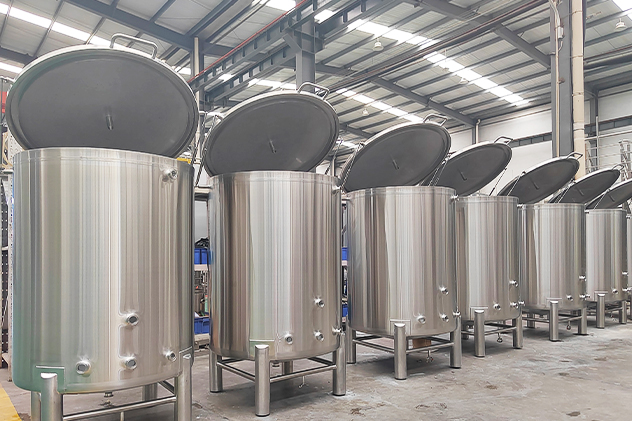
The root cause often lies within the vessel. Primary kombucha fermentation requires stable oxygen supply at the liquid surface to support uniform pellicle formation. Heat generated by microbial metabolism naturally creates a temperature gradient inside the tank: temperature differs between the tank wall and the core zone, as well as between the liquid surface and the bottom. Conventional generic tanks are only equipped with single-point temperature measurement and single-layer heat exchange jackets. Judging the overall fermentation status solely by a single temperature reading frequently leads to a misleading scenario: the measured point meets the target, yet local overheating occurs inside the tank. Local high temperature triggers rapid proliferation of acetic acid bacteria and causes runaway acidity; localized low temperature suppresses microbial activity, extends fermentation cycles and results in uneven pellicle growth.
Furthermore, generic fermentation tanks are not optimized for the aerobic characteristics of kombucha. Excessive aeration introduces airborne contaminants and triggers mold growth; insufficient aeration prevents proper SCOBY pellicle formation and disrupts the microbial community balance, which may result in total batch loss.
Vessel Design Details Tailored for Kombucha Characteristics
Scaled-up kombucha production cannot adopt the design logic of beer fermentation tanks. A dedicated kombucha fermentation system consists of two units: open-top primary fermentation vessels and sealed secondary fermentation tanks. The open-top tanks are fitted with sanitary breathable filter assemblies to achieve controlled aeration, ensure uniform dissolved oxygen at the liquid surface, support even SCOBY pellicle development and block airborne microbial contamination.
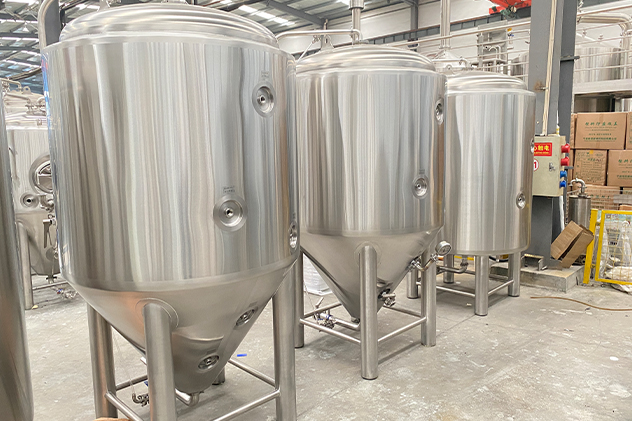
The tank body adopts zoned heat exchange jackets plus multi-layer thermal insulation. Distributed multi-point temperature sensors capture temperature deviations at different heights inside the vessel, achieving a temperature control accuracy of ±0.5℃, and stably maintaining the optimal fermentation range of 24–26℃, mitigating disturbances from workshop conditions and seasonal temperature swings.
The tank interior features mirror polishing and crevice-free sanitary welding. All nozzles, sampling ports and discharge outlets are designed for CIP (Clean-in-Place) operation to eliminate sanitary dead zones and reduce cross-contamination risks between batches, suitable for continuous food-grade production. The supporting control system allows preset fermentation profiles, linked with temperature, pH and dissolved oxygen monitoring, and automatically logs fermentation data. It converts empirical manual judgment into standardized processes. After capacity expansion, the sweet-sour balance, tea aroma and carbonation base of every batch of kombucha can be replicated consistently.
Reliable Equipment: The Foundation for Brand Scaling
Small manual batches rely on environmental tolerance, while industrial mass production depends on equipment to lock in process variables. As orders grow, retailers, supermarkets and beverage chain partners impose stricter requirements on flavor consistency and food safety. Formulas can be replicated, but unstable fermentation conditions will continuously erode brand reputation. A customized kombucha brewing system developed for symbiotic microbial communities covers all controllable process nodes: tea infusion and sugar dissolution, cooling & inoculation, primary aerobic fermentation, flavor blending, secondary carbonation fermentation and aseptic filling. It eliminates frequent manual monitoring and sensory judgment of fermentation endpoints, reduces product rejection rates and shortens trial-and-error cycles.
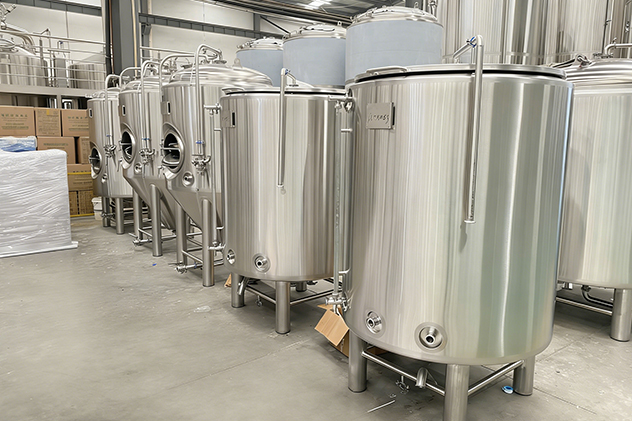
Tiantai possesses mature R&D and manufacturing capabilities for stainless steel pressure vessels. We have developed a dedicated vessel structure library for aerobic kombucha fermentation, supporting customized design of zoned heat exchange, distributed temperature sensing and auxiliary process automation systems. We supply standalone tanks and full turnkey kombucha production lines, and have delivered stable equipment solutions for kombucha projects across the globe.