
As the kombucha market continues to grow, more producers are moving from small-scale fermentation to commercial production. In addition to tea extraction, sugar mixing, and fermentation equipment, filling and packaging are also essential parts of the kombucha production process.
Different packaging formats can affect product distribution channels, storage conditions, transportation costs, and production line configurations. Currently, the most common packaging options for kombucha are bottles, cans, and kegs.
So, how should manufacturers choose the right kombucha filling equipment? This article explores the key filling requirements, packaging options, and equipment selection considerations.
一、What Are the Requirements for Kombucha Filling Equipment?
Kombucha is a fermented beverage produced through microbial fermentation. It typically has a certain level of acidity, and some products also contain naturally produced carbon dioxide. Therefore, several factors should be considered when selecting filling equipment.
1.1 Minimize Oxygen Exposure
Excessive oxygen exposure during filling may affect kombucha flavor and storage stability. Therefore, filling equipment should be designed to minimize contact between the beverage and air.
For carbonated products, CO₂ purging can be used to reduce the oxygen content inside the packaging before filling.
1.2 Reduce Foaming and CO₂ Loss
Some kombucha products have relatively high carbonation levels. During filling, excessive foaming may occur, affecting filling efficiency and product quality.
For carbonated kombucha, counter-pressure filling technology is recommended. It helps reduce CO₂ loss and foam formation by maintaining pressure during the filling process.
1.3 Meet Hygiene and Cleaning Requirements
As a fermented beverage, kombucha requires strict hygiene control during production and packaging. All product-contact parts of the filling equipment should be made from food-grade materials, such as stainless steel, and feature a hygienic design that allows easy cleaning and sanitization.
In addition, if the product contains active yeast and residual sugars, fermentation may continue after packaging. This can increase CO₂ levels and internal container pressure. Therefore, filtration, refrigeration, or other stabilization methods should be selected according to the product process and shelf-life requirements.
二、Common Kombucha Filling Solutions
2.1 Bottled Kombucha
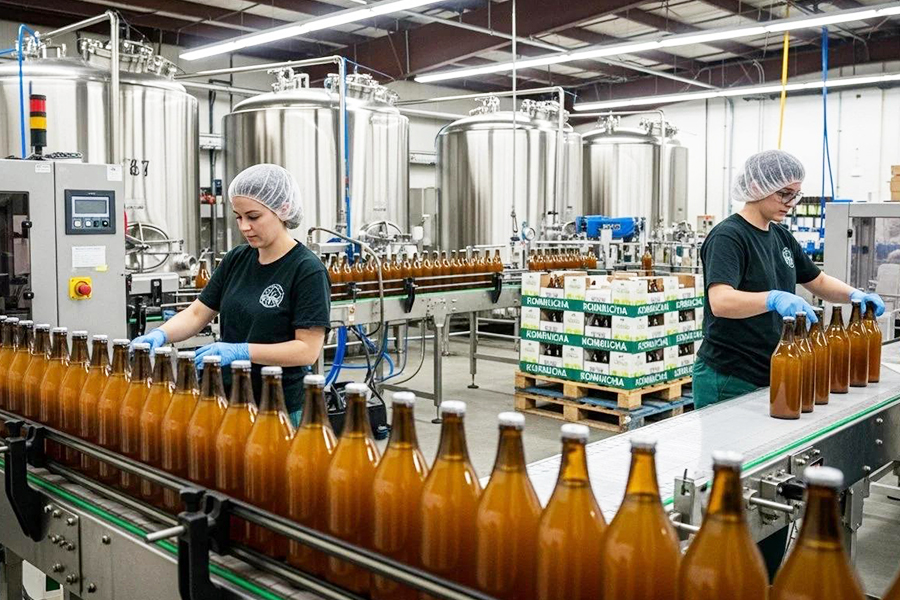
Bottling is one of the most common packaging options for kombucha. Glass bottles and PET bottles designed to withstand the required product pressure are commonly used. This format is suitable for supermarkets, convenience stores, restaurants, and retail brands.
Main Equipment:
Automatic or semi-automatic bottle filling machine
Crown capping or screw capping machine
Bottle labeling machine
Date coding machine
Conveyor and packaging equipment
Key Advantages:
An established packaging format suitable for various sales channels.
Glass bottles offer a premium appearance and help enhance brand presentation.
Different bottle capacities are available to meet diverse consumer needs.
Flexible production line configurations are suitable for manufacturers of different sizes.
Important Considerations:
For carbonated kombucha, bottles and caps must be suitable for the required internal pressure. Counter-pressure filling equipment should also be considered.
Manufacturers should pay attention to bottle pressure resistance and sealing performance to prevent leakage or excessive pressure buildup during storage.
2.2 Canned Kombucha
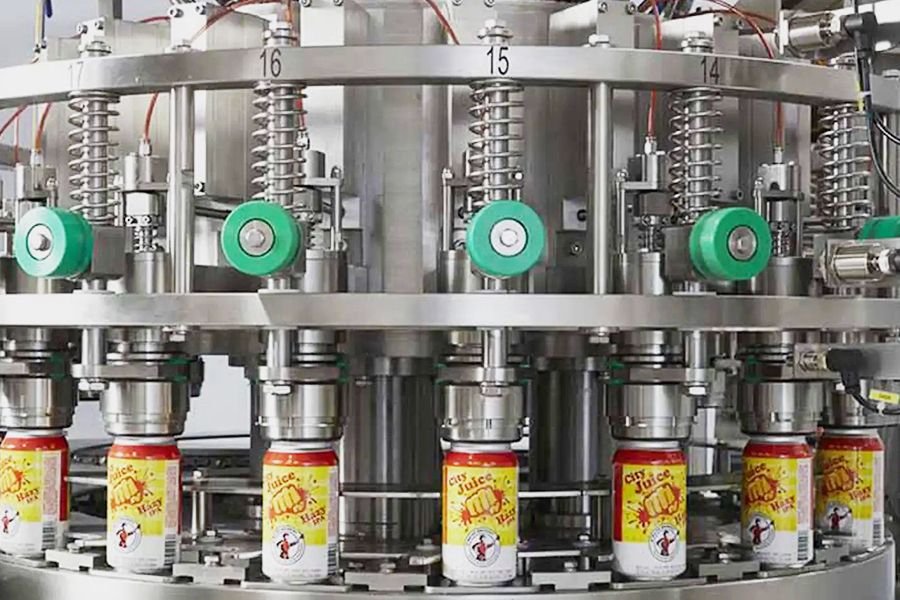
With the growing popularity of canned beverages, aluminum cans have also become an important packaging option for kombucha.
Compared with glass bottles, aluminum cans are lightweight and block light, making them easier to transport, stack, and store. They are particularly suitable for kombucha brands targeting large-scale retail and distribution channels.
Main Equipment:
Can depalletizer and conveying system
Empty can rinsing machine
Automatic can filling machine
Automatic can seaming machine
Date coding and inspection equipment
Automatic packaging equipment
Key Advantages:
Lightweight packaging helps reduce transportation and handling costs.
Opaque packaging helps protect product quality from light exposure.
Easy stacking and storage improve warehouse and logistics efficiency.
Suitable for continuous, automated production and capacity expansion.
Important Considerations:
For carbonated kombucha, counter-pressure filling equipment designed for carbonated beverages is recommended, together with a reliable automatic can seamer.
Seam quality directly affects package integrity and sealing performance, so regular inspection of the can seams is essential.
In addition, because kombucha is acidic, aluminum cans with food-grade internal coatings compatible with the product formulation should be selected to ensure packaging compatibility.
2.3 Kegged Kombucha
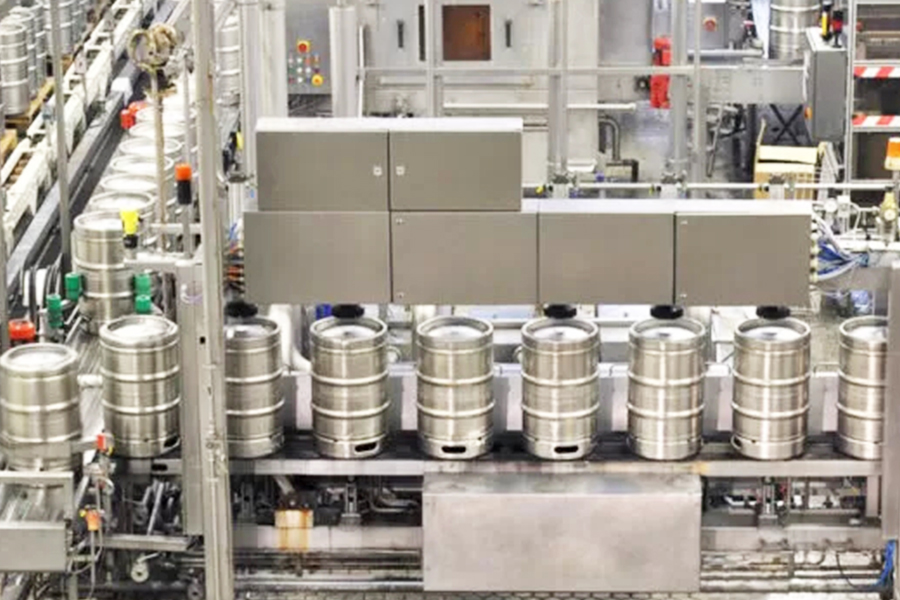
Kegged kombucha is generally packaged in stainless steel kegs or food-grade beverage kegs. It is mainly used in coffee shops, restaurants, bars, and specialized kombucha outlets.
Compared with bottles and cans, keg packaging focuses more on bulk beverage storage, transportation, and on-site dispensing.
Main Equipment:
Keg cleaning and sanitizing equipment
Keg filling machine
CO₂ gas supply system
Keg valves and connection fittings
Beverage dispensing system
Key Advantages:
Reusable kegs help reduce single-use packaging materials.
Larger capacities are suitable for bulk beverage supply in food service establishments.
Kegs can be connected to dispensing systems for fresh, on-tap service.
Fewer individual packaging and labeling operations are required.
Important Considerations:
Kegged kombucha requires reliable cleaning and sanitizing equipment. Reusable kegs must be properly cleaned and sanitized before each use.
A suitable pressure control and gas supply system should also be configured according to the product’s carbonation level. Storage and refrigeration conditions should be determined based on the characteristics of the beverage to maintain product quality.
三、What Are the Differences?
| Comparison | Bottled | Canned | Kegged |
|---|---|---|---|
| Common Packaging | Glass bottles, PET bottles | Aluminum cans | Stainless steel kegs, food-grade beverage kegs |
| Main Equipment | Bottle filling machine | Can filling and seaming machine | Keg cleaning and filling equipment |
| Packaging Features | Flexible appearance and design options | Lightweight and opaque | Large capacity and reusable |
| Automation Level | Flexible configurations | Suitable for high-speed automation | Customized according to requirements |
| Main Sales Channels | Supermarkets, convenience stores | Retail, supermarkets, distribution | Restaurants, bars, draft beverage outlets |
| Key Selection Factors | Bottle pressure resistance and sealing | Seaming quality and internal coating | Cleaning, sanitization, and pressure control |
四、How to Choose the Right Kombucha Filling Equipment?
In actual production, manufacturers should not select filling equipment based solely on the packaging format. Production capacity, product characteristics, and target sales channels should also be taken into consideration.
4.1 Select Equipment Based on Production Capacity
Kombucha manufacturers of different sizes have different requirements for filling speed and automation.
Small-scale producers: Semi-automatic filling equipment is a practical choice for reducing initial investment.
Medium-scale producers: Automatic filling, capping, and labeling equipment can improve production efficiency.
Large-scale producers: A complete automated filling and packaging line is recommended, integrating conveying, filling, sealing, inspection, and packaging processes.
4.2 Choose the Filling Method Based on Product Characteristics
Kombucha may develop carbonation naturally during fermentation or undergo forced carbonation using dedicated equipment. Different carbonation levels and product temperatures can affect the filling method.
For carbonated kombucha, counter-pressure filling technology is recommended to minimize foaming and CO₂ loss.
If the product contains active microorganisms and residual sugars, filtration, refrigeration, or other stabilization processes should be selected according to the desired shelf life. This helps prevent continued fermentation and excessive pressure buildup after packaging.
4.3 Consider Equipment Hygiene and Cleaning Requirements
Kombucha production involves several stages, including fermentation, filtration, blending, and filling. Filling equipment should feature a hygienic design, with all product-contact components made from materials suitable for food and beverage production.
The equipment should also meet daily cleaning and sanitization requirements. For medium- and large-scale production lines, a CIP cleaning system can be integrated according to actual production needs to reduce manual cleaning work and improve cleaning efficiency.
Choosing the right kombucha filling equipment requires comprehensive consideration of product characteristics, packaging formats, production capacity, and sales channels.
As a professional beer and beverage equipment manufacturer, Shandong Tiantai Beer Equipment Co., Ltd. can provide suitable kombucha production equipment and supporting solutions based on customers’ processing requirements, production capacity, and packaging needs.
We help manufacturers plan efficient production processes and develop equipment configurations suitable for different production scales.