
Raw Material Control
Kombucha only requires four basic raw materials: water, tea, sugar and SCOBY, yet each ingredient directly determines fermentation stability and final flavor profile.
Water
Water accounts for the largest proportion of kombucha raw materials. Large-scale industrial production universally adopts RO Reverse Osmosis Water Treatment System to reduce interference from excess minerals and airborne contaminants. Excess metal ions or residual chlorine will inhibit microbial activity and ruin the tea base flavor.
Tea Leaves
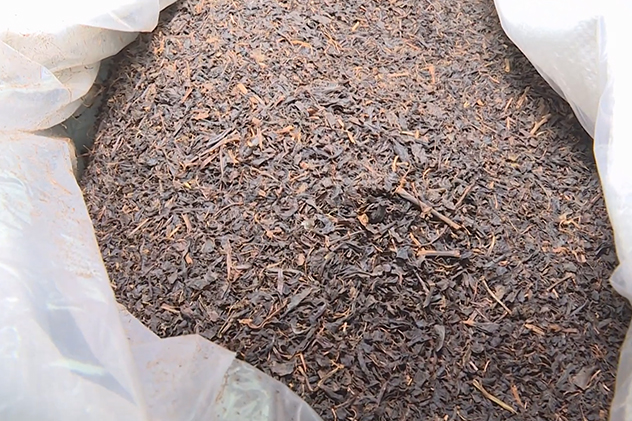
Incoming inspection must cover tea quality, pesticide residue content and moisture level before batch production.
Sugar
Sugar dosage directly sets the final acidity and ABV (Alcohol by Volume) of finished kombucha. It acts as the energy source for microbial growth and the precursor of flavor compounds. Precise batching and thorough dissolution are mandatory for consistent batches.
Fermentation
Fermentation differentiates kombucha from conventional ready-to-drink beverages. Kombucha is fermented by SCOBY (Symbiotic Culture of Bacteria and Yeast). Yeast first converts sugar into ethanol, then acetic bacteria oxidize alcohol into organic acids, forming the signature sour taste of kombucha.
Kombucha fermentation is strictly oxygen-dependent. Fermenters must maintain sufficient aeration and dissolved oxygen with even distribution across the tank. Industrial solutions integrate controllable aeration systems + optimized tank fluid design to form a uniform flow field. This promotes synergistic metabolism between yeast and acetic bacteria, while preventing localized over-acidification and out-of-control gas generation.
Post-Fermentation
Once primary fermentation finishes, post-treatment procedures split completely according to product type: live-culture kombucha or clarified shelf-stable kombucha.
Live-Culture Kombucha
Live probiotic cultures must remain viable throughout processing. Production operations shall minimize microbial damage while controlling acidity and carbonation level.
Adopt counter-pressure / isobaric filling to avoid rapid CO₂ escape;
Conduct temperature-controlled maturation after bottling to stabilize internal bottle pressure;
Implement full cold-chain warehousing and temperature-controlled logistics across the whole supply chain.
Key note: Kombucha continues secondary fermentation inside sealed anaerobic bottles, so refrigerated storage is required to preserve live cultures.
Clarified Shelf-Stable Kombucha
This variant targets mass distribution channels with extended shelf life and no cold-chain requirement. Core technical steps:
Clarification & Membrane Filtration: Remove biofilm, yeast cells and sediment to prevent turbidity during long-term storage;
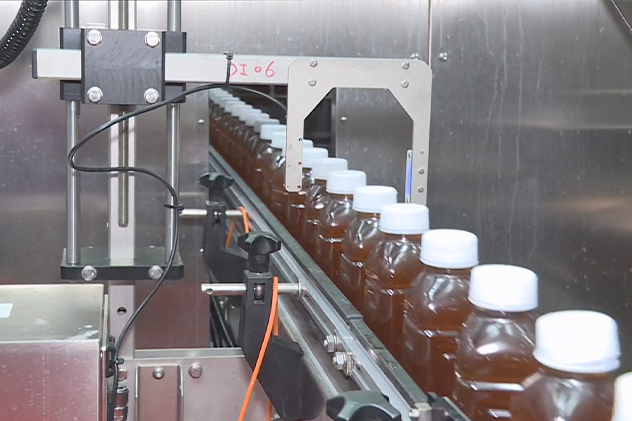
UHT Ultra-High Temperature Instant Sterilization: Eliminate microbes and bacterial spores to achieve 6–18 months ambient shelf life without preservatives;
Aseptic Filling: Bottle finished liquid in a fully enclosed sterile environment to meet commercial sterility standards.
Sanitation Management
Kombucha fermentation is highly sensitive to microbial spoilage, so sanitary control runs through every production stage. All brewing vessels and process pipelines must be equipped with a CIP (Clean-in-Place) System. The standardized cleaning cycle includes alkaline wash, acid wash and sterile water rinse, which thoroughly removes organic residues and eliminates sanitary dead zones inside the equipment.
Most producers face a universal bottleneck: pilot-scale trials cannot be smoothly scaled up to mass production. Common pain points include process discontinuity, mismatched equipment and formula, unreasonable factory layout, and lack of ongoing technical support after commissioning.
As a pressure vessel manufacturer holding D1/D2 Pressure Vessel Certification, Tiantai delivers fully integrated turnkey kombucha production solutions:
Pre-project Phase: Capacity calculation, process route evaluation, 3D factory layout planning, plus utility engineering proposals for water, electricity and steam;
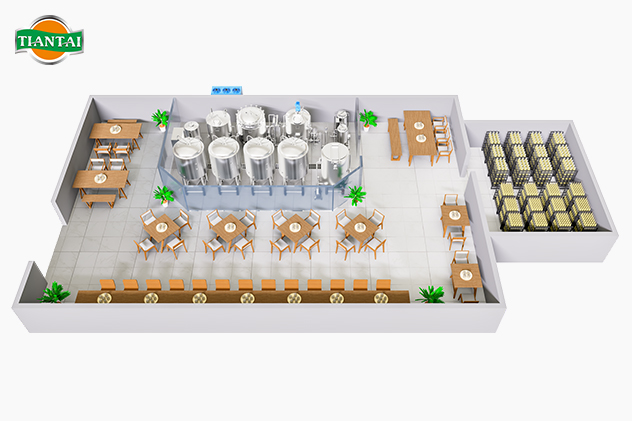
Mid-term Construction: Customized full-line equipment tailored to your formula, product type, budget and site conditions. Semi-automatic and fully automatic PLC control versions are both available;
After-sales Phase: On-site installation & commissioning, operator training, long-term maintenance and remote technical support. Our equipment complies with international export standards including CE and PED certification.
Long-term competitiveness in the kombucha industry relies on stable, repeatable fermentation quality. Selecting a production line matching your product positioning is the decisive factor.
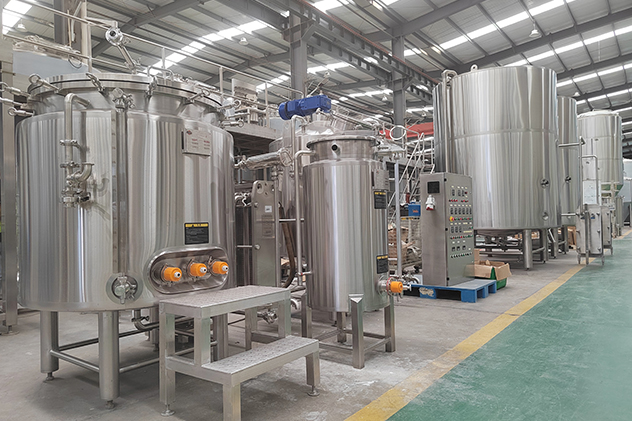
If you are planning to build a kombucha brewery, contact Tiantai today. Share your capacity target and product roadmap, and we will deliver customized process designs and detailed equipment lists.