
Unlike the production of conventional beverages, kombucha is crafted through the synergistic fermentation of microorganisms, such as yeasts and acetic acid bacteria. The production process typically involves tea extraction, sugar solution preparation, cooling, inoculation, fermentation, blending, filtration, and packaging. Therefore, when planning a commercial kombucha facility, it is essential to strategically delineate production zones based on the specific fermentation process, product type, production scale, and packaging method.
A comprehensive commercial kombucha production facility generally includes areas for raw material storage, tea base preparation, fermentation, post-processing and packaging, and finished product warehousing. Additionally, provisions must be made for supporting facilities, such as quality control laboratories, equipment cleaning stations, utility systems, and personnel hygiene areas.
Here are several key aspects to consider when planning the layout of a kombucha production facility, as outlined by Tiantai:
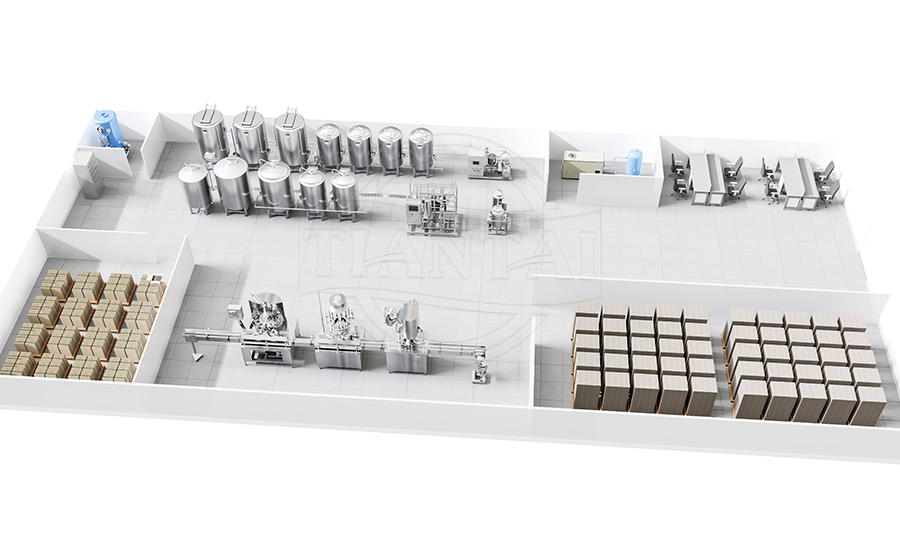
I. Raw Material Storage Area
The raw material storage area serves as the starting point for kombucha production. It is used for receiving, inspecting, and storing ingredients such as tea, granulated sugar, fruits, fruit juices, fermentation cultures, and other additives.
In the facility layout, it is advisable to position the raw material receiving area near the unloading entrance to facilitate deliveries and the handling of materials. Based on specific storage requirements, this area can be subdivided as follows:
· Dry Ingredient Area: Designated for tea, granulated sugar, and other dry additives; this space must be kept dry and well-ventilated to prevent moisture absorption and contamination.
· Refrigerated Storage Area: Used for fruits, fruit juices, and other perishable ingredients that require low-temperature storage.
· Packaging Material Area: Used for storing glass bottles, cans, caps, labels, and cartons; this area must be kept clean and dry, and should be appropriately separated from raw material storage and waste disposal zones.
Furthermore, all raw materials should undergo quality inspection upon arrival. A system for batch tracking and inventory management must also be established to ensure full traceability of all ingredients.
II. Tea Base Preparation Area
The tea base preparation area is responsible for tea extraction, the preparation of sugar solutions, filtration, and cooling. It serves as a critical processing stage before the kombucha enters the fermentation phase. Depending on the production scale and process requirements, this area typically requires the following equipment:
· Tea-brewing tanks: Used for steeping tea leaves to extract flavor compounds.
· Sugar-solution preparation tanks: Used for mixing and dissolving granulated sugar in water; these can be configured as standalone units or integrated into the system, depending on production capacity.
· Filtration equipment: Used to remove tea leaves and other unwanted solid impurities.
· Plate heat exchangers: Used to rapidly cool the tea infusion to a temperature suitable for inoculating fermentation cultures.
· Transfer pumps and piping: Used for the sanitary transport of the tea infusion between various pieces of equipment.
When laying out the production facility, it is advisable to arrange the equipment in the sequence of the actual production process. This ensures a smooth workflow—from steeping, filtration, and sugar-solution mixing to cooling—before the tea infusion is transferred to the fermentation area.
Since the tea-brewing process generates heat and water vapor, the area must be equipped with adequate ventilation, drainage, and floor-cleaning facilities. Furthermore, the tea-preparation area should be located as close as possible to the fermentation area to minimize the transport distance for the cooled tea infusion.
For large-scale kombucha production facilities, water treatment and sugar-solution preparation systems can be planned as independent units to meet the requirements of continuous production.
III. Fermentation Area
The fermentation area is the core of the kombucha production line and a critical stage that influences the product’s flavor, acidity, and quality consistency.
Kombucha fermentation relies primarily on the synergistic action of yeasts and acetic acid bacteria. Yeasts consume sugars to produce alcohol and carbon dioxide, while acetic acid bacteria subsequently convert the alcohol into organic acids, such as acetic acid. Consequently, the fermentation process requires careful control of temperature, oxygen supply, and duration, based on the specific characteristics of the microbial cultures and the production process.
This area typically requires the following:
· Stainless steel fermentation tanks: Used for mixing the tea infusion with fermentation cultures and carrying out the fermentation process.
· Temperature control systems: Used to regulate fermentation temperatures, typically via cooling jackets or similar mechanisms.
· CIP (Clean-in-Place) systems: Used to clean fermentation tanks, piping, and related equipment, thereby minimizing residues and microbial contamination.
· Transfer pumps and piping: Used for the transport of the fermented liquid and for subsequent processing steps. When planning the fermentation area, special attention should be paid to the following three aspects:
Designing fermentation tanks based on the fermentation process
The primary fermentation of traditional kombucha typically requires oxygen. Therefore, fermentation tanks must be designed with appropriate aeration or air-exposure mechanisms that meet process requirements while preventing the entry of external contaminants such as dust and insects. For production lines utilizing closed-system fermentation, a specialized sterile or sanitary-grade aeration system must be incorporated to satisfy process needs. This differs from the anaerobic conditions required for standard beer fermentation; consequently, the design of equipment used for beer fermentation cannot be directly applied to kombucha production.
Implementing an effective temperature control system
Fermentation temperature influences microbial activity, the rate of fermentation, and the flavor profile of the final product. An optimal temperature range should be established based on the specific microbial cultures and product formulation. Furthermore, a temperature monitoring and control system must be installed to ensure a stable fermentation process.
Allocating space for equipment installation and maintenance
Kombucha fermentation tanks often have significant volume and height. During facility design, it is essential to account for equipment dimensions, installation height, workspace for personnel, piping connections, and future maintenance requirements to avoid space constraints after the equipment has been installed.
Additionally, it is recommended to establish a quality testing area near the fermentation zone. This area should be equipped with a pH meter and other relevant testing instruments to regularly monitor parameters such as pH, sugar content, total acidity, and alcohol concentration. Maintaining detailed batch records is also crucial to ensuring consistent product quality.
IV. Post-Processing and Packaging Area
After the primary fermentation is complete, kombucha typically undergoes several additional stages—such as filtration, blending, flavoring, carbonation, and filling—before it becomes the final product.
The post-processing and packaging area should be designed based on the specific product formulation, packaging format, and production scale. Common equipment includes:
· Filtration equipment: Used to remove pellicles (SCOBY remnants), excess yeast, and other suspended impurities from the fermented liquid.
· Blending tanks: Used for incorporating fruit juices, purees, flavorings, and other ingredients.
· Finished product storage tanks: Used to temporarily hold the blended kombucha.
· Carbonation equipment: Used to infuse the product with food-grade CO₂; this is necessary for products that require additional carbonation.
· Filling equipment: Systems designed for the specific packaging format, such as glass bottles, cans, or kegs.
· Sealing and packaging equipment: Used for capping, seaming (for cans), labeling, coding (printing dates/batch numbers), and cartoning/boxing.
It should be noted that not every kombucha production line requires all of the equipment listed above. For instance, some products rely on natural carbonation, eliminating the need for forced carbonation equipment; others may require pasteurization or other stabilization processes.
When laying out the facility, it is advisable to arrange the filtration, blending, storage, and filling equipment in the order of the actual production process to ensure a continuous flow of materials. The packaging area must be maintained under strict sanitary conditions and should be appropriately segregated from areas such as raw material receiving or waste disposal.
Furthermore, for kombucha containing live cultures, special attention must be paid to the potential for continued fermentation after filling. Appropriate filtration, pasteurization, or other stabilization methods should be selected to prevent issues during storage and transport—such as an increase in alcohol content, excessive gas production, or abnormal pressure buildup within the packaging.
V. Finished Product Storage Area
The finished product storage area is designated for kombucha that has already been filled, sealed, labeled, and packaged. It is recommended to locate this storage area near the packaging zone and the shipping exit to facilitate the efficient transfer and loading of finished goods. Furthermore, storage areas should be logically separated from raw material storage zones to prevent the commingling of different materials.
Depending on the product’s processing method and stability requirements, finished product storage is generally categorized into two types:
· Ambient-temperature storage: Suitable for products that have undergone appropriate stabilization and have had their shelf life verified for storage at room temperature.
· Refrigerated storage: Suitable for kombucha that contains live cultures, has the potential for further fermentation, or otherwise requires low-temperature storage.
For products containing live cultures and residual fermentable sugars, cold-chain management is critical. Storage temperatures and shelf life must be validated based on specific product characteristics to prevent issues such as continued fermentation—which could lead to increased alcohol content, excessive carbon dioxide production, or dangerous pressure buildup within the packaging.
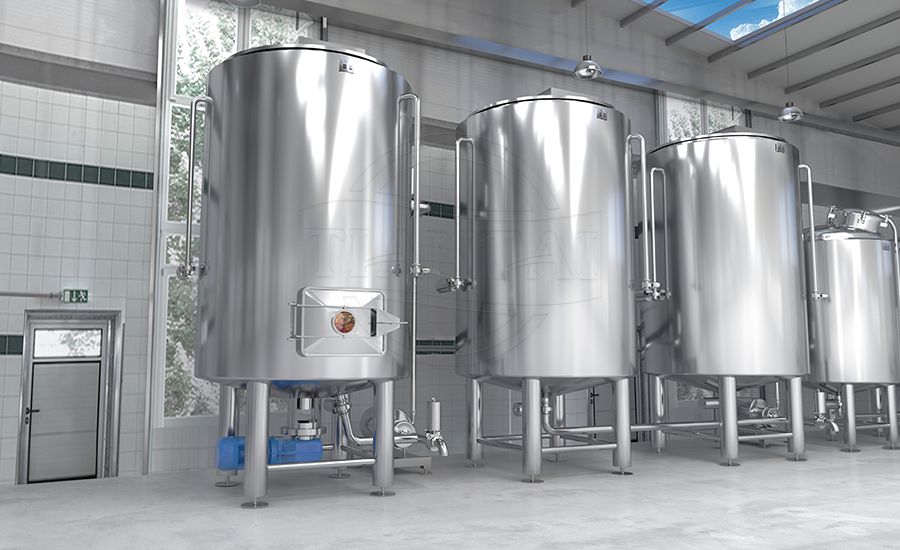
The overall layout of a kombucha production facility must account for the logical division of production zones, while also considering production workflows, food hygiene standards, and supporting infrastructure. The facility should be designed with a unidirectional production flow that aligns with the manufacturing process, ensuring that the movement of personnel, raw materials, and finished products is organized to avoid cross-contamination. Floors should be constructed from non-slip, corrosion-resistant, and easy-to-clean materials, complemented by robust drainage, cleaning/sanitization systems, and pest control measures. Additionally, utility systems—including water treatment, power supply, cooling, CIP (Clean-in-Place) systems, ventilation, and wastewater treatment—must be planned in advance to meet the operational requirements of production equipment, with sufficient space allocated for installation, routine maintenance, and future capacity expansion.
Planning a kombucha production facility requires a comprehensive assessment of production scale, process workflows, equipment configuration, and future growth objectives. A well-designed layout not only enhances production efficiency and ensures product quality but also provides a foundation for future capacity scaling and process optimization.
With extensive experience in manufacturing beverage and fermentation equipment, Tiantai Equipment offers customized solutions—ranging from equipment selection and production line design to facility layout planning—tailored to each client’s specific production needs, process requirements, and site conditions. We help clients build commercial kombucha production lines that are perfectly aligned with their operational realities.