
For businesses planning to establish a commercial kombucha production facility, fermentation time is an important factor in production planning. It not only affects the final beverage’s flavor, sweetness, and acidity but also influences fermentation tank utilization, production capacity, and overall operating costs.
So, how long does kombucha fermentation typically take? What factors determine the fermentation cycle? And how can manufacturers maintain consistent product quality during commercial production? Tiantai will explain these key aspects below.
1. How Long Does Kombucha Fermentation Take?
Kombucha production typically involves two fermentation stages: primary fermentation and optional secondary fermentation.
Primary fermentation usually takes around 6–14 days, although the actual duration depends on several factors, including the culture, temperature, tea and sugar formulation, oxygen supply, and desired flavor profile.
During this stage, yeast converts sugar into ethanol and carbon dioxide. Acetic acid bacteria (AAB) use oxygen to oxidize some of the ethanol into acetic acid and convert other sugars into organic acids, including gluconic acid.
As fermentation progresses, the sweetness of the beverage generally decreases while its acidity increases. A shorter fermentation period may produce a sweeter, milder kombucha, whereas longer fermentation usually results in a more pronounced sour taste.
However, fermentation should not be stopped based on time alone. Manufacturers need to evaluate pH, residual sugar, alcohol content, and sensory characteristics to determine the appropriate fermentation endpoint.
Secondary fermentation is optional and is generally used to develop carbonation and introduce additional flavors.After primary fermentation, kombucha can be blended with fruit juice, fruit extracts, or other flavoring ingredients. It is then transferred to a suitable closed fermentation tank or packaged in bottles for natural carbonation.
During this stage, yeast continues consuming available sugars and producing carbon dioxide, creating the desired level of carbonation. The actual fermentation time depends on the amount of added sugar, fermentation temperature, microbial activity, and target carbonation level.
Since pressure and alcohol content may increase during secondary fermentation, commercial producers need appropriate pressure control, monitoring, and product stabilization measures.
In general, a typical primary fermentation cycle takes approximately one to two weeks. Secondary fermentation, flavor adjustment, stabilization, and packaging may require additional time.
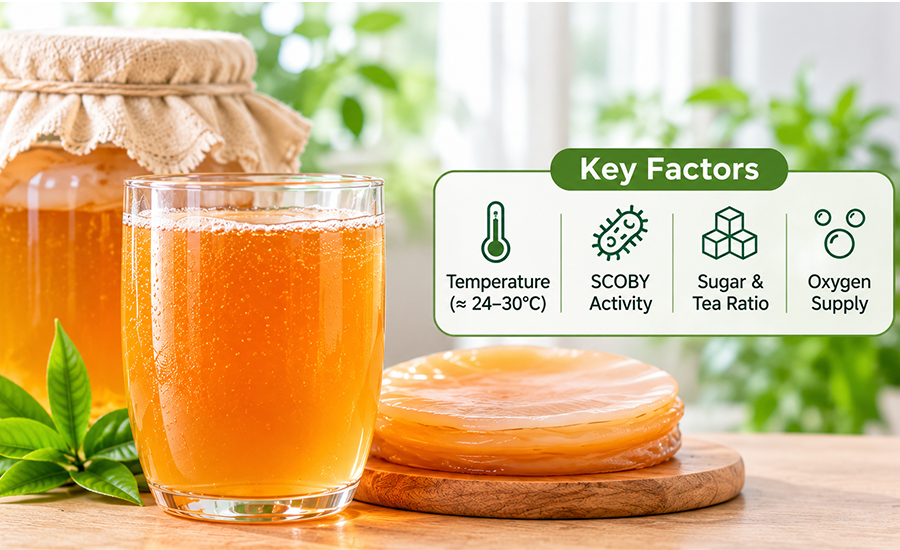
2. What Factors Affect Kombucha Fermentation Time?
Kombucha fermentation is a biological process influenced by several interacting factors. For commercial production, the following factors are particularly important.
Fermentation Temperature
Temperature is one of the most important factors affecting microbial activity and fermentation speed.
Kombucha is commonly fermented at around 24–30°C, with approximately 25°C often used as a starting point for process development. Higher temperatures may accelerate microbial metabolism and acid production, while lower temperatures generally slow down fermentation.
However, higher temperatures do not necessarily produce better kombucha. Excessively high or unstable temperatures may change microbial activity, accelerate acidification, and negatively affect the beverage’s flavor.
For commercial production, fermentation tanks equipped with cooling jackets and automatic temperature control systems help maintain stable fermentation conditions throughout each batch.
SCOBY Activity and Inoculation Rate
SCOBY is the core of kombucha fermentation. It contains a community of yeasts and bacteria that work together to convert sugars, produce alcohol, and form organic acids.
The activity and composition of the culture, as well as the inoculation rate, can all affect fermentation speed. Using an active, stable culture and adding an appropriate amount of starter liquid according to the process requirements generally helps fermentation start more quickly and consistently.
In contrast, low culture activity or an unsuitable inoculation ratio may slow down fermentation and lead to inconsistent product quality between batches.
Tea Concentration and Sugar Ratio
Tea and sugar are the main ingredients in traditional kombucha production. Their proportions affect both fermentation performance and the characteristics of the final beverage.
Sugar provides the primary energy source for yeast and bacteria. Its concentration influences microbial activity and subsequent fermentation. Too little sugar may limit fermentation, while excessive sugar can affect residual sweetness, alcohol production, and the overall balance of the finished product.
Tea also provides flavor compounds, nutrients, and other substances that influence microbial activity. Different tea varieties, tea concentrations, and extraction conditions may produce different fermentation results.
Therefore, manufacturers should conduct pilot-scale trials before commercial production to determine the appropriate tea-to-water ratio, sugar concentration, and overall formulation.
Oxygen Supply and Fermentation Tank Design
Oxygen management is particularly important during primary kombucha fermentation.Yeast produces ethanol through sugar fermentation, while acetic acid bacteria require oxygen to oxidize ethanol into acetic acid and participate in the production of other organic acids.Unlike conventional closed beer fermentation, traditional primary kombucha fermentation generally requires contact with air.
In commercial production, oxygen transfer is influenced by several factors, including:
· Fermentation tank diameter and liquid depth
· The relationship between liquid surface area and fermentation volume
· Tank design and filling level
· Ventilation and air exchange systems
· The method of oxygen transfer into the fermentation medium
Therefore, fermentation tanks should be designed according to the actual kombucha production process rather than simply adapting conventional sealed beverage fermentation tanks.
3. How Can Manufacturers Improve Fermentation Efficiency and Consistency?
For commercial kombucha producers, shortening fermentation time is not the only goal. Maintaining consistent product quality while improving production efficiency is equally important.
The following practices can help achieve this goal:
Standardize the Fermentation Recipe
Maintain consistent tea concentration, sugar content, starter tea ratio, and inoculation procedures. A standardized formulation helps reduce variations in product quality between batches.
Maintain Stable Temperature Conditions
Use properly sized fermentation tanks equipped with cooling jackets and automatic temperature control systems to minimize temperature fluctuations throughout the fermentation process.
Optimize Oxygen Supply
Design the fermentation tank and ventilation system according to the requirements of the selected culture and fermentation process. Adequate oxygen supply helps support acetic acid bacteria activity during primary fermentation.
Monitor Fermentation Parameters
Regularly measure pH, titratable acidity, soluble solids (°Brix), residual sugar, and alcohol content as required. Combining laboratory measurements with sensory evaluation provides a more reliable way to determine the fermentation endpoint.
Implement Proper Cleaning and Sanitation
All equipment and product-contact components, including fermentation tanks, pipelines, valves, and transfer connections, should be designed for effective cleaning and sanitation. A suitable CIP (Clean-in-Place) system helps reduce contamination risks and improve production hygiene.
4. Choosing the Right Kombucha Fermentation Equipment
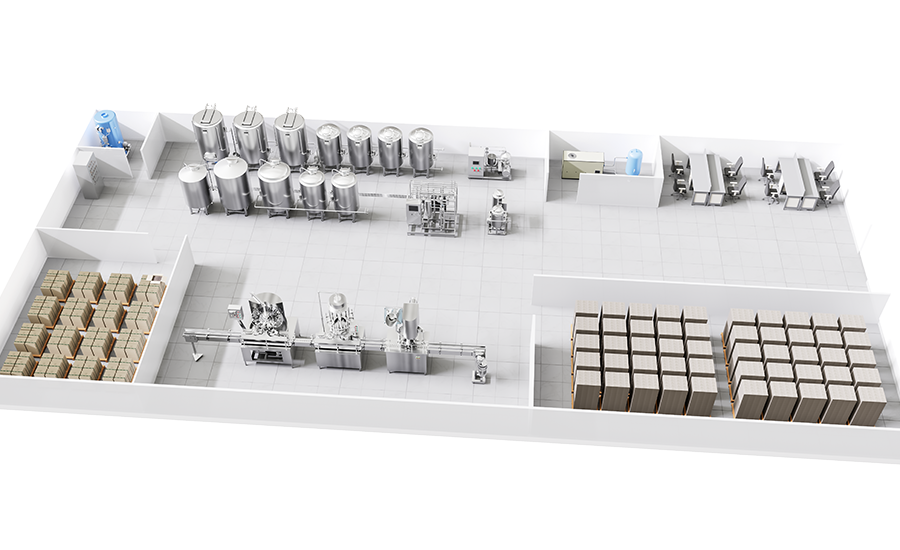
A complete commercial kombucha production system typically includes raw material handling equipment, tea preparation tanks, sugar mixing equipment, fermentation tanks, filtration equipment, blending tanks, and filling equipment.
Among these components, fermentation tanks are at the heart of the production system. Depending on the production scale and fermentation process, manufacturers can select stainless steel fermentation tanks in different capacities and equip them with temperature control, ventilation, CIP cleaning, and necessary in-line monitoring devices.
Tiantai Equipment provides customized solutions based on each customer’s formulation, target production capacity, and fermentation process. From individual fermentation tanks to complete commercial kombucha production systems, we work with customers to develop practical equipment configurations that support efficient production and consistent product quality.