
Jun is often described as a close relative of kombucha, but producing a consistent honey-fermented tea requires more than replacing sugar with honey. The choice of tea, condition of the starter culture, fermentation temperature, oxygen availability, and timing of the second fermentation all influence the final beverage.
For commercial producers, these variables matter because Jun can change quickly during fermentation. A batch that initially tastes balanced may become excessively acidic if left too long, while additional honey or fruit juice can provide more fermentable sugars and lead to unexpected carbonation or alcohol formation.
Understanding these interactions is the first step toward developing a repeatable Jun production process.
What Is Jun Tea?
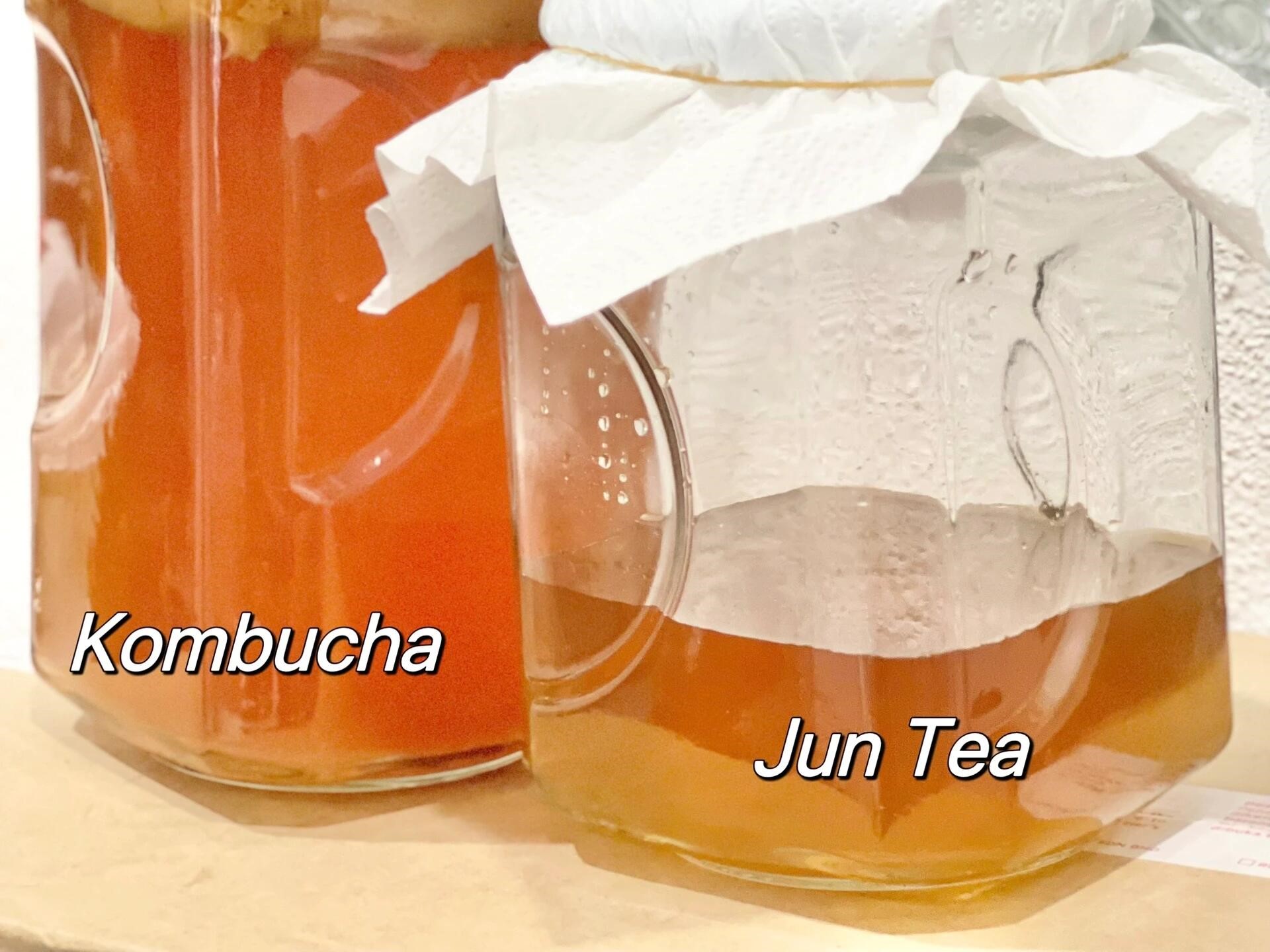
Jun is a fermented tea traditionally made with green tea, honey, and a symbiotic culture of bacteria and yeasts (SCOBY). During fermentation, the microorganisms transform the sweetened tea into an acidic beverage with a distinctive balance of tea character, honey-derived aromas, and fermentation flavors.
Although Jun and conventional kombucha share similarities in their fermentation mechanisms, they are not necessarily produced with identical microbial cultures or formulations. Jun is commonly associated with green tea and honey, whereas conventional kombucha often uses black tea and sucrose.
The distinction matters when developing a commercial product. Honey contains a mixture of sugars, including glucose and fructose, as well as other constituents that vary with its botanical source and processing. These differences can influence fermentation behavior and the final flavor profile.
A production method that works reliably for one kombucha culture cannot automatically be assumed to work equally well for a honey-based Jun formulation. The culture and process need to be evaluated together.
Why Green Tea and Honey Are Commonly Used
Green tea provides the characteristic tea base for Jun. Its soluble compounds contribute to the beverage’s color, aroma, taste, and overall composition. Changes in tea variety, leaf quality, extraction temperature, and steeping time can therefore alter the fermentation substrate before the culture is added.
Honey supplies fermentable carbohydrates and contributes its own flavor characteristics. Different honey varieties can produce noticeably different starting profiles, even when the same weight or volume is used.
For a commercial producer, ingredient selection should be based on the intended product rather than a fixed recipe alone.
Can You Use Tea Other Than Green Tea?
Green tea is the conventional choice for Jun, but other teas and botanical infusions may be investigated during product development.
White tea, oolong, and other tea varieties differ in their chemical composition and flavor. Herbal infusions can differ even more substantially because they do not necessarily provide the same compounds as tea from Camellia sinensis.
Changing the tea can affect extraction, fermentation performance, acidity development, and sensory characteristics. A formulation that works with green tea may need different processing conditions when another substrate is used.
For commercial production, alternative teas should be treated as new formulations requiring controlled trials. Record the tea source, extraction conditions, honey addition, fermentation time, temperature, and analytical results so that successful batches can be reproduced.
Does Jun Have to Use Honey?
Honey is a defining ingredient of traditional Jun. However, the claim that ordinary sugar can never ferment in a Jun culture is too absolute to use as a general scientific rule.
The more important issue is culture adaptation. Different microbial communities do not necessarily perform identically when the carbohydrate source changes.
If a producer intends to replace honey with sucrose, glucose syrup, or another sweetener, the change should be evaluated through fermentation trials. The resulting beverage may have a different flavor, fermentation trajectory, or product identity.
For a commercial line, ingredient substitution should not be treated as a simple one-to-one replacement without validating the complete process.
How to Prepare Sweetened Tea for Jun Fermentation
The preparation stage establishes the conditions under which the culture will begin working. Inconsistent tea extraction, incomplete honey dissolution, or excessive temperature at inoculation can create avoidable variation between batches.
A typical production sequence is:
Tea extraction → Tea-leaf separation → Honey dissolution → Cooling → Starter addition → Primary fermentation
Tea leaves are first steeped in potable water and then removed. Honey is mixed into the prepared tea until it is evenly distributed.
The sweetened tea must then be cooled to a temperature appropriate for the selected starter culture before inoculation. Adding an active culture to excessively hot tea can damage its microorganisms and interfere with fermentation.
At commercial scale, the preparation system should also account for mixing efficiency and transfer hygiene. Honey must be evenly distributed throughout the batch rather than concentrated in one part of the tank.
The result should be a consistent starting medium, not merely a tank containing the correct total amount of ingredients.
Does Jun Require a SCOBY Pellicle or Starter Liquid?
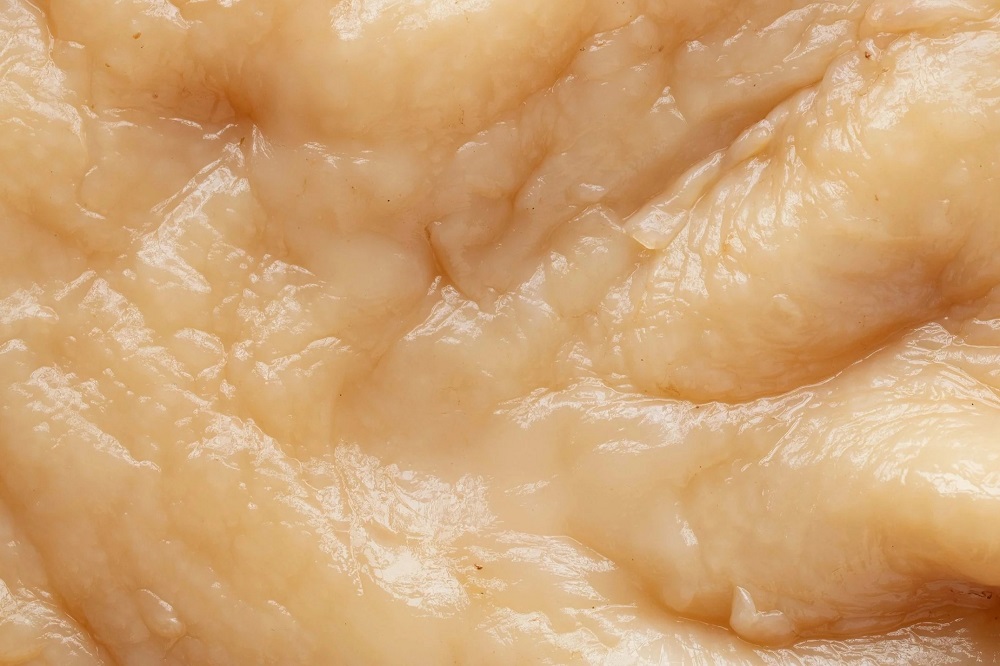
The cellulose layer that forms on the surface of fermented tea is commonly called the SCOBY, although the physical layer is more precisely described as a pellicle. The fermentation culture itself consists of microorganisms distributed through the liquid and the biofilm.
For subsequent batches, a portion of healthy fermented liquid can be retained as starter. The pellicle may also be transferred when that is part of the producer’s established method.
The important question is whether the inoculum remains active and suitable for the intended fermentation.
Starter management should account for:
- The source and condition of the culture.
- The volume of starter added relative to the new batch.
- The acidity of the starter and the starting pH after inoculation.
- The culture’s performance over successive batches.
- The handling conditions between production cycles.
There is no single starter ratio that should be applied to every Jun culture. The appropriate level should be established using the actual formulation and verified under the intended operating conditions.
It is also unwise to assume that any conventional kombucha starter will produce the same results in a honey-based Jun process. The compatibility of the culture with the intended substrate should be demonstrated before scaling up.
How Long Does Jun Fermentation Take?
Jun is often reported to ferment faster than conventional kombucha, but fermentation time depends on the culture, formulation, temperature, inoculation conditions, and target flavor.
A food-safety-oriented process reference describes primary Jun fermentation in the range of approximately four to seven days under its specified conditions. This is a useful point of reference, not a universal production schedule.
For a commercial producer, the batch should be assessed using measurable process indicators rather than a calendar alone.
Monitor pH and acidity
As fermentation progresses, organic acids accumulate and pH generally decreases. Monitoring this change helps the producer assess whether acidification is proceeding as expected.
Some food-safety guidance uses a pH of 4.2 or below as an acidification control point and identifies pH below 2.5 as an excessively acidic condition to avoid. The actual critical limits and corrective actions must be incorporated into a validated process and checked against applicable local requirements.
A suitable pH does not, by itself, establish every aspect of product safety or stability. Fermentation history, total acidity, alcohol content, microbiological condition, and the intended product specification may also need to be evaluated.
Control temperature
Temperature influences microbial growth and metabolism, affecting how quickly the beverage acidifies and how its flavor develops.
Jun fermentation guidance commonly uses temperatures around 20–26°C, although the appropriate operating range depends on the culture and process being used.
The most useful operating temperature is the one that produces a repeatable fermentation profile within the validated process. Temperature records should therefore be associated with individual batches, rather than relying solely on room-temperature estimates.
Follow the flavor as well as the measurements
The beverage’s sweetness, acidity, aroma, and body evolve throughout fermentation. Sensory evaluation can help the production team understand how the product develops, but it should complement rather than replace analytical monitoring.
A commercial target should be defined in terms of a reproducible product profile, supported by measurable process parameters.
What Happens If Primary Fermentation Continues Too Long?
As the culture continues to metabolize the available sugars, the beverage’s acidity and flavor can change considerably.
A longer fermentation may produce a sharper, more vinegar-like taste and lower residual sweetness. Depending on the culture and conditions, it can also alter alcohol content and aroma.
This creates a practical challenge for producers working with several batches at once. If one tank is sampled too infrequently, it may move beyond the intended sensory target before it is ready for downstream processing.
A defined sampling schedule helps the production team recognize when the batch is approaching its specified endpoint.
The objective is not to ferment Jun for the longest possible time. It is to reach the intended product specification consistently.
How Should You Store Jun Starter Between Batches?
Production schedules do not always allow one batch to follow another immediately. A plant may need to hold a culture between runs, perform maintenance, or change production plans.
In these situations, culture storage should be treated as a managed process rather than an indefinite pause.
A producer should define:
- Whether the starter is held as liquid culture, pellicle, or both.
- The temperature and duration of storage.
- The minimum quantity and condition of starter required for the next batch.
- How the culture will be checked before reuse.
- What to do when fermentation behavior differs from the established pattern.
Refrigeration can slow microbial activity during holding, but it does not sterilize the culture or guarantee that fermentation will stop permanently. Activity may resume when the culture returns to warmer conditions.
Storage duration should therefore be validated for the specific culture. A starter that has been held for an extended period should not be assumed to perform identically to a recently active culture without verification.
If the culture develops abnormal growth or discoloration, or otherwise departs from its established condition, it should be isolated and assessed according to the plant’s food-safety procedures rather than transferred automatically into a production batch.
Why Sanitation Matters in Jun Production
Jun is an acidic fermented beverage, but acidity does not eliminate the need for hygienic processing.
Tea, honey, fruit ingredients, water, and equipment can all introduce unwanted microorganisms. During early fermentation, the beverage is still developing its acidic environment, making good handling practices especially important.
Primary fermentation vessels should allow the oxygen exposure required by the process while protecting the beverage from dust, insects, and other environmental contaminants. A suitable food-grade breathable cover can serve this purpose where an open fermentation vessel is used.
Equipment should be cleaned and sanitized according to a defined procedure. This includes the tea preparation vessel, fermentation tank, transfer lines, valves, sampling ports, hoses, and any equipment used for starter handling.
For commercial systems, a validated cleaning-in-place (CIP) arrangement can reduce manual handling and make cleaning procedures more consistent. The cleaning and sanitizing program should be designed for the equipment, soil load, and product being processed.
Using vinegar or hot water alone should not be assumed to provide a validated sanitation process.
What Happens During Secondary Fermentation?
Once primary fermentation reaches the intended endpoint, Jun may be transferred to a closed vessel or package for secondary fermentation.
Fruit, juice, or other flavoring ingredients can be added at this stage, depending on the product design. These ingredients introduce additional flavor compounds and may also supply fermentable sugars.
That second effect requires particular attention.
Yeast can continue metabolizing sugars in a sealed container, generating carbon dioxide and ethanol. Because gas cannot freely escape, pressure can accumulate. The final carbonation level depends on residual sugar, added ingredients, yeast activity, temperature, time, and the packaging or vessel used.
Jun can develop substantial carbonation, so the second fermentation should not be treated as an informal waiting period.
Fruit juice can change carbonation significantly
A flavored Jun that receives additional juice may behave differently from the unflavored base. Different fruits and juices contain different quantities and mixtures of fermentable sugars, while their acidity and suspended solids can also affect the final product.
The production team should validate each flavor formulation rather than assume the same secondary-fermentation duration will work for every recipe.
For commercial manufacturing, pressure monitoring and a defined endpoint are more reliable than relying on bottle appearance or periodically opening packages to release gas.
Does refrigeration stop secondary fermentation?
No. Refrigeration slows microbial activity, but it should not be assumed to stop ongoing fermentation or make an otherwise unstable product shelf-stable.
If a live Jun beverage contains residual fermentable sugar, microbial activity can continue during storage, particularly if the product warms during distribution or handling. Carbonation and alcohol content may consequently change after packaging.
Commercial producers need an appropriate strategy for controlling post-packaging activity. Depending on the intended product, this may involve validated stabilization, yeast management, a maintained cold chain, and supporting shelf-life studies.
The choice of method must match the product’s intended characteristics and regulatory requirements.
Managing Alcohol and Pressure in Commercial Jun
Alcohol control deserves particular attention because Jun combines fermentable sugars with an active microbial culture.
Alcohol production can occur during fermentation, and additional sugar introduced during flavoring or secondary fermentation can support further production. The relationship between residual sugar, alcohol, and carbon dioxide depends on the microorganisms and processing conditions.
A commercial producer should establish a monitoring plan appropriate to the product’s alcohol specification. Depending on the market and process, this can require laboratory alcohol analysis or another validated measurement method.
Pressure must be managed at the same time. Bottles, cans, tanks, and fittings must be suitable for the pressures expected during fermentation and carbonation. Filling conditions should also minimize unnecessary carbon dioxide loss.
Uncontrolled pressure is not merely a quality problem. Excessive pressure can cause packages to rupture or release their contents violently when opened.
For this reason, commercial Jun production should define secondary-fermentation duration, pressure limits, temperature conditions, and transfer or filling procedures as part of one coordinated process.
What Equipment Is Needed for Commercial Jun Production?
The right equipment depends on production capacity and the process chosen, but commercial Jun usually requires more than a single fermentation vessel.
Tea brewing and filtration system
Provides repeatable tea extraction and efficient separation of the leaves before honey is added.
Honey mixing system
Allows honey to be dissolved and distributed evenly throughout the tea base.
Cooling system
Brings the sweetened tea to the appropriate inoculation temperature before the starter culture is introduced.
Primary fermentation tanks
Provide the required fermentation environment, temperature management, and hygienic access for sampling and inspection.
Starter culture management
Provides a controlled way to retain, hold, monitor, and transfer active culture between production batches.
Secondary fermentation or carbonation equipment
Supports controlled flavoring, continued fermentation, or direct carbonation, depending on the intended beverage.
Filtration and filling system
Removes unwanted suspended material where required and transfers the finished beverage into suitable packaging under controlled conditions.
CIP system
Supports consistent cleaning and sanitation of tanks, piping, and other product-contact equipment.
Not every plant needs every component as a separate vessel. The configuration should reflect the production schedule, target batch size, fermentation method, and required degree of automation.
Designing a Jun Production Line Around the Fermentation Process
When moving from small batches to commercial production, the central challenge is repeatability.
Tea extraction must be consistent. Honey must be mixed evenly. The culture must be introduced under suitable conditions. Primary fermentation must reach a controlled endpoint, while secondary fermentation and packaging need to account for the continued activity of the microorganisms.
These requirements should influence equipment selection from the beginning of the project.
Tiantai develops commercial fermentation and beverage-processing systems around the intended production flow. For Jun, the system can be configured to integrate tea preparation, honey mixing, cooling, fermentation tanks, temperature control, sanitary transfer, CIP, filtration, carbonation, and filling as required.
The design should also consider how the operator will monitor the process. Sampling access, pH measurement, temperature records, and provisions for handling culture between batches can be as important to day-to-day reliability as the tank’s nominal capacity.
A plant designed around the full process is better positioned to reproduce the same product characteristics across successive batches than one assembled from equipment selected independently.
From Jun Brewing to Commercial Production
Jun offers a distinctive approach to fermented tea, combining green tea and honey with a living fermentation culture. But its production requirements should not be reduced to a single recipe or fermentation duration.
The culture, ingredient composition, temperature, oxygen exposure, and acidity all influence primary fermentation. Added fruit or juice can change the behavior of the beverage during secondary fermentation, while residual sugar and viable yeast can continue to affect carbonation and alcohol after packaging.
For a commercial producer, the goal is to understand these variables well enough to control them.
That means treating starter management, fermentation monitoring, sanitation, pressure control, and downstream processing as interconnected parts of the production system.
If you are planning a commercial Jun project or adapting an existing kombucha line for honey-fermented tea, the equipment configuration should be developed around your formulation, batch capacity, fermentation targets, and final packaging requirements.
A reliable Jun production process starts with a suitable culture and a controlled fermentation environment—and continues through stabilization, carbonation, and packaging.