
Kombucha is increasingly common on supermarket shelves, yet few products complete the full fermentation sequence. As a brewing equipment manufacturer, our perspective differs from brand owners: recipes can be adjusted, marketing concepts packaged, but flavor is ultimately governed by process — and process is delivered by equipment.
One mainstream, low-cost, scalable production route is to dilute finished primary fermented stock with water, halt fermentation via pasteurization, then force-carbonate before filling. This approach prevails in e-commerce and mass retail. Its sensory profile is predictable: sharp, direct acidity, coarse bubbles, and superficial aroma with little lingering finish.
A popular upgrade in recent years replaces plain dilution water with brewed tea infusion. This delivers more pronounced tea notes and supports higher price points, yet fermentation still terminates after the primary stage. Flavor compounds are not reconfigured, leaving the profile thin and short on the finish. Many premium-positioned brands fall into this category.
Adding fruit juice or flavorings during dilution is widespread. In this setup, fruit acts purely as a flavor additive and does not participate in biotransformation. The beverage can taste pleasant, yet it departs significantly from authentic kombucha processing.
Chain tea brands adopt another model: primary fermented base paired with fresh fruit or botanicals, mixed in-store. These offerings often resemble traditional kombucha more closely than pre-packaged industrial variants, thanks to fresh fruit and live fermented culture.
Across these categories, the gap lies not in raw material grade, packaging or distribution channel, but in truncated fermentation. Flavor development never runs its full course.
During primary fermentation, yeast and acetic acid bacteria convert sugars into ethanol and organic acids, while tea polyphenols are partially transformed and amino acids released. This stage builds the foundational backbone of organic acids, amino acids and modified polyphenols — these are flavor precursors, not the finished sensory profile.
Secondary fermentation takes place within a sealed pressure vessel. Under closed conditions, yeast continues metabolizing and rearranging those precursors to synthesize new esters and aromatic compounds. Sealing is not an optional process detail; it is a fundamental requirement. Accumulating CO₂ builds positive headspace pressure, trapping volatile aromas in the liquid and preventing their escape.
The distinction between fermentation-derived carbonation and artificial carbonation is immediately noticeable. Artificially injected CO₂ forms large, fast-rising, fleeting bubbles that create a sharp prickling sensation. Carbon dioxide generated in-situ during fermentation dissolves more thoroughly, yielding fine, persistent bubbles with a smooth mouthfeel, even at equivalent carbonation levels.
The timing of fruit addition dictates its functional role. Fruit dosed into secondary fermentation contributes sugars and aromatic substrates into the metabolic pathway for bioconversion, yielding integrated, layered fruit and acidic notes. Fruit added immediately before filling operates only as a top dressing. Complexity emerges when compounds release sequentially across the palate, rather than delivering a simultaneous, flat burst of sweet, sour and aroma.
Three Scalable Commercial Kombucha Production Routes
Live culture cold chain
No pasteurization. The product is kept refrigerated throughout distribution. This format serves draft dispense outlets including craft breweries, specialty coffee shops and tea houses. It delivers the highest flavor ceiling yet has a limited commercial reach and is rarely found in conventional retail. It demands rigorous in-process sanitation and cold-chain discipline. Any temperature break enables ongoing fermentation inside the package.
Pasteurized with full secondary fermentation
Gentle thermal treatment is applied to meet regulatory requirements. The base stock is not diluted; fruit participates in secondary fermentation, and carbonation originates biologically rather than via carbonator. The final product is microbiologically stable post-treatment while retaining a complete flavor architecture. This is the preferred compromise for many export-focused and premium product lines.
Pasteurized for ambient shelf distribution
Formulated for long shelf life and room-temperature logistics. Pasteurization occurs before ambient filling. Stability is managed by pH control and ethanol monitoring. The main risk lies in precise thermal processing: minor deviations in time-temperature profile degrade delicate aroma fractions and break down esters, leading to significantly faster flavor deterioration compared with cold-chain live products.
None of these routes are inherently superior; selection follows brand positioning. The critical risk to avoid is marketing a truncated process as a premium full-fermentation product.
What are the requirements for the equipment?
Scaling from small-batch artisanal production to industrial manufacture is not simply a matter of upsizing vessel capacity. The core challenge is controlling process variables. Even with identical recipes, inconsistent equipment design produces batches with divergent acidity, aroma and carbonation texture. Well-engineered equipment locks these variables under control.
SUS304 and SUS316L are industry-standard construction materials. Internal surfaces require mirror polishing with controlled low roughness to minimize microbial adhesion and support effective CIP cleaning. Temperature regulation is achieved via dimple jacketed cooling/heating panels, delivering ±1 °C accuracy to guarantee batch-to-batch reproducibility. Kombucha fermentation is highly temperature-sensitive; shifts of only a few degrees alter acid production kinetics and aromatic development. Headspace atmosphere is equally critical. For facultative anaerobic phases, oxygen ingress must be minimized by operating at high fill levels or purging residual headspace oxygen with nitrogen. Integrated features include level transmitters, temperature probes, sampling valves and CIP spray balls to enable full process visibility, traceability and audit.
Cleaning System
Fermenters serve as bioreactors and represent a primary contamination risk point. Standard validated CIP sequence: pre-rinse to remove loose solids, caustic recirculation with chemical recovery, intermediate water rinse for alkali neutralization, sanitizer recirculation for microbial deactivation, and final flush with sterile water. All parameters — temperature, concentration, exposure duration — are logged digitally. Cleaning efficacy cannot rely on operator judgement alone.
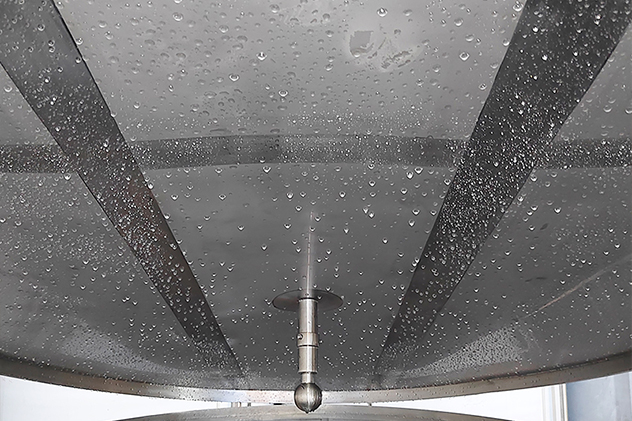
Aseptic cold filling mitigates contamination risks at both the product and packaging interface. The filling zone is enclosed within an isolator under positive pressure with HEPA filtration to maintain near-aseptic conditions. Product, bottles, caps, machinery and surrounding environment are incorporated into the sanitation regime. Process parameters are automatically captured and stored for traceability. This technology is nearly mandatory for fermented beverages that cannot withstand high thermal load while requiring extended shelf-life safety.
About Tiantai
Kombucha commercialization cannot rely on recipes alone. It requires mastery of microbial metabolism, aroma compound physiochemistry, and precision engineering to reliably replicate target conditions. Secondary fermentation sets the upper limit of flavor quality; a complete equipment ecosystem preserves that quality at scale.
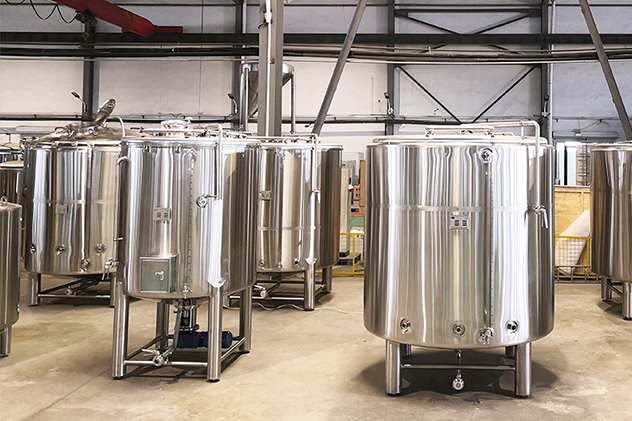
Tiantai manufactures kombucha brewing equipment and delivers turnkey kombucha production project solutions for commercial scale-up. If you are planning a kombucha production line, please get in touch.