
High-grade kombucha is defined by layered sensory profiles: crisp entry, mid-palate fruit notes, lingering sweet finish, and consistent, fine, persistent carbonation. The foundation of this sensory experience lies in the secondary fermentation process.
Why Secondary Fermentation for Kombucha?
Primary fermentation takes place in open-top fermenters, where the SCOBY consortium (symbiotic culture of yeast, acetic acid bacteria and lactic acid bacteria) metabolizes sugar within the tea substrate. This stage generates organic acids, amino acids and converted polyphenols — these serve as flavour precursors.
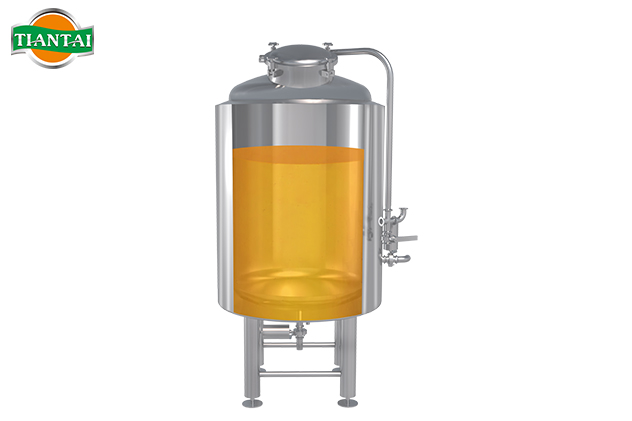
Secondary Fermentation = Flavour Modulation & Carbonation Lock-In
Secondary fermentation is carried out under sealed, pressurized conditions:
- Generation of complex, mellow aromatic compounds
- Anoxic yeast metabolism of residual sugars with continuous CO₂ production
- Retention of volatile aroma compounds within the liquid matrix, preventing atmospheric escape
Secondary fermentation achieves three core functions concurrently: aroma enrichment, natural carbonation development and flavour containment.
Forced Carbonation vs. Natural In-Bottle/In-Tank Carbonation
Carbon dioxide introduced via forced carbonation forms coarse, aggressive bubbles that dissipate rapidly. CO₂ produced endogenously during secondary fermentation yields fine, creamy, long-lasting effervescence with gradual palatal release.
Function of Fruit Additions at Secondary Fermentation
Fruit dosed at this phase contributes native sugars and flavour precursors to ongoing microbial metabolism. Fruit character integrates into the kombucha flavour architecture, rather than acting as a superficial post-blend flavour additive.
Industrial High-Grade Kombucha Product Categories
Live Culture Cold-Chain Kombucha
This variant follows the full fermentation workflow without pasteurization, retaining viable live cultures. It cannot be distributed under ambient conditions and requires cold-chain logistics. Distribution channels are primarily craft beer taps, premium tea outlets and specialty coffee venues; presence in conventional retail shelving remains limited.
Pasteurized Kombucha
Manufacturers implement pasteurization to satisfy regulatory requirements while preserving core quality attributes: undiluted base kombucha, fruit biotransformation during secondary fermentation (instead of post-filling flavour dosing), and 100% natural in-tank CO₂ generation without forced carbonation. Products engineered with full-process quality control are classified as premium kombucha.
Consistent Quality Enabled by Dedicated Brewing Equipment
Stable, scalable kombucha production relies on integrated kombucha brewing systems rather than standalone stainless steel vessels. This is the core design philosophy of Tiantai kombucha solutions: equipment engineered for process requirements, process parameters safeguarding product quality.
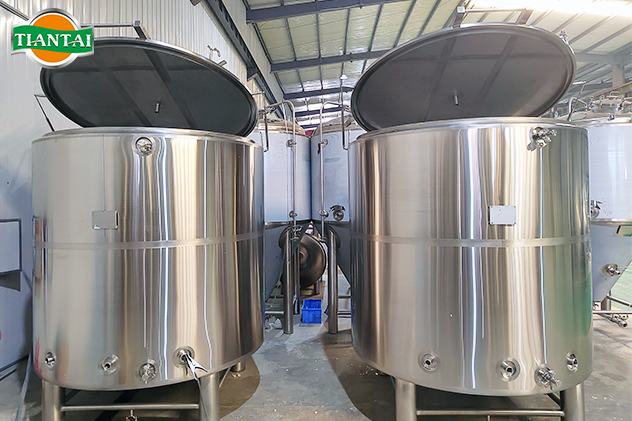
Aerobic Primary Fermentation System
Stability is critical for primary fermentation. Fluctuating temperature, insufficient oxygen supply and suboptimal vessel geometry lead to aberrant acidity, dull flavour profiles, or catastrophic batch contamination. Tiantai dedicated aerobic kombucha fermenters feature open aerated vessel design to deliver controlled oxygen transfer to the culture while mitigating airborne contamination. Integrated PLC process control maintains setpoint environmental parameters optimized for acetic acid bacterial activity.
Pressurized Anaerobic Carbonation & Aroma Development System
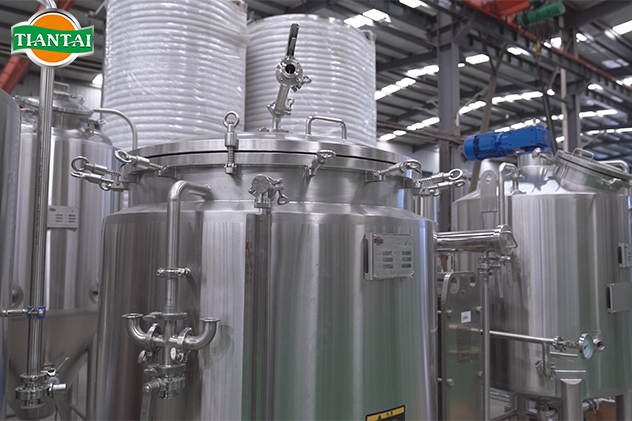
As outlined above, aroma formation and carbonation in secondary fermentation depend entirely on a sealed pressurized environment. Secondary fermenters must be pressure-rated hermetic vessels capable of sustaining accumulating CO₂ pressure without leakage — a distinct specification from open primary fermenters. A qualified high-performance secondary fermentation package incorporates:
Pressure rating & safety hardware: pressure-rated vessel construction, mandatory safety relief valves and pressure relief assemblies
Hermetic sealing & anaerobic integrity: precision sealing structure to eliminate gas loss and oxygen ingress throughout carbonation and aroma maturation
Temperature modulation: adjustable temperature setpoints to arrest fermentation via cooling or reactivate metabolic activity via heating for precise flavour steering
Filling line compatibility: matched pressure conditions downstream to filler interfaces, preventing CO₂ breakout and effervescence loss during transfer
CIP Cleaning System
Material specification, surface finish and elimination of dead legs directly determine batch-to-batch safety, consistency and flavour reproducibility. Tiantai kombucha plant layouts are engineered with integrated Clean-in-Place (CIP) systems. Standardized automated cleaning cycles support hygienic production. Higher upfront capital expenditure delivers long-term operational efficiency, sanitation assurance and consistent organoleptic performance.
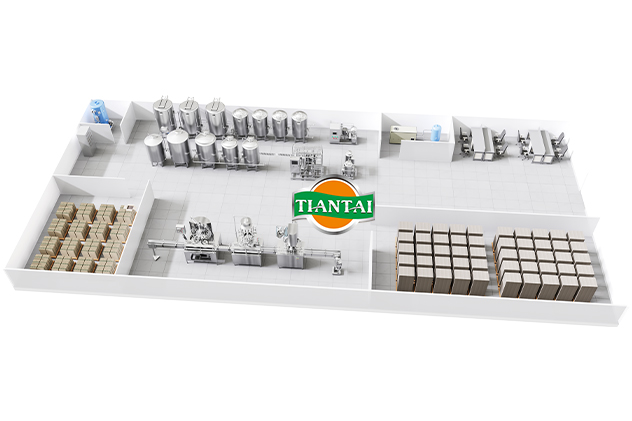
If you are developing a kombucha production project, contact Tiantai. Share your product positioning, target throughput and target flavour specification. Tiantai delivers deployable, replicable, cost-controlled kombucha brewing turnkey solutions. Our specialized process equipment and matched technical support translate your concept into commercially stable premium kombucha supply.