
Kombucha is a fermented beverage made primarily from tea, sugar, and SCOBY (Symbiotic Culture of Bacteria and Yeast). During fermentation, yeast converts sugar into alcohol and carbon dioxide, while acetic acid bacteria and other microorganisms contribute to organic acid production, gradually developing kombucha’s distinctive sweet-and-sour flavor.
As kombucha production evolves from home brewing to commercial manufacturing, selecting the right fermentation equipment has become an important part of production planning. In addition to tank capacity, material, and hygienic design, manufacturers need to consider the production environment, fermentation process, and temperature control requirements when choosing a tank.
Single-wall and jacketed fermentation tanks are two common options for kombucha production. Single-wall tanks feature a simpler structure and generally require a lower initial investment, while jacketed tanks can be connected to heating or cooling systems to provide more active temperature control.
So, when is a single-wall fermentation tank suitable? What production requirements make a jacketed fermentation tank a better choice? This article explores their working principles, suitable applications, and key selection considerations.
When Is a Single-Wall Fermentation Tank Suitable?
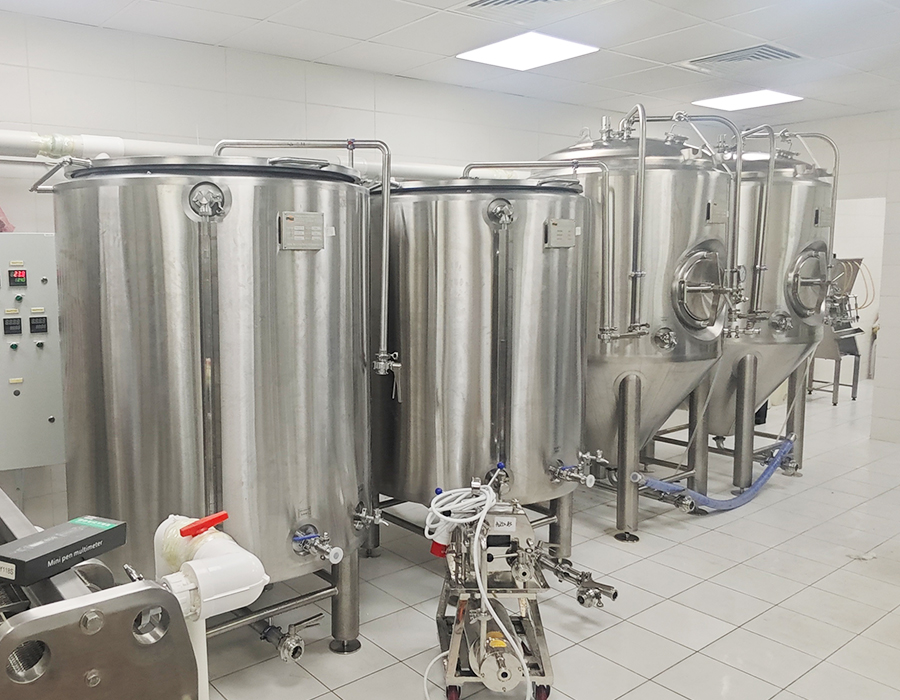
A single-wall fermentation tank is a fermentation vessel without an integrated heating or cooling jacket. It relies primarily on environmental temperature management to meet fermentation requirements.
Stable Fermentation Environment
Fermentation temperature affects microbial activity, acidity development, and flavor formation in kombucha. If the fermentation room can maintain a suitable temperature over time and the liquid temperature inside the tank remains within the required process range, a single-wall tank can generally meet basic production needs.
Small-Batch Production or Product Development
For startups, beverage workshops, and new product development projects, single-wall tanks offer a relatively simple structure and typically lower initial equipment costs. They are suitable for small-batch production, pilot runs, and process testing.
No Need for Active Tank Temperature Control
If the manufacturer can effectively manage fermentation through room temperature control and temperature monitoring, and the process does not require active heating or cooling of the tank, a single-wall tank can be a practical and cost-effective option.
It is important to note that a single-wall tank does not eliminate the need for temperature management. Manufacturers should still monitor the liquid temperature inside the tank to prevent environmental fluctuations from affecting fermentation progress and product quality.
When Is a Jacketed Fermentation Tank a Better Choice?
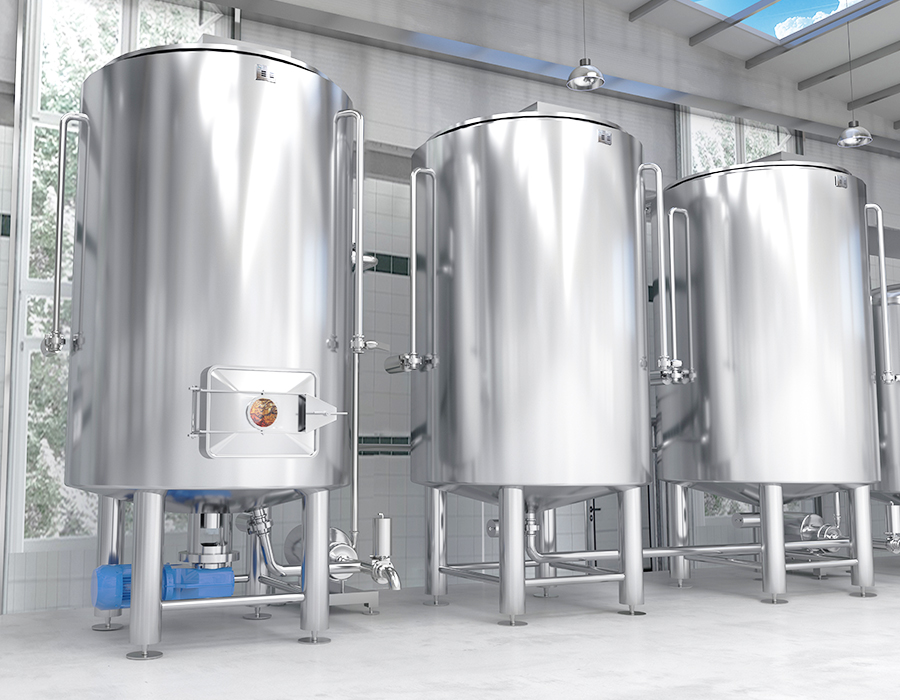
When ambient temperatures fluctuate significantly or the production process requires greater consistency, a jacketed fermentation tank is generally worth considering.
Significant Changes in Ambient Temperature
High summer temperatures or seasonal variations can alter the fermentation rate of kombucha. When connected to a suitable heating or cooling system, a jacketed tank can actively regulate the liquid temperature according to process requirements, helping reduce the impact of environmental changes.
Larger Fermentation Volumes
As batch volumes increase, managing liquid temperature through environmental adjustments alone may become more challenging. A jacketed tank can help control product temperature through a heat exchange system. However, actual performance depends on heat transfer capacity, tank design, and the temperature control system.
Higher Product Consistency Requirements
Commercial production requires manufacturers to minimize variations between batches as much as possible. A jacketed tank equipped with temperature sensors and a control system can help maintain more stable fermentation conditions and improve process controllability.
It is important to emphasize that a jacketed structure alone does not guarantee precise temperature control. Actual performance also depends on temperature monitoring, equipment configuration, and a validated fermentation process.
What Else Should You Consider When Selecting a Kombucha Fermentation Tank?
In addition to the temperature control method, manufacturers should evaluate the following factors when selecting a fermentation tank.
Tank Material: Kombucha is acidic, so all product-contact materials should be suitable for acidic beverage production. 304 or 316L stainless steel is commonly used, with the final choice depending on the product characteristics and cleaning conditions.
Cleaning and Hygienic Design: The tank should be designed for effective cleaning and complete drainage. For commercial production, a CIP (Clean-in-Place) system can be configured as needed, and its cleaning effectiveness should be validated.
Fermentation Process: Primary fermentation in traditional kombucha production generally requires consideration of the oxygen needs of acetic acid bacteria. The tank design should therefore match the actual fermentation method.
Downstream Production Requirements: If secondary fermentation, carbonation, or pressurized operations are involved, the corresponding equipment should be planned in advance. A standard atmospheric fermentation tank must not be used for pressurized production unless it has been specifically designed and rated for that purpose.
Therefore, equipment selection should not be based on purchase price alone. Process requirements, temperature control conditions, hygienic management, and long-term operating costs should all be considered.
Tiantai Kombucha Fermentation Equipment Solutions
For kombucha manufacturers, the right fermentation equipment should match the product process, production environment, and capacity planning.
Tiantai provides fermentation equipment and beverage production solutions tailored to customers’ product types, fermentation volumes, temperature control requirements, and production plans, helping manufacturers develop suitable equipment configurations for their projects.
If the production environment is stable and active heating or cooling is unnecessary, a single-wall fermentation tank may offer a more economical solution. If active temperature control is required or greater fermentation consistency is a priority, a jacketed fermentation tank with a compatible temperature control system may be the better option.
The key to selecting the right kombucha fermentation tank is to match the equipment configuration to the actual process requirements.
Contact Tiantai to discuss your product process, target production capacity, and temperature control requirements, and learn more about fermentation equipment solutions tailored to your project.