
Homemade kombucha is one of the easiest fermented beverages to prepare: simply combine sweetened tea with a starter culture and allow it to ferment for about 10–15 days, resulting in a naturally effervescent drink with a balanced sweet, sour, and slightly bitter flavor. While this “plain” kombucha is enjoyable on its own—especially when chilled—its true potential lies in flavoring. With creativity and care, it can be transformed into a wide variety of complex and refreshing beverages. Understanding when and how to flavor kombucha is essential for maintaining fermentation quality and achieving clean, well-defined flavors.
When to Flavor Kombucha?
Flavoring is best done after the primary fermentation and before bottling, during what is known as the secondary fermentation stage.
The standard procedure is as follows: First, brew sweet tea and allow it to ferment with the SCOBY culture for 10–15 days. Once the desired acidity is reached, remove the SCOBY and reserve it for the next batch. At this stage, flavorings can be added to the kombucha before bottling it for secondary fermentation.
While it is theoretically possible to add flavoring ingredients during the initial fermentation, this is not recommended. Many ingredients especially fruits, herbs, and spices,can disrupt the microbial balance of the SCOBY, potentially reducing its activity or increasing the risk of contamination. In addition, volatile flavor compounds may degrade or dissipate during prolonged fermentation, resulting in a less pronounced final flavor.
By contrast, secondary fermentation helps preserve bright, vibrant flavors while also promoting natural carbonation, as residual sugars are consumed in the sealed bottle.
What Are Some Tips for Flavoring Kombucha?
There are four main methods for flavoring kombucha:
1. Direct Addition
This is the simplest method, in which flavorful ingredients such as fruit juices, syrups, or extracts are added directly to the kombucha. Because these ingredients are already concentrated, they impart flavor quickly and consistently. For a standard 750 ml bottle of kombucha, the amount added can range from a few drops to as much as half a cup, depending on the ingredient’s strength.
2. Infusion (Cold Infusion)
This method involves adding ingredients directly to the kombucha and allowing them to steep at room or cool temperature for 6 to 48 hours. This gentle approach is ideal for preserving the delicate aromatic compounds found in fresh fruits, edible flowers, and herbs such as peppermint or basil. It is especially well suited for extracting citrus oils from fruit peels without introducing excessive bitterness.
3. Hot Infusion
In this method, the ingredients are first steeped in hot water to extract their flavor, and the liquid is then cooled before being added to the kombucha. This approach helps capture deeper, more complex flavors that may not be fully extracted through cold infusion. Because the added liquid dilutes the kombucha, the infusion should be prepared at a strength 2 to 4 times greater than regular tea.
4. Decoction Method
The decoction method is a more intensive version of hot infusion, in which the ingredients are gently simmered in water for 10 minutes to 1 hour. This technique is particularly suitable for tougher plant materials—such as roots, bark, seeds, and certain spices—since it extracts higher concentrations of aromatic and bioactive compounds. It is commonly used for ingredients like ginger root, medicinal herbs, or blended mushroom preparations.
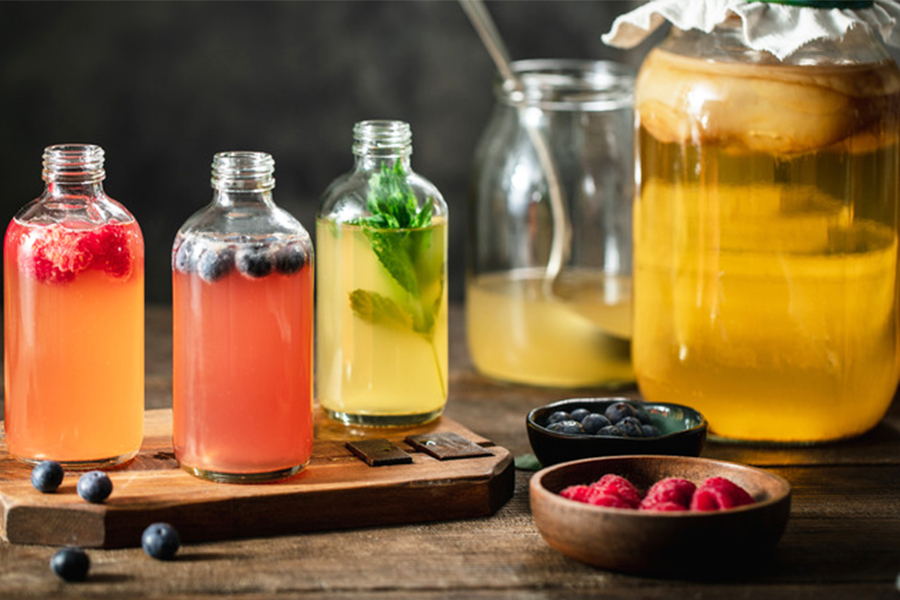
What Ingredients Can Be Used to Flavor Kombucha?
1. Fruit Juice
Fruit juice is one of the most effective and reliable ingredients for flavoring kombucha due to its high concentration and ease of use. It blends quickly into the kombucha, adding both flavor and fermentable sugars, which help boost carbonation.
Recommended amounts for a 750 ml bottle of kombucha:
45 ml (3 tablespoons) lime juice
60 ml (¼ cup) cranberry juice or pineapple juice
125 ml (½ cup) blueberry juice or coconut water
Fruit juice creates a bright, refreshing flavor profile and is an excellent choice for beginners.
2. Syrups
A wide variety of flavored syrups are now available on the market—especially cocktail syrups—which make it easy to create layered and complex flavors. Options such as berry syrups, herbal syrups, or floral syrups can transform kombucha into a refined non-alcoholic beverage.
Shrubs (drinking vinegars made from vinegar, sugar, and fruit) are particularly well suited for kombucha, as they complement its natural acidity.
Because syrups vary greatly in sweetness and intensity, it’s best to start with a small amount (about 45 ml per 750 ml of kombucha) and adjust to taste.
3. Fruit
Compared to juice, whole or minimally processed fruit produces a softer, more natural flavor, making steeping time especially important. Fruit can be fresh or frozen and may be chopped, mashed, or left whole depending on the desired level of extraction.
Recommended amounts for a 750 ml bottle of kombucha:
60 ml (¼ cup) pineapple chunks
60 ml (¼ cup) mixed berries (strawberries, blueberries, blackberries)
60 ml (¼ cup) sea buckthorn berries
This method yields a smoother, more delicate flavor and may add a slightly pulpy texture.
4. Spices and Herbs
Spices can significantly enhance kombucha, adding warmth, depth, and complexity. The method of use depends on the form of the ingredient:
Ground spices can be added directly
Whole spices are better suited for infusion or decoction
Hard seeds or roots benefit from simmering
Recommended amounts for a 750 ml bottle of kombucha:
1 teaspoon chai spice blend
¼ teaspoon turmeric powder
½ teaspoon fenugreek seeds
1 sprig of rosemary
Spices should be used sparingly, as their strong flavors can easily overpower other ingredients.
5. Tea and Herbal Infusions
Using tea or herbal infusions during secondary fermentation is an excellent way to add aromatic complexity. Primary fermentation typically relies on standard teas (such as black or green tea), while secondary fermentation allows for more creative use of flavored teas.
Recommended additions for a 750 ml bottle of kombucha:
125 ml lemon-ginger herbal tea
125 ml fruit rooibos tea
125 ml hibiscus and rosehip infusion
These additions create layered, elegant flavor profiles and pair well with fruits or spices.
Flavoring kombucha is both a science and an art. For best results, start with moderate amounts, taste frequently, and keep track of successful combinations. By understanding the characteristics of different ingredients and refining your technique, you can consistently create kombucha ranging from light and refreshing to rich and complex.