
En la producción comercial de kombucha, mantener un cultivo de fermentación no consiste simplemente en mantener vivo un SCOBY.
La cuestión más importante es cómo mantener una fuente fiable de líquido de fermentación que permita inocular nuevos lotes de forma constante.
El líquido de cultivo, también denominado «té de cultivo» o «inóculo», es la kombucha fermentada que se retiene de una fermentación activa y se traslada a una nueva tanda de té azucarado. Contiene microorganismos viables, así como ácidos y otros metabolitos de la fermentación producidos durante la fermentación anterior.
Cuando la kombucha se elabora de forma continua, este líquido de cultivo se convierte en una parte importante del ciclo de producción.
Un productor puede utilizarlo para inocular uno depósito de fermentación una tras otra, lo que hace que el estado del fermento influya directamente en la velocidad de fermentación, la acidez, el desarrollo del sabor y la uniformidad de cada lote.
La película física del SCOBY también puede mantenerse como parte de un sistema de cultivo, pero no debe confundirse con el objetivo principal de la gestión de los iniciadores comerciales.
El líquido de fermentación es el elemento fundamental del manejo de los cultivos
Como ya hemos explicado anteriormente, la kombucha es un proceso de fermentación con un cultivo mixto de levaduras y bacterias. Durante la fermentación, el cultivo consume los nutrientes del té y produce ácidos orgánicos, etanol, dióxido de carbono y otros metabolitos.
Cuando se trasvasa una parte de este líquido fermentado a un nuevo lote, se introduce una población microbiana ya establecida en el té dulce recién preparado.
Al mismo tiempo, el fermento aporta la acidez ya existente a la nueva fermentación.
Esto confiere al líquido de fermentación dos funciones importantes:
- Proporciona un inóculo activo.
- Ayuda a establecer las condiciones ácidas del nuevo lote.
Para la producción comercial, ambas son muy valiosas.
En lugar de permitir que cada nuevo lote se desarrolle a partir de una población microbiana muy pequeña o irregular, el productor puede partir de una cantidad definida de líquido fermentado activo.
Esto convierte al líquido de fermentación en un insumo del proceso que puede medirse, supervisarse y estandarizarse.
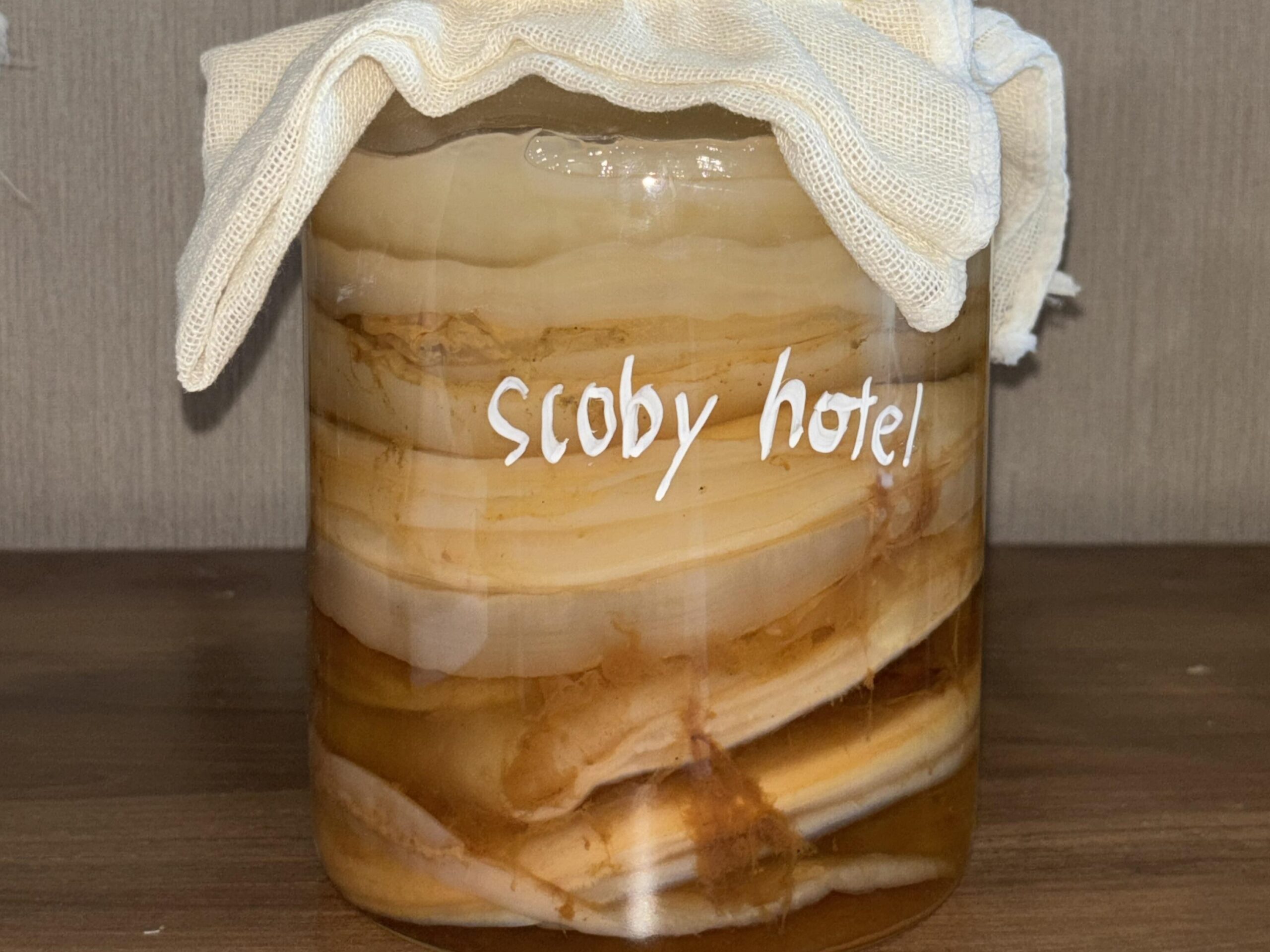
¿Qué es un «hotel para scobys»?
Un “hotel SCOBY” es un sencillo sistema de almacenamiento de cultivos en el que las películas se conservan en kombucha fermentada y se les añade periódicamente té dulce fresco.
Puede resultar útil para un pequeño productor que desee conservar películas de reserva entre lotes o tener a mano un cultivo de reserva.
Sin embargo, no hay que confundir un «hotel de SCOBY» con un sistema comercial de cultivo inicial.
El objetivo principal de un «hotel» para SCOBY es conservar la película biológica.
El objetivo principal de un sistema comercial de iniciación es mantener un inóculo fiable para la fermentación.
Para los cerveceros caseros, estas dos funciones pueden llevarse a cabo en el mismo recipiente.
En el caso de una fábrica comercial de kombucha, es mejor analizarlos por separado.
¿Cómo se debe conservar el líquido de fermentación?
El principio más importante es mantener el fermento en un estado en el que permanezca activo y apto para iniciar una nueva fermentación.
Por lo tanto, el líquido de cultivo no debe tratarse como si fuera kombucha ya preparada y guardarse en una estantería hasta que se necesite para la siguiente tanda.
El cultivo sigue estando biológicamente activo, y las condiciones de almacenamiento influyen en su actividad y composición.
Hay que tener en cuenta varios factores.
Temperatura
La temperatura influye directamente en la actividad microbiana.
Por lo general, un fermento más caliente se mantendrá más activo desde el punto de vista metabólico, mientras que las condiciones más frías pueden ralentizar la actividad microbiana.
En el caso de que los intervalos entre lotes de producción sean cortos, el fabricante puede mantener el fermento en condiciones de fermentación controladas, de modo que el cultivo permanezca listo para su inoculación.
Para períodos de almacenamiento más prolongados, se puede considerar una estrategia de temperatura más baja, pero conviene comprobar el efecto de esa condición de almacenamiento en el rendimiento de la fermentación posterior.
Un cultivo que se haya mantenido en condiciones diferentes puede necesitar un periodo de recuperación antes de comportarse de la misma manera que un fermento mantenido activamente.
Lo importante es la coherencia.
Si la temperatura de almacenamiento varía significativamente de un lote a otro, el propio fermento puede convertirse en otra fuente de variación del proceso.
Acidez
El líquido de cultivo debería mantenerse normalmente ácido, pero no existe un valor de pH único y universal que defina un cultivo comercialmente aceptable para todos los procesos de elaboración de kombucha.
El objetivo debe fijarse en función del cultivo, la composición del té, la proporción de inoculación, la temperatura de fermentación y las características deseadas del producto.
El seguimiento del pH a lo largo del tiempo resulta útil porque ofrece una forma sencilla de detectar cambios en el estado del fermento.
Sin embargo, el pH no debe utilizarse por sí solo.
Los cambios en la acidez titulable, la actividad fermentativa, el aroma y el rendimiento posterior del lote pueden aportar información adicional.
Disponibilidad de nutrientes
Un cultivo que permanece activo sigue consumiendo los nutrientes disponibles.
Si el líquido de fermentación se almacena durante un periodo prolongado sin una alimentación adecuada, su estado puede alterarse.
Para el mantenimiento activo del cultivo, los productores pueden introducir periódicamente té azucarado fresco u otro sustrato adecuado, de acuerdo con un procedimiento establecido de gestión del cultivo.
El calendario de alimentación debería depender de las condiciones reales de almacenamiento y de la actividad del cultivo, más que de un número de días fijo.
El objetivo es mantener el cultivo activo sin permitir que una fermentación descontrolada genere una acidez innecesaria o un agotamiento excesivo de nutrientes.
¿Con qué frecuencia hay que renovar el líquido de la masa madre?
No existe un intervalo de renovación único que se aplique a todas las fábricas de kombucha.
Un fermento que se utiliza a diario tiene necesidades muy diferentes a las de un fermento de reserva que puede permanecer sin utilizarse durante varias semanas.
El ciclo de actualización depende de:
- temperatura de almacenamiento;
- volumen inicial;
- actividad cultural;
- disponibilidad de nutrientes;
- frecuencia de vacunación obligatoria;
- calendario de producción previsto.
Para una producción continua, un enfoque práctico consiste en mantener el fermento como un cultivo activo y reponerlo periódicamente según un ciclo de producción definido.
Por ejemplo, una fábrica de cerveza que gestiona varias depósitos de fermentación por semana puede mantener un recipiente de iniciación específico en el que se introduce sustrato fresco y se añade una cantidad controlada de inóculo a cada nueva fermentación.
Esto resulta más predecible que mantener una colección de tarros de todo tipo o depender de el tanque de producción que esté listo en cada momento.
¿Qué cantidad de masa madre hay que conservar de cada lote?
La cantidad de masa madre que se debe conservar debe determinarse en función de las necesidades de la próxima producción.
Un productor comercial debería calcular primero:
¿Qué volumen tiene el próximo lote de fermentación?
¿Qué proporción de inoculación se requiere?
¿Cuántos lotes hay que inocular antes de que haya más cultivo iniciador disponible?
¿Cuánto fermento hay que dejar de reserva?
Estas preguntas permiten dimensionar el sistema de cultivo en función de las necesidades reales de producción.
Por ejemplo, una fábrica de cerveza que produzca varios lotes de fermentación cada semana puede necesitar un recipiente de cultivo inicial lo suficientemente grande como para realizar múltiples inoculaciones sin agotar el cultivo de reserva.
Esta es una de las razones por las que el dimensionamiento de los tanques de iniciación debe basarse en el programa de producción completo y no únicamente en el volumen de un solo tanque de fermentación.
¿Cómo se mantiene un fermento estable a lo largo de sucesivas elaboraciones?
Los cultivos comerciales de kombucha son comunidades microbianas dinámicas.
No son ingredientes fijos.
Cuando un fermento se traslada repetidamente de una fermentación a otra, el cultivo queda expuesto a cambios en la temperatura, la composición del té, la concentración de azúcar, la disponibilidad de oxígeno, la duración de la fermentación, la acidez y otras condiciones del proceso.
Con el tiempo, estas condiciones pueden influir en el equilibrio y el comportamiento de la comunidad microbiana.
A esto se le suele llamar «propagación repetida» o «backslopping».
El trasvase repetido es una técnica práctica y muy utilizada en la producción de alimentos fermentados, pero no debe darse por sentado que el cultivo permanezca completamente inalterado a lo largo de un número ilimitado de ciclos.
Por lo tanto, en la producción comercial de kombucha, el objetivo práctico no es conservar exactamente la misma población microbiana para siempre.
El objetivo es mantener un rendimiento constante en la fermentación.
¿Qué aspectos deben controlarse en un iniciador comercial?
Un cultivo iniciador debe cumplir unos criterios de liberación cuantificables antes de que se utilice para inocular un nuevo lote de producción.
Las especificaciones exactas variarán según el fabricante, pero entre los indicadores útiles pueden figurar:
pH
Las mediciones periódicas del pH pueden revelar si el cultivo se mantiene dentro del rango ácido previsto.
Una desviación repentina respecto a los valores históricos puede ser motivo para investigar.
Acidez titulable
La acidez aporta información que el pH por sí solo no refleja.
Dos cultivos pueden presentar valores de pH similares aunque tengan concentraciones de ácido total diferentes.
Actividad de fermentación
Una prueba práctica consiste en comprobar cómo se comporta el fermento al añadirlo al té recién preparado.
¿Empieza el nuevo lote a acidificarse en el plazo previsto?
¿Sigue la curva de fermentación habitual?
¿Se alcanza la condición objetivo dentro del plazo habitual de producción?
Estas observaciones pueden resultar más reveladoras que el aspecto de la película del SCOBY.
Aroma y aspecto
Un equipo de producción con experiencia suele detectar cambios en el comportamiento de los cultivos mediante el aroma y la inspección visual.
Se deben investigar los olores inesperados, el crecimiento inusual en la superficie u otras anomalías.
La inspección visual debe complementar, y no sustituir, el control analítico.
Rendimiento entre lotes
El indicador más claro de que un fermento es estable es su repetibilidad.
Si un mismo cultivo presenta repetidamente un comportamiento de fermentación similar en las mismas condiciones de proceso, significa que está funcionando según lo previsto.
Si la fermentación se ralentiza de repente, se vuelve más ácida, menos predecible o presenta diferencias notables en su perfil sensorial, se debe evaluar la masa madre antes de volver a utilizarla.
¿Hay que extraer líquido de fermentación de cada lote terminado?
No necesariamente.
La mejor fuente de fermento debe definirse como parte del proceso de producción.
En algunos sistemas, se puede reservar una parte de una fermentación primaria en buen estado como masa madre para lotes posteriores.
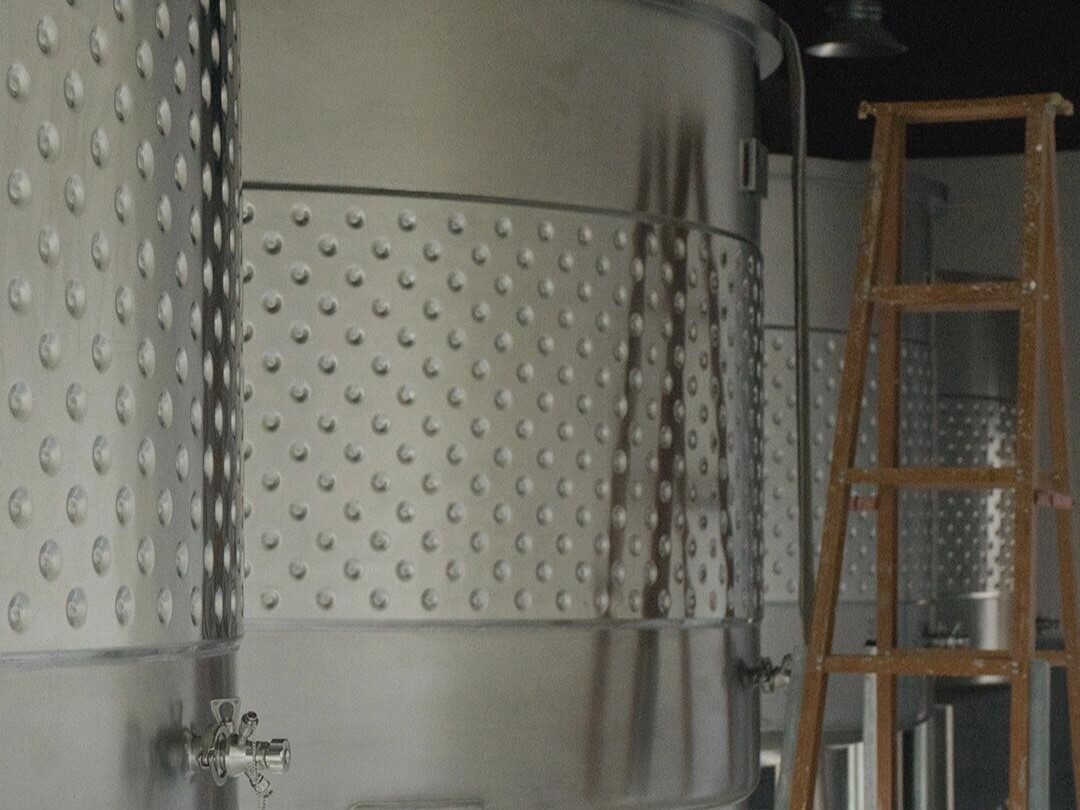
En otros sistemas, el cultivo iniciador específico se mantiene por separado de los depósitos principales de producción.
El segundo enfoque puede ofrecer un mayor control cuando la producción es a gran escala o frecuente.
Además, evita que la disponibilidad del fermento dependa del momento exacto en que se terminen los lotes de producción.
Una fermentación retrasada no debería retrasar necesariamente la preparación del siguiente lote simplemente porque aún no se disponga de masa madre.
Por qué un depósito de fermentación específico puede mejorar la producción
Un tanque de iniciación específico permite que la gestión de cultivos se convierta en una operación independiente.
En lugar de considerar el fermento como un subproducto de la producción, la cervecería puede mantener un volumen definido de cultivo activo destinado específicamente a la inoculación.
Esto ofrece varias ventajas prácticas.
Mejor planificación de la producción
La masa madre se puede preparar independientemente del calendario de fermentación principal.
Una inoculación más uniforme
La fábrica de cerveza puede establecer un volumen de inoculación y aplicar el mismo procedimiento en varios depósitos.
Supervisión más sencilla
Es posible tomar muestras del fermento y supervisarlo sin interrumpir el proceso de producción principal.
Menor manipulación
El fermento se puede transferir a través de las tuberías sanitarias, en lugar de trasladarlo manualmente de un recipiente a otro.
Mejor protección del patrimonio cultural
Un recipiente hermético puede reducir la exposición innecesaria al entorno.
Estas ventajas cobran cada vez más importancia a medida que aumenta el número de depósitos de fermentación.
¿Se puede guardar el líquido de fermentación en la nevera?
Las temperaturas más bajas pueden ralentizar la actividad microbiana y, por lo tanto, pueden resultar útiles cuando es necesario mantener un cultivo en reposo temporalmente.
Sin embargo, la refrigeración no debe considerarse automáticamente como el método de almacenamiento ideal para todos los sistemas de producción.
El efecto depende de:
- temperatura de almacenamiento;
- plazo de conservación;
- composición cultural;
- disponibilidad de nutrientes;
- tiempo de recuperación necesario;
- condiciones de fermentación previstas tras el almacenamiento.
Un cultivo que se haya conservado en frío puede comportarse de forma diferente a uno que se haya mantenido en condiciones de fermentación activa.
Por lo tanto, en el caso de las operaciones comerciales, cualquier procedimiento de almacenamiento refrigerado debe validarse comprobando el comportamiento del cultivo tras su retorno a las condiciones de producción.
La cuestión relevante no es simplemente si el producto cultural se conserva tras el almacenamiento.
La cuestión es si la fermentación se reanuda de forma constante.
¿Cuánto tiempo se puede conservar el líquido de fermentación?
No existe un plazo de conservación universal para el líquido iniciador de kombucha vivo.
El periodo de conservación útil depende del cultivo, las condiciones de almacenamiento, la higiene de los recipientes, la disponibilidad de nutrientes y el rendimiento de fermentación requerido.
En lugar de fijar un número arbitrario de días, los productores comerciales pueden definir criterios de aceptación para la reutilización de cultivos iniciadores.
Por ejemplo:
- ¿Se mantiene el fermento dentro de los límites previstos de pH y acidez?
- ¿Tiene el aroma esperado?
- ¿No presenta contaminación visible?
- ¿Presenta un comportamiento de fermentación normal cuando se inocula en té fresco?
Este enfoque resulta mucho más útil que basarse únicamente en el tiempo de almacenamiento.
¿Cuándo hay que cambiar el cultivo iniciador?
No existe un número universal de ciclos de fermentación tras los cuales haya que desechar un cultivo de kombucha.
Por el contrario, la sustitución debería basarse en la capacidad del cultivo para cumplir los requisitos de rendimiento establecidos por la cervecería.
Un productor puede plantearse sustituir o regenerar un cultivo iniciador cuando se da alguna de las siguientes circunstancias:
- variabilidad persistente e inexplicable en la fermentación;
- cambios significativos y repetidos en la acidez;
- un aroma o sabor inusual;
- escasa actividad fermentativa;
- posible contaminación;
- una historia cultural que ya no se puede rastrear con fiabilidad.
En lo que respecta a la producción de alimentos, cualquier sospecha de contaminación debe tratarse siempre siguiendo los procedimientos de seguridad alimentaria y control de calidad de la fábrica de cerveza.
El mero hecho de alimentar un cultivo dudoso y seguir propagándolo puede hacer que el problema se extienda a varios lotes de producción.
Diseño de un sistema de cultivos iniciadores para la producción continua
Un sistema de arranque comercial debe diseñarse en función del calendario de producción real.
Entre las consideraciones importantes se incluyen:
Capacidad del depósito de fermentación
- ¿Cuánta kombucha se produce en cada lote?
Número de depósitos de fermentación
- ¿Cuántos lotes puede ser necesario inocular al mismo tiempo?
Tasa de vacunación
- ¿Cuánto líquido de masa madre se necesita para cada tanda?
Frecuencia de producción
- ¿Con qué frecuencia debe haber masa madre fresca disponible?
Estrategia de mantenimiento de la cultura
- ¿Se mantendrá el cultivo de forma continua o se preparará únicamente cuando sea necesario?
Método de transferencia
- ¿Cómo se trasladará el fermento del recipiente de cultivo a los tanques de fermentación?
Seguimiento
- ¿Dónde se comprobarán el pH, la acidez, la temperatura y otros parámetros?
Limpieza
- ¿Cómo se limpiarán y desinfectarán el depósito de fermentación y las tuberías de trasvase?
Estas cuestiones deben resolverse durante la planificación del equipamiento, y no una vez que la fábrica de cerveza ya esté en funcionamiento.
Creación de un sistema fiable de producción continua de kombucha
La producción continua de kombucha no consiste solo en mantener vivo un SCOBY.
Depende de mantener un cultivo en condiciones controladas, supervisar su rendimiento, transferir un inóculo homogéneo al té fresco y proteger todo el sistema de la contaminación.
Por lo tanto, en el caso de los productores comerciales, se debería prestar más atención a la gestión de los cultivos iniciadores que a la acumulación de SCOBY.
Tiantai puede diseñar sistemas de elaboración de kombucha a escala comercial basados en este principio, con depósitos de fermentación, recipientes para fermentación inicial o cultivos, sistemas de control de temperatura, tuberías de transferencia sanitarias, sistemas CIP, equipos de carbonatación y procesos posteriores configurados de acuerdo con el proceso de producción.
La elección del sistema de iniciación adecuado depende del volumen de cada lote, del ciclo de fermentación, del número de depósitos, de los requisitos de inoculación y de la frecuencia de producción.
Para una fábrica de cerveza que tiene previsto llevar a cabo una producción continua, la pregunta clave no es:
“¿Cuántos SCOBY tenemos que guardar?”
Es:
“¿Cómo podemos mantener un cultivo iniciador fiable y suministrar un inóculo homogéneo a cada lote de fermentación?”
Esa es la base para una gestión escalable del cultivo de kombucha.