
La fabrication du kombucha commence par un simple mélange de thé sucré et d'une culture de fermentation vivante. Cependant, à mesure que la production passe de petits lots à des volumes commerciaux, une étape du processus mérite bien plus d'attention qu'on ne lui en accorde habituellement : le liquide de démarrage.
Également appelé « thé de démarrage » ou « liquide de culture », le liquide de démarrage du kombucha est du kombucha fermenté conservé d'une cuvée précédente et ajouté à du thé sucré fraîchement préparé. Il permet d'introduire une culture microbienne établie dans la nouvelle cuvée, tout en apportant des acides organiques déjà produits au cours de la fermentation.
Dans le cadre d'une fabrication à petite échelle, le liquide de démarrage peut sembler n'être qu'un élément mineur de la recette. Dans la production commerciale de kombucha, il revêt en revanche une importance bien plus grande. Son état peut influencer l'acidité initiale d'un nouveau lot, les performances de fermentation, la durée de production, le développement des arômes et la régularité d'un lot à l'autre.
C'est pourquoi le liquide de levain doit être considéré comme faisant partie intégrante du processus de fermentation.
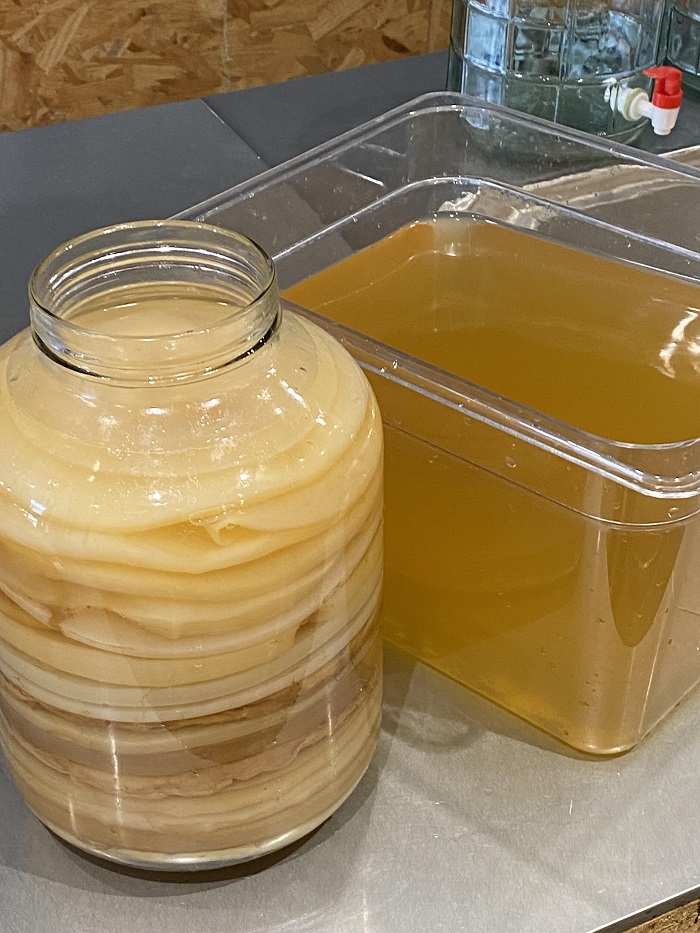
Qu'est-ce que le liquide de démarrage pour le kombucha ?
Le kombucha est fermenté par une culture microbienne mixte composée principalement de levures et de bactéries acétiques. Au cours de la fermentation, ces micro-organismes consomment des sucres et produisent de l'éthanol, des acides organiques, du dioxyde de carbone et d'autres métabolites. C'est l'interaction entre ces micro-organismes qui confère au kombucha son acidité, son arôme et sa saveur caractéristiques.
Le « liquide de démarrage » est une partie d'une fermentation déjà en cours qui est transférée dans la cuvée suivante.
Un levain liquide mûr peut contenir :
- levures viables et bactéries acétiques ;
- les acides organiques produits au cours de la fermentation précédente ;
- les nutriments résiduels et les métabolites de fermentation ;
- un milieu liquide déjà acide.
Le liquide de démarrage est donc bien plus qu'un simple thé fermenté. Il sert à la fois d'inoculum microbien et d'agent acidifiant lors de la fermentation suivante.
Cette distinction permet également de mieux cerner la relation entre le liquide de démarrage et la pellicule du SCOBY.
La couche épaisse de cellulose qui se forme à la surface du kombucha est communément appelée « SCOBY », bien que, d'un point de vue technique, il soit plus juste de la qualifier de pellicule ou de biofilm de cellulose. Elle peut contenir des micro-organismes, mais ceux qui sont responsables de la fermentation sont également présents dans la phase liquide.
Par conséquent, le transfert d'une bonne quantité de liquide fermenté permet d'apporter une culture active au nouveau lot, même sans transférer un gros morceau de pellicule.
Dans le cadre d'une production industrielle, cela s'avère particulièrement utile, car le levain liquide est beaucoup plus facile à doser, à transférer, à prélever et à intégrer dans un système de production contrôlé.
Pourquoi le liquide de démarrage est-il important pour la fermentation du kombucha ?
La première fonction principale du liquide de démarrage est d'introduire une population microbienne bien établie dans du thé sucré fraîchement préparé.
Un thé sucré fraîchement préparé n'est pas encore du kombucha. La culture microbienne doit d'abord s'établir avant que les réactions de fermentation caractéristiques puissent se dérouler efficacement.
L'ajout d'un levain liquide mûr permet d'apporter immédiatement un inoculum microbien à la nouvelle cuvée, au lieu de compter uniquement sur le développement des micro-organismes à partir d'une population initiale relativement faible.
La deuxième fonction principale est l'acidification.
Au cours de la fermentation, des acides organiques s'accumulent et le pH du liquide diminue. Le liquide de démarrage ayant déjà subi ce processus, son ajout au thé sucré frais permet d'abaisser le pH initial avant même que la nouvelle cuvée n'ait produit elle-même des quantités significatives d'acide.
Cette acidification précoce est importante pour créer les conditions de fermentation souhaitées et limiter le risque de développement de micro-organismes indésirables.
Pour les producteurs commerciaux, ces deux fonctions vont de pair :
Le levain liquide apporte à la fois la culture et l'acidité.
Cette combinaison en fait un élément essentiel du contrôle des processus.
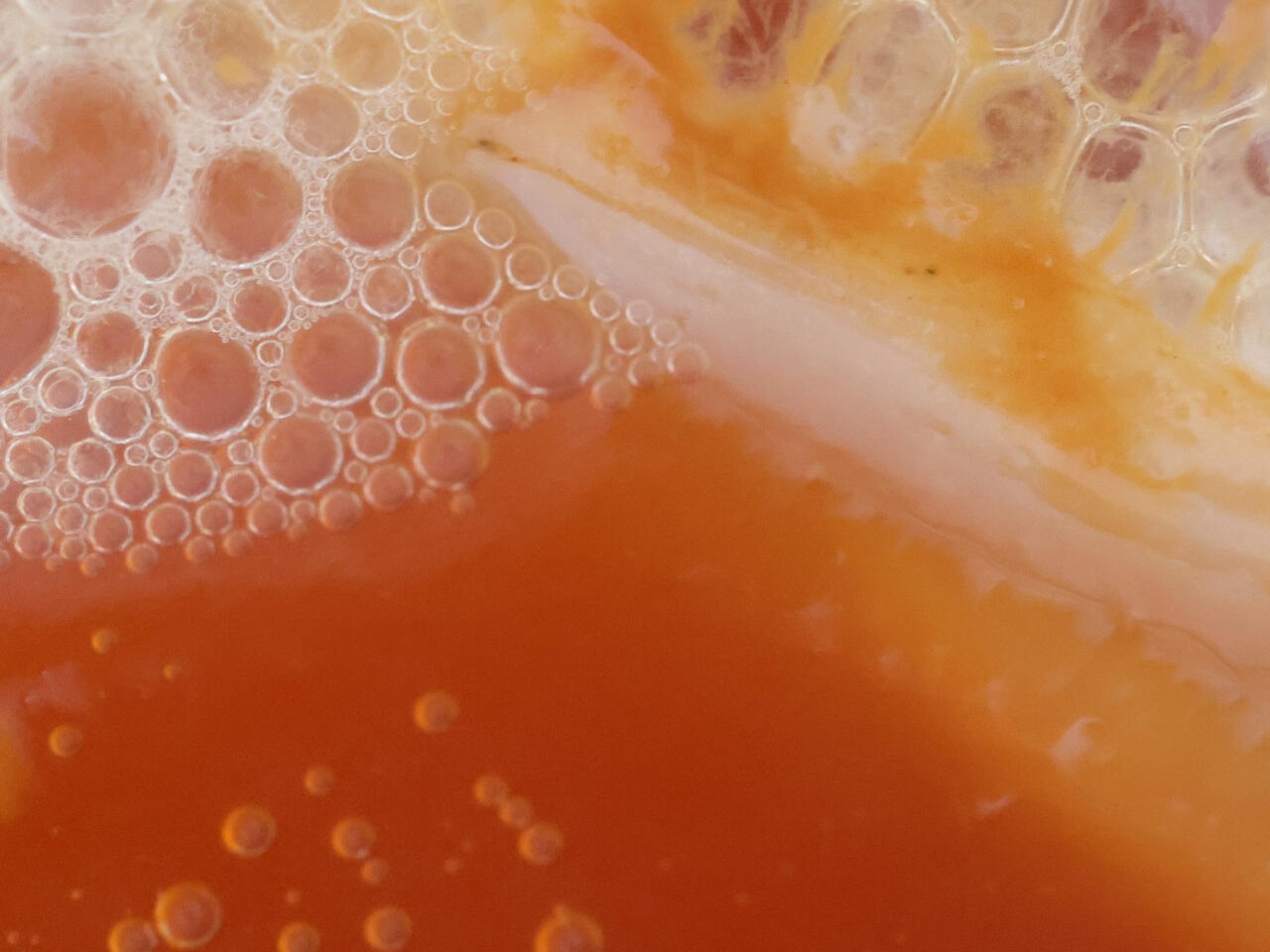
Liquide de levain et consistance de la fermentation
La production commerciale de kombucha ne se résume pas à réussir une seule fermentation. L'objectif est d'obtenir un comportement de fermentation à peu près identique d'un lot à l'autre.
C'est là que la gestion du levain revêt une importance particulière.
Deux lots préparés avec le même thé, la même concentration en sucre et la même température de fermentation peuvent néanmoins présenter des comportements différents si l'inoculum varie considérablement.
L'activité et l'état de la culture de démarrage peuvent avoir une incidence sur :
- le rythme d'acidification ;
- durée de fermentation ;
- sucre résiduel ;
- développement des acides organiques ;
- arôme et saveur ;
- planification de la production ;
- niveau de remplissage du réservoir ;
- le mélange et l'aromatisation en aval.
Un levain faible ou en mauvais état peut ralentir la fermentation. À l'inverse, un levain très acide ou anormalement actif peut faire évoluer le processus dans le sens inverse.
À petite échelle, le brasseur peut souvent compenser ces différences en prolongeant la durée de fermentation. À l'échelle industrielle, en revanche, même un changement relativement mineur peut avoir une incidence sur le calendrier de production et l'uniformité de la boisson finale.
C'est pourquoi le liquide de démarrage doit être géré comme un intrant contrôlé du processus.
Quelle quantité de levain liquide faut-il ajouter ?
Il n'existe pas de rapport de culture unique qui convienne à tous les systèmes de production commerciale de kombucha.
Les études publiées ont utilisé une large gamme de concentrations d'inoculum liquide, en fonction de la culture, de la composition du thé, de la température de fermentation, de la durée de fermentation et des caractéristiques souhaitées de la boisson finale. Une concentration d'environ 10% est couramment utilisée comme point de départ pratique, mais les producteurs commerciaux ne doivent pas considérer ce pourcentage comme une formule universelle.
Le niveau d'inoculation approprié dépend du procédé utilisé.
Parmi les facteurs importants, on peut citer :
État du liquide de démarrage
Un levain mûr et actif peut se comporter différemment d'une culture fraîchement préparée ou faiblement fermentée.
Acidité du levain
Le niveau d'acidité reporté dans le nouveau lot influe sur les conditions de départ.
Composition du thé
La variété de thé, les conditions d'extraction et les composés solubles peuvent influencer l'activité microbienne.
Concentration en sucre
La quantité de substrat fermentable disponible influe sur la cinétique de fermentation.
Température de fermentation
La température influe sur la croissance microbienne et l'activité métabolique.
Durée de fermentation prévue
Un producteur travaillant avec un cycle de production court peut avoir besoin de conditions d'inoculation différentes de celles d'un producteur recourant à une période de fermentation plus longue.
Profil du produit recherché
Un kombucha destiné à conserver davantage de douceur résiduelle peut nécessiter un traitement différent de celui d'un produit fortement acide.
Au lieu de choisir le rapport de culture de levure uniquement en se basant sur une recette, les producteurs industriels devraient définir une plage de fonctionnement contrôlée et vérifier le comportement de la fermentation dans les conditions réelles de production.
Liquide de démarrage ou pellicule de SCOBY ?
Les termes “ SCOBY ” et “ thé de démarrage ” sont souvent utilisés comme synonymes, mais ils ne désignent pas la même chose.
La culture microbienne responsable de la fermentation du kombucha se trouve à la fois dans le liquide fermenté et dans la matière associée à la pellicule de surface.
La pellicule est une structure riche en cellulose qui se forme au cours de la fermentation. Elle peut contenir des levures et des bactéries et peut être préservée dans le cadre des pratiques de gestion des cultures mises en œuvre par le producteur.
Cependant, la présence d'une pellicule épaisse ne garantit pas à elle seule une fermentation intense. De même, l'absence de pellicule visible ne signifie pas pour autant que la fermentation ne puisse pas avoir lieu.
Du point de vue des procédés industriels, la phase liquide présente un intérêt particulier car elle permet une manipulation beaucoup plus homogène.
Un inoculum liquide peut être :
- dosés selon le rapport de mélange requis ;
- acheminées par des canalisations sanitaires ;
- pompé dans une cuve de fermentation ;
- soumis à des contrôles de qualité ;
- dont le pH et l'acidité sont contrôlés ;
- intégré dans un calendrier de production reproductible.
Ce procédé est nettement plus facile à standardiser que le transfert manuel de gros morceaux de pellicule de cellulose d'une cuve à l'autre.
Le kombucha prêt à boire peut-il servir de liquide de démarrage ?
Une partie d'un lot fermenté en bon état peut être conservée pour servir de liquide de démarrage, à condition qu'elle reste apte à maintenir la culture active.
Il convient de faire une distinction importante entre le kombucha fermenté destiné à servir d'inoculum actif et la boisson finie ayant déjà subi des traitements en aval.
À l'issue de procédés tels que la pasteurisation, la stabilisation ou d'autres traitements visant à prolonger la durée de conservation, la culture microbienne peut ne plus être adaptée à la reprise de la fermentation.
Pour la production commerciale, il est donc préférable de définir un moment précis du processus de production où le liquide de démarrage est prélevé et mis de côté.
Cela permet de mettre en place un cycle contrôlé de gestion des cultures :
Fermentation → Conservation du levain → Conditionnement ou maintien du levain → Inoculation du thé frais → Nouvelle fermentation
Un tel système est plus facile à gérer que de prélever du levain sur le produit fini chaque fois qu'un nouveau lot est nécessaire.
Comment les producteurs de kombucha à l'échelle commerciale devraient-ils gérer leur liquide de culture ?
À mesure que la production de kombucha augmente, la gestion du levain peut devenir un processus à part entière.
Au lieu de considérer le levain comme un sous-produit accessoire de la fermentation, une installation industrielle peut mettre en place un système dédié à l'entretien et au transfert de la culture.
Il convient de prendre en compte plusieurs facteurs.
Veiller à séparer la gestion des levains de celle des produits finis
Le liquide de levain doit être conservé en tant que facteur actif de fermentation plutôt que d'être incorporé au flux normal du produit fini.
La séparation de ces opérations facilite le contrôle de la culture et empêche les étapes de transformation en aval d'affecter involontairement la qualité du levain.
Surveiller le pH et l'acidité
Le pH est l'un des indicateurs les plus utiles de la fermentation du kombucha, mais il ne doit pas être pris en compte isolément.
En fonction du processus de production, des mesures supplémentaires telles que l'acidité titrable, la teneur en sucre résiduel, la température et la durée de fermentation peuvent donner une image plus complète des performances de la culture.
Le suivi de ces paramètres au fil des lots successifs peut aider à déterminer la plage de fonctionnement normale d'une culture starter spécifique.
Maintenir des conditions de température stables
La température influe sur l'activité des micro-organismes impliqués dans la fermentation du kombucha.
De fortes fluctuations peuvent modifier la vitesse de fermentation et l'équilibre des métabolites produits au cours du processus. Un contrôle stable de la température contribue donc à rendre les performances du levain plus prévisibles.
Respecter les règles d'hygiène
Le liquide de levain contient, de par sa nature même, des micro-organismes vivants, mais cela ne signifie pas pour autant qu'il soit à l'abri de toute contamination.
Les cuves, les vannes, les conduites de transfert, les flexibles, les points de prélèvement et les autres surfaces en contact avec le produit doivent être nettoyés et désinfectés dans le cadre du programme d'hygiène de l'usine.
Cela revêt une importance particulière à l'échelle industrielle. Un système de culture mère contaminé peut affecter plusieurs lots de production successifs, car la même culture peut être réutilisée à plusieurs reprises.
Quel équipement faut-il pour la gestion des démarreurs à usage professionnel ?
Les petits producteurs peuvent gérer le liquide de culture à l'aide de récipients relativement simples. La production commerciale nécessite une approche différente, car le liquide de culture doit être intégré dans un processus contrôlé et reproductible.
En fonction de la capacité de production et de la stratégie de fermentation, un système de gestion des levures de démarrage peut comprendre :
Cuve de fermentation initiale dédiée
Offre un espace contrôlé permettant de conserver un liquide en fermentation.
Surveillance et régulation de la température
Contribue à maintenir des conditions de culture constantes.
Tuyauteries et vannes de transfert à usage sanitaire
Permet de transférer le liquide de démarrage directement dans les cuves de production, tout en réduisant les risques liés à la manipulation et à la contamination.
Orifices de prélèvement
Permettre aux opérateurs de surveiller le pH, l'acidité et d'autres indicateurs de qualité.
Fonctionnalité CIP
Facilite le nettoyage et la désinfection des cuves et des canalisations en contact avec le produit.
La conception exacte dépend du calendrier de production de la brasserie.
Dans le cas d'une petite installation commerciale, la culture de levain peut être gérée en utilisant une partie de la capacité de fermentation primaire. Pour une usine plus grande, dotée de plusieurs cuves de fermentation et connaissant des cycles de production fréquents, une cuve dédiée à la culture de levain permet un meilleur contrôle de l'inoculation et de la planification de la production.
Pourquoi la gestion des ferments prend de l'importance à mesure que la production s'intensifie
Le principe de base reste le même, même si la production augmente.
Un petit producteur peut préparer quelques litres de thé sucré et y ajouter manuellement un ferment. Une usine industrielle peut quant à elle devoir inoculer plusieurs milliers de litres à la fois et répéter la même opération sur plusieurs lots de production.
À ce stade, les petites différences dans l'état du levain prennent beaucoup plus d'importance.
Imaginons deux lots de fermentation de 4 000 litres soumis à des conditions de démarrage différentes. L'un pourrait atteindre le niveau d'acidité souhaité plusieurs jours avant l'autre. Cette différence peut avoir une incidence sur la disponibilité des cuves, le calendrier des opérations d'aromatisation et de gazéification, ainsi que sur le calendrier de conditionnement prévu.
C'est pourquoi augmenter la production de kombucha ne se résume pas simplement à réaliser une version à plus grande échelle d'une recette destinée à de petits lots.
La culture de fermentation, le taux d'inoculum, le contrôle de la température, la conception des cuves, le système de transfert, les procédures d'hygiène et la stratégie de surveillance doivent tous fonctionner en synergie.
Conception d'un système de fermentation de kombucha à usage commercial
Le liquide de culture ne constitue qu'une partie du système global de production du kombucha.
Dans le cas d'une installation industrielle, il convient de prendre en compte l'ensemble des étapes suivantes : préparation du thé, dissolution du sucre, refroidissement, fermentation primaire, fermentation secondaire, aromatisation, filtration, gazéification, mise en bouteille et nettoyage en place (CIP).
Le matériel de fermentation doit également être adapté aux caractéristiques biologiques du kombucha.
La fermentation primaire peut nécessiter des conditions de température contrôlées et une exposition adéquate à l'oxygène, tandis que les étapes ultérieures peuvent nécessiter l'utilisation de cuves fermées et une gestion de la pression pour la carbonatation et l'affinage.
Tiantai conçoit des systèmes de fabrication de kombucha à usage commercial en tenant compte de l’ensemble du processus de production, plutôt que de considérer la cuve de fermentation comme un équipement isolé. En fonction de la capacité requise et de la méthode de production, le système peut être configuré avec des cuves de fermentation, des systèmes de contrôle de la température, des canalisations sanitaires, des systèmes CIP, des équipements de filtration et de gazéification en aval, ainsi que des solutions de remplissage.
Le système de démarrage le plus adapté dépend donc de l'objectif de production réel, notamment de la capacité par lot, du nombre de fermentations par semaine, du cycle de fermentation souhaité, de la méthode de gestion des cultures et des spécifications finales de la boisson.
Pour un producteur de kombucha à vocation commerciale, la question essentielle n'est pas simplement :
“ Quelle quantité de levain liquide dois-je ajouter ? ”
La question la plus pertinente est la suivante :
“ Comment puis-je conserver une culture de levain stable et la transférer de manière homogène dans chaque nouveau lot de fermentation ? ”
C'est là le fondement nécessaire à la fabrication du kombucha à l'échelle industrielle, avec un meilleur contrôle des processus, une fermentation prévisible et une qualité constante du produit.