
Commercial kombucha brewing is a complex process requiring specific equipment to ensure consistent quality, high yield, and efficient operation. Whether you are a small-batch kombucha brewer looking to scale up or building a new commercial kombucha brewery, each stage, from brewing and fermentation to bottling, requires specialized equipment to maintain the probiotic-rich, effervescent, and other flavor profiles that kombucha lovers appreciate while scaling up production.
TianTai will introduce the core equipment required for commercial kombucha brewing, explaining the role of each piece in the brewing process and its importance to the production flow.
1. Brewing Tank
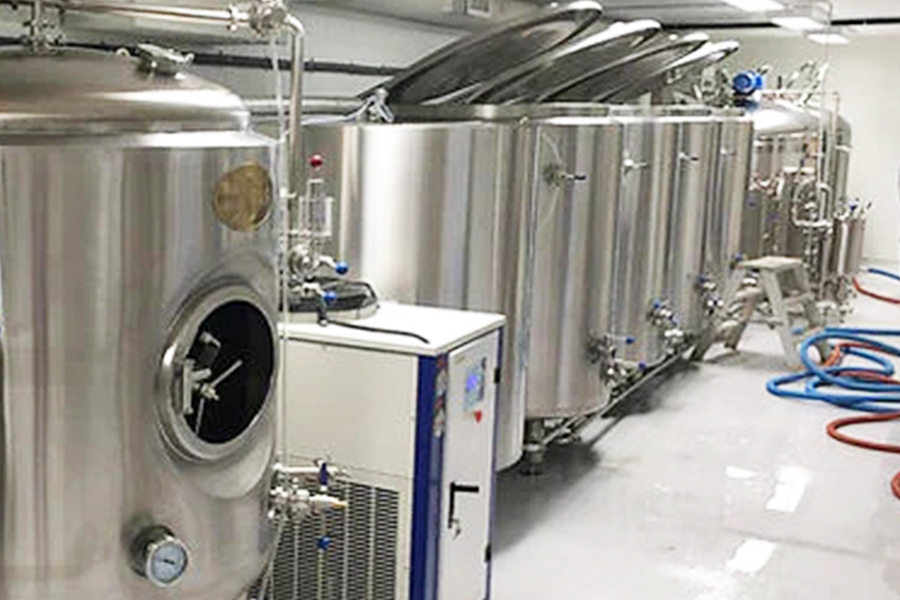
Regardless of size, the first step in kombucha brewing is brewing the tea leaves. The brewing tank is the starting point for kombucha production, where water is heated, tea leaves are steeped, and sugar is dissolved. Stainless steel is the preferred material for commercial fermentation tanks due to its durability, rust resistance, and ease of cleaning. Commercial fermentation tanks are much larger than home fermentation tanks, typically ranging from 10 to 200 gallons, depending on your production scale.
2. Fermentation Tanks (Primary Fermentation)
The fermentation tank is where the kombucha undergoes its primary fermentation. During this process, the sugars in the sweetened tea are converted into acids, alcohol, and carbonic acid by SCOBY (a symbiotic community of bacteria and yeast). Fermentation tanks come in various shapes, but wide, shallow containers facilitate more even fermentation and easier handling of the SCOBY culture.
3. Sake Tanks (Secondary Fermentation)
After primary fermentation, the kombucha is transferred to sake tanks (or finishing tanks) for secondary fermentation. This stage involves adding flavorings, fruits, herbs, or spices, while yeast continues to ferment the remaining sugars, producing carbonic acid.
4. Bottling and Packaging Equipment
Once the kombucha has fermented and flavored, it’s ready to be bottled. This stage is crucial for delivering your kombucha to customers in safe and aesthetically pleasing packaging.
Filling Machines: Automated filling machines ensure your kombucha is filled into bottles accurately and quickly, minimizing contact with air. Depending on the system, commercial filling machines can process thousands of bottles per hour.
Capping Machines: Bottles need to be sealed to maintain freshness and carbonation. Automated capping machines can handle screw caps, crown caps, or flip caps.
Labeling Machines: Automated labeling systems are crucial for quickly and consistently applying labels to bottles, a key step in commercial production. These machines are often customized to accommodate different bottle shapes and sizes.
Packaging Lines: For large-scale production, packaging lines typically include equipment for boxing, shrink wrapping, and pallet stacking to load bottles onto pallets for transport.
5. SCOBY P Spawn Propagation System
In commercial production, maintaining a healthy and stable supply of SCOBY spawn is critical. Spawn propagation systems are used to cultivate spawn from a starting culture into multiple strains.
Sponge Culture Tanks:These specialized tanks cultivate multiple layers of sponge culture, ensuring a stable supply of sponge for large-volume kombucha production. These tanks vary in size, but their design is generally similar to that of fermentation tanks.
6. pH and Brix Testing Equipment
Maintaining appropriate pH and Brix (sugar concentration) throughout the brewing and fermentation process is crucial for achieving ideal taste and quality.
pH Meter:Commercial pH meters are used to monitor the acidity of kombucha. The ideal pH for kombucha is typically between 3.0 and 3.5 at the end of the primary fermentation.
Britx Filtration Meter:Used to measure the sugar content in the tea leaves, ensuring the correct sugar-to-tea ratio is achieved during fermentation.
7. Cooling Systems
After boiling, the tea leaves need to be cooled to a safe temperature before adding the sponge culture (SCOBY). Commercial brewing typically uses cooling systems such as heat exchangers or chilled water systems to rapidly reduce the temperature of large volumes of liquid.
8. Cleanup and Sterilization Equipment
Sterilizing equipment is paramount to preventing contamination and ensuring the safety of kombucha. Cleaning systems for commercial breweries include:
Disinfectant sprayers and Clean In-Place (CIP) systems: CIP systems are automated systems that clean and disinfect tanks, pipes, and hoses without disassembling the equipment.
Manual cleaning tools: For smaller equipment, you will need specialized brushes and cleaning agents designed for food-grade cleaning.
Investing in high-quality, reliable equipment is crucial for scaling up production and maintaining the integrity and quality of yourkombucha. Tiantai can carefully configure the right equipment for every step of your brewing process, enabling you to streamline operations, improve product consistency, and produce products that meet the growing demands of your customer base.